 Comparison
Is Laminate Flooring Worth It for High-Traffic Hallways?
Table of Contents
- Durability and AC Ratings: What High-Traffic Hallways Demand
- Laminate vs Luxury Vinyl Plank Durability: Which Handles Hallway Traffic Better?
- Moisture Resistance and Wear Layer Technology in Laminate
- How to Maintain Laminate Flooring in Hallways
- Installation Methods for High-Traffic Hallways
- Cost-Effectiveness: Laminate vs Hardwood in Busy Hallways
- The Verdict: Is Laminate Flooring Worth It for Your High-Traffic Hallway?
- Frequently Asked Questions
Last Updated: September 15, 2026
Durability and AC Ratings: What High-Traffic Hallways Demand
Is laminate flooring worth it for high-traffic hallways? Yes, provided you choose an AC4-rated product or higher. The Abrasion Class rating is the most important specification for hallway performance, and the one most buyers overlook.
The AC rating for laminate flooring is a standardized AC1-AC5 scale measuring resistance to abrasion, impact, and staining in lab testing. Busy-home hallways typically need AC4, rated for heavy residential traffic.
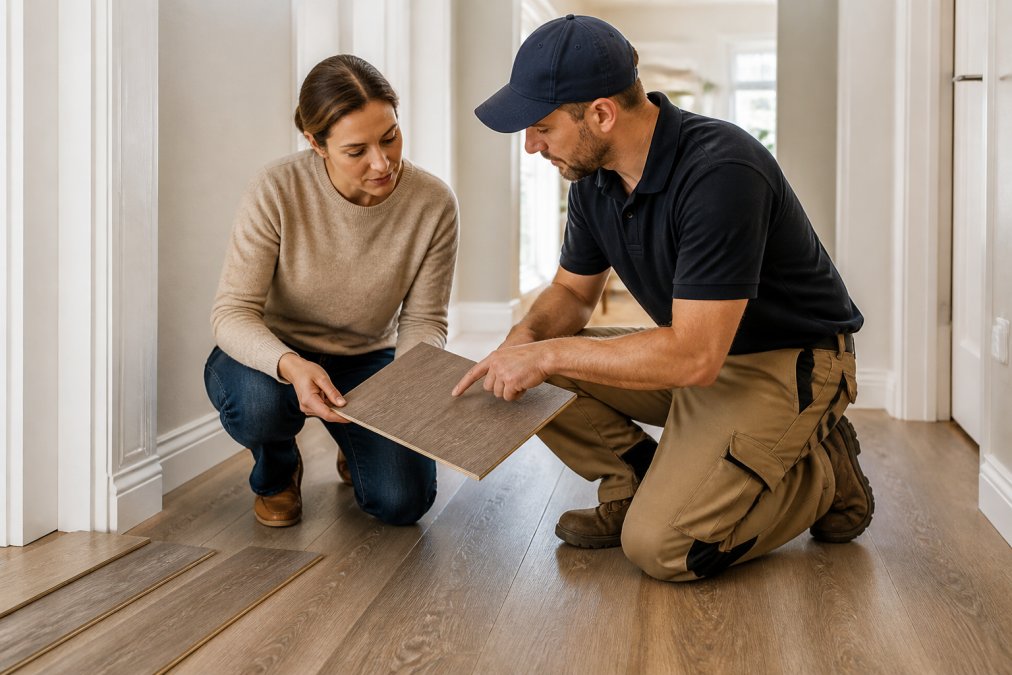
Industry guidance from Quality Hardwood's 2026 high-traffic flooring guide confirms that AC4-rated laminate is the recommended standard for high-traffic residential areas. That's not marketing language; it's a test-based threshold.
Laminate's layered construction, a wear layer over a high-density fiberboard (HDF) core, gives it the resilience hallways demand. But the rating on the box matters more than the brand name.
Laminate vs Luxury Vinyl Plank Durability: Which Handles Hallway Traffic Better?
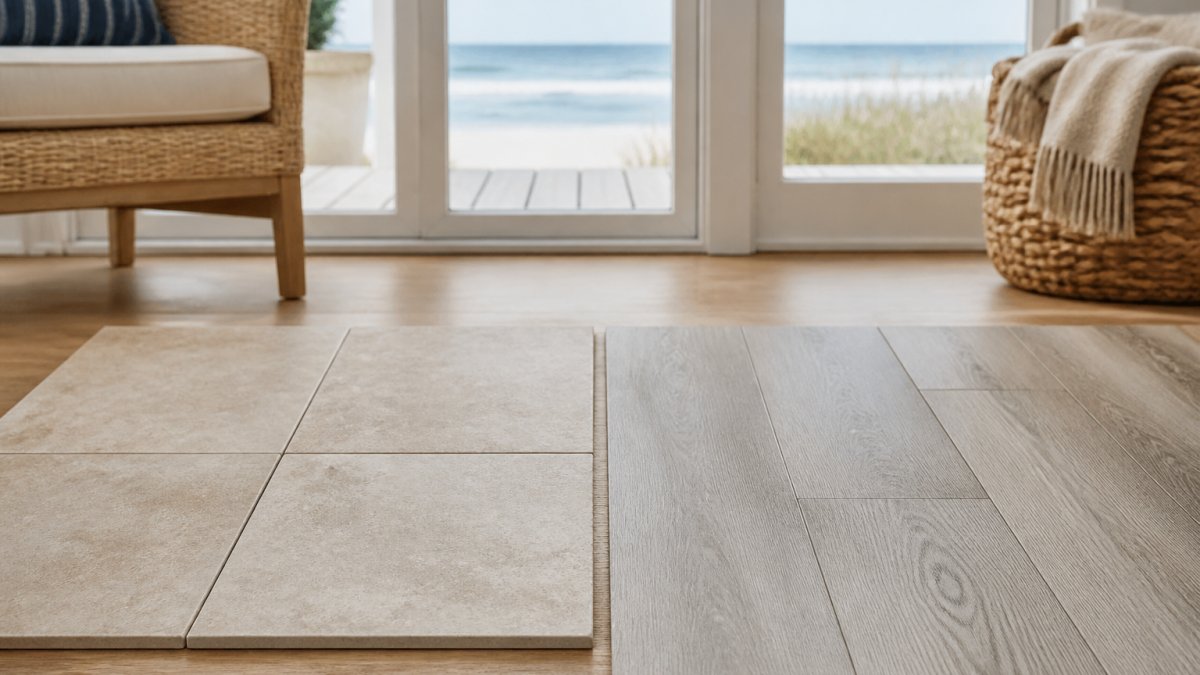
For dry hallways, laminate generally wins on scratch and dent resistance. For moisture-exposed hallways, luxury vinyl plank (LVP) is safer. Hallways sit between the front door and the rest of the home, where foot traffic and moisture exposure both peak.
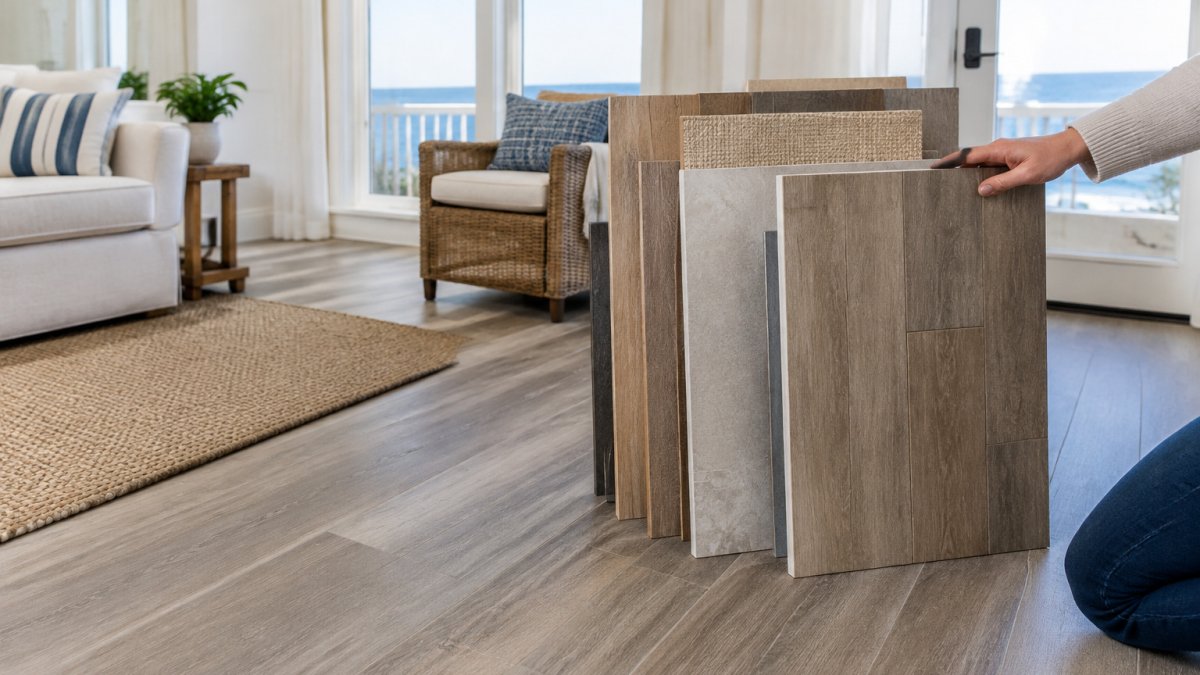
Consumer Reports' 2026 flooring durability analysis categorizes laminate, porcelain, and vinyl as the most durable options for high-traffic zones like hallways. Within that group, the trade-offs are specific:
- Scratch resistance: Laminate's aluminum oxide top layer outperforms most LVP in standard abrasion tests.
- Moisture tolerance: LVP is fully waterproof; most laminate is water-resistant at best.
- Repairability: Individual LVP planks can often be replaced; laminate typically cannot be refinished.
- Underfoot feel: LVP feels slightly softer; laminate reads as harder and cooler.
Laminate's dense HDF core gives it strong impact resistance, but that same density makes it unforgiving to stand on for long periods. Easton Flooring's 2026 analysis notes laminate's hardness can be uncomfortable versus more resilient flooring.
| Feature | Laminate (AC4) | Luxury Vinyl Plank |
|---|---|---|
| Scratch resistance | Excellent | Very good |
| Moisture resistance | Water-resistant | Waterproof |
| Repairability | Low | Moderate |
| Refinishable | No | No |
| Best for | Dry, busy hallways | Moisture-prone hallways |
Moisture Resistance and Wear Layer Technology in Laminate
Modern laminate handles moisture far better than a decade ago, but the improvement is mechanical, not marketing. Knowing where water causes damage tells you which products justify the premium.
The wear layer is the transparent top surface, sealed with melamine resin and embedded with aluminum oxide particles to resist scratches, stains, and fading. It protects against surface abrasion, not water. That job belongs to the core and locking system.
Where laminate actually fails
The vulnerable point is the seam. Laminate's core is high-density fiberboard (HDF), a compressed wood-fiber composite. When water sits on a seam and wicks into the core, the fibers swell, pushing edges up at the joints, installers call it "peaking", and the core never returns to shape. A single slow leak under an entryway mat can ruin a run of planks that look fine on the surface.
This is the mechanism behind the water-resistant-versus-waterproof distinction:
- Water-resistant laminate resists surface moisture and short-term spills. Standing water that reaches a seam can still penetrate the core.
- Waterproof laminate uses a sealed core (often a polymer or treated HDF core) plus sealed joints so water cannot reach the fiberboard in the first place.
Doppler Construction's 2026 laminate overview notes that current laminate uses a sealed top layer engineered to resist scratches and dents in high-traffic zones, but the surface seal is only one layer of the defense.
Reading the moisture claims
Manufacturers describe moisture performance inconsistently, so compare construction, not labels:
- Surface water resistance, the wear layer and a treated surface repel spills. This is the baseline on most modern laminate.
- Core water resistance, the HDF core is treated or replaced with a moisture-tolerant material. This is what determines whether a spill that reaches a seam causes swelling.
- Joint sealing, the click-lock profile is designed to keep water from traveling between planks. Products marketed as waterproof for the full plank typically combine all three.
Shaw Repel Laminate pairs a water-resistant surface with an HDF core but is not fully waterproof; standing water still needs prompt cleanup. Pergo Outlast+ uses surface-to-core waterproof protection for spills that sit. The difference isn't the brand, it's whether the core itself is protected.
Climate and expansion gaps in entryway hallways
Entryway hallways see the home's widest humidity and temperature swings, cold dry air in winter, humid air in summer. Laminate is wood-based, so it expands and contracts with moisture, and a floating floor needs room to move.
That's why the expansion gap matters more in a hallway. A 1/4-inch gap along all walls gives the floor somewhere to go. If it's too small, or a baseboard or transition strip pins the planks, the floor buckles or gaps at the seams seasonally. In narrow hallways the run is short, so movement is concentrated: the same product and installation error can fail in a tight hall but perform fine in a wide living room.
A moisture barrier under the subfloor plus water-resistant laminate is the practical combination where sand, salt air, or wet shoes are constant. The barrier handles vapor from below; the laminate handles surface wear and short-term spills. Neither substitutes for the other.
How to Maintain Laminate Flooring in Hallways
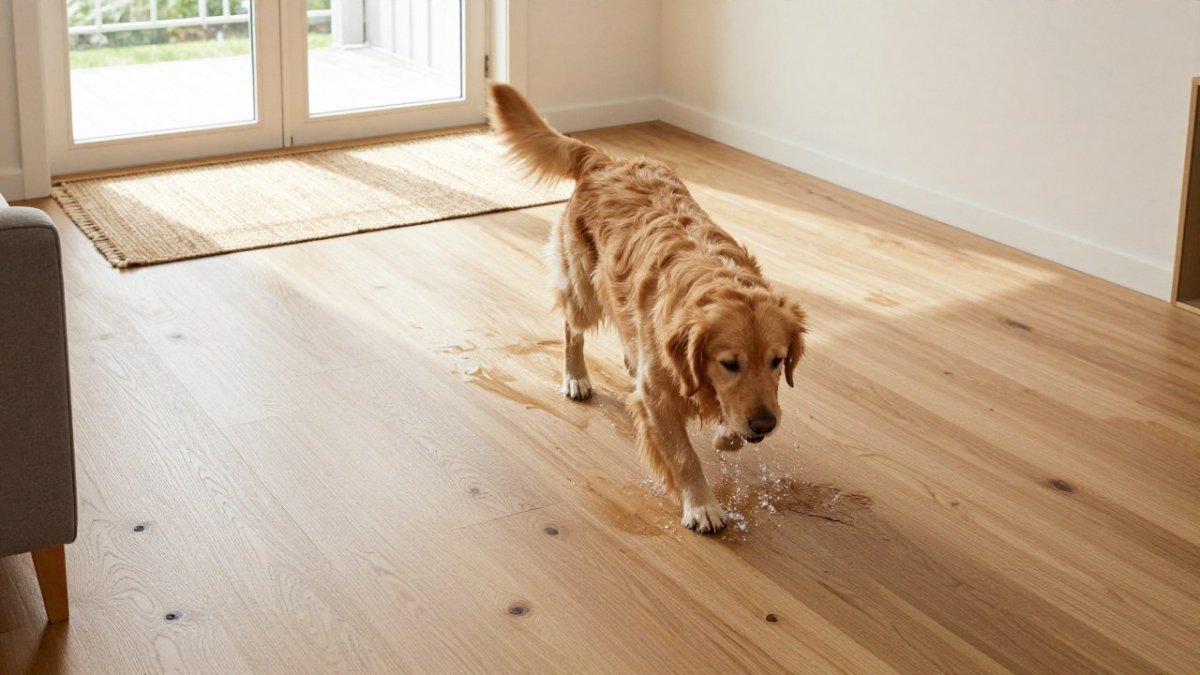
Maintaining laminate flooring in hallways comes down to three habits: dry mopping often, cleaning spills immediately, and never using a wet mop. Laminate's sealed surface resists stains, but standing water can seep into seams and swell the core.
A practical weekly routine:
- Dry mop or vacuum with a hard-floor attachment twice a week
- Wipe spills within a few minutes using a damp cloth, not a soaked one
- Place a quality entryway mat to trap sand and grit before it scratches
- Use felt pads under furniture legs to prevent indentation
- Skip steam mops entirely; heat and moisture damage the wear layer
Modern laminate builds in stain and fade resistance, with UV protection preventing sun-related color shifts. The maintenance burden is genuinely low compared to hardwood, which needs periodic refinishing.
Installation Methods for High-Traffic Hallways
Most laminate uses a click-lock floating system: planks lock together and rest on the subfloor rather than being nailed or glued. For hallways, installation details matter as much as the product.
Expansion gaps: the math that matters
The standard guidance is a 1/4-inch expansion gap along all walls, a minimum, not a target. The gap scales with the length of the continuous run, because laminate moves proportionally to its length as humidity changes.
Most installers allow roughly 1/4 inch for runs up to about 20 feet, adding gap for longer runs. Hallway runs are usually short, so 1/4 inch typically suffices, but the failure mode differs.
The details that prevent this:
Subfloor flatness and prep
Underlayment: acoustic performance is the undersold spec
Installation method and hallway traffic
Cost-Effectiveness: Laminate vs Hardwood in Busy Hallways
The Verdict: Is Laminate Flooring Worth It for Your High-Traffic Hallway?
Frequently Asked Questions
Is laminate flooring good for high-traffic areas like hallways?
Laminate works well in high-traffic hallways when you choose the right AC rating. Industry guidance recommends AC4-rated laminate for busy residential spaces, as it resists scratches and dents from constant foot traffic. Consumer Reports categorizes laminate alongside porcelain and vinyl as one of the most durable options for hallways. The key is selecting a quality tier with a sealed wear layer and installing it with proper underlayment to handle the daily wear.
What is the downside of laminate flooring in hallways?
The main drawback is that laminate cannot be refinished like hardwood. If the surface gets deeply scratched or damaged, the affected planks usually need replacement rather than sanding and resealing. Laminate is also hard underfoot, which can feel uncomfortable during long periods of standing. Additionally, while water-resistant options exist, standing water can still cause swelling if not cleaned promptly, so it is less forgiving than luxury vinyl plank in moisture-prone hallways.
How does laminate compare to luxury vinyl plank for hallway durability?
Both are durable, but they handle different stressors. Laminate typically offers superior scratch and dent resistance thanks to its aluminum oxide wear layer, making it a strong choice for hallways with heavy foot traffic. Luxury vinyl plank, however, is fully waterproof and better suited for areas where moisture is a concern, such as entryways near bathrooms or kitchens. For dry hallways with high traffic, laminate often provides better value; for damp areas, LVP is the safer pick.
How do I maintain laminate flooring in a busy hallway?
Sweep or vacuum the hallway daily to remove grit that can scratch the surface. Use a damp mop with a manufacturer-approved cleaner once a week, avoiding excessive water. Place mats at entryways to trap sand and dirt before they reach the laminate. For high-traffic zones, felt pads under furniture legs and regular trimming of pet nails help prevent scratches. Promptly wipe up spills to avoid moisture seeping into the seams and causing swelling.