 Comparison
Is Polished Concrete Worth the Cost for Retail?
Table of Contents
- Polished Concrete for Retail: The Real Investment Case
- Polished Concrete vs Epoxy for Retail Stores: Which Wins?
- Initial Installation Costs and Long-Term Value
- Commercial Concrete Flooring Cost Per Square Foot: Breaking Down the Numbers
- Polished Concrete Maintenance Requirements for Retail Environments
- Durability, Foot Traffic, and Retail-Specific Performance
- Impact on Retail Branding, Lighting, and Customer Experience
- Verdict: When Polished Concrete Delivers ROI for Retail
Last Updated: August 12, 2026
Polished Concrete for Retail: The Real Investment Case
Is polished concrete worth the cost for retail? The answer depends entirely on how you measure value. If you're comparing upfront installation costs alone, polished concrete loses. But if you're evaluating total cost of ownership over a decade, durability through heavy foot traffic, and the impact on customer experience and branding, the equation shifts dramatically.
At Hamptons Carpet One Floor and Home, we work with retail owners who've invested in flooring solutions across the spectrum. What we've learned is that polished concrete isn't a one-size-fits-all answer, but for specific retail scenarios, high-traffic showrooms, modern concept stores, and facilities where maintenance costs matter, it delivers genuine ROI.
The real question isn't whether polished concrete is expensive. It is. The question is whether the benefits justify that expense for your specific retail operation. This guide breaks down the numbers, the performance trade-offs, and when polished concrete actually makes financial sense.
Polished Concrete vs Epoxy for Retail Stores: Which Wins?
Polished concrete and epoxy represent two fundamentally different approaches to concrete flooring, and the choice hinges on your retail priorities.
Polished concrete grinds and densifies the existing slab through a multi-step process. You're exposing aggregate, refining the surface, and chemically hardening it. The result is a durable, low-maintenance surface that lasts 20-30 years with minimal intervention. The finish ranges from matte to high-gloss, and you can customize the look through aggregate exposure or staining.
Epoxy flooring applies a protective coating system over concrete. It's a sealed, non-porous surface that resists chemicals, stains, and water. Epoxy typically requires recoating every 5-7 years, which means ongoing maintenance costs and periodic downtime for application.
For retail, the practical difference comes down to this: polished concrete is a permanent solution that hardens over time and actually improves with proper maintenance. Epoxy is a temporary seal that degrades and eventually needs replacement.
| Flooring Type | Installation Downtime | Lifespan | Maintenance | Best For | Long-Term Cost |
|---|---|---|---|---|---|
| Polished Concrete | 3-7 days | 20-30 years | Regular cleaning only | Modern retail, showrooms, high-traffic areas | Lower over 20+ years |
| Epoxy | 2-3 days | 5-7 years (before recoating) | Recoating every 5-7 years | Spaces needing chemical resistance or color customization | Higher due to recoating cycles |
| VCT Tile | 1-2 days | 10-15 years | Stripping and waxing quarterly | Budget-conscious retail, quick replacements | Moderate, but labor-intensive |
Epoxy wins on installation speed and upfront customization. Polished concrete wins on longevity and maintenance simplicity. For retail stores operating continuously, the installation downtime matters, polished concrete requires 3-7 days of disruption, while epoxy takes 2-3 days. That's a meaningful difference if your store can't close for a week.
But here's what most guides miss: epoxy's recoating cycle creates recurring disruption. Every 5-7 years, you're closing the store again or operating during application. Polished concrete, once done, stays done.
Initial Installation Costs and Long-Term Value
The initial cost of polished concrete typically ranges from $3 per square foot upward, depending on substrate condition, aggregate exposure, and finish level. For a 5,000 sq ft retail space, that's $15,000 to $25,000+ in installation costs.
That sounds steep until you compare the lifecycle cost. VCT tile starts around $1.50-$2 per square foot but requires quarterly stripping and waxing, labor costs that compound over years. Epoxy starts similarly to polished concrete but triggers recoating expenses every 5-7 years.
The math becomes clearer over 20 years. Polished concrete, with routine cleaning and occasional resealing, costs far less in cumulative maintenance than alternatives that demand regular stripping, waxing, or recoating. A retail space that operates 12 hours daily, 6 days a week sees significant foot traffic. That traffic accelerates the degradation of cheaper flooring options.
What most retailers underestimate is the hidden cost of downtime. If your store closes for flooring work, you're losing revenue. If you operate during installation, customer experience suffers. Polished concrete's longer lifespan means fewer disruptions over the business's lifetime.
Commercial Concrete Flooring Cost Per Square Foot: Breaking Down the Numbers
The cost structure for polished concrete involves several layers. The $3 per square foot baseline assumes a relatively clean existing slab in decent condition. But retail floors often have complications.
Substrate preparation is where costs can climb. If the existing concrete has cracks, spalling, or moisture issues, preparation work increases the bill. Moisture testing (critical for retail spaces, especially those with HVAC or potential groundwater seepage) may reveal the need for moisture mitigation, another expense.
Aggregate exposure level affects price. A simple polished finish with minimal aggregate showing costs less than a heavily exposed aggregate finish that reveals decorative stone throughout the slab. The more grinding required, the higher the labor cost.
Densifier application hardens the concrete and dust-proofs it. Products like Ashford Formula chemically react with the concrete to increase surface density. This step is essential for durability in high-traffic retail but adds to the overall cost.
Sealer application protects the finished surface. Some polished concrete installations skip this; others apply penetrating sealers for additional stain resistance. Retail environments benefit from sealer, especially if spills are common.
Customization through staining or dyes increases cost but allows branding integration. A retail showroom might stain the concrete to match brand colors, an option that adds value beyond pure flooring.
The total cost per square foot in a retail context typically falls between $3 and $8, depending on these factors. A 5,000 sq ft space could range from $15,000 to $40,000. That's a wide band, but it reflects real variation in project scope.
The critical point: get a detailed estimate that breaks down substrate preparation, densification, sealing, and any customization. A vague "$3 per square foot" quote likely underestimates your actual project.
Polished Concrete Maintenance Requirements for Retail Environments
One of polished concrete's strongest selling points is maintenance simplicity. Unlike VCT, which demands quarterly stripping and waxing, polished concrete requires routine cleaning and occasional resealing.
Daily and weekly maintenance involves regular sweeping and damp mopping. The reflective surface shows dust and footprints, which actually encourages frequent cleaning, good for retail aesthetics. Use pH-neutral cleaners; avoid acidic or alkaline products that can etch the surface.
Monthly maintenance might include a deeper clean with appropriate concrete floor cleaners. The non-porous surface resists staining, so spills wipe up easily compared to porous alternatives.
Periodic resealing (typically every 1-3 years, depending on traffic intensity) protects the surface and maintains the gloss level. This is the primary ongoing cost. A retail space with heavy foot traffic might reseal annually; a lower-traffic showroom might go 2-3 years. Resealing takes hours, not days, and doesn't require store closure.
Compare this to VCT tile, which demands quarterly stripping and waxing, labor-intensive work that disrupts operations. Polished concrete's maintenance burden is dramatically lighter.
The maintenance schedule for polished concrete in retail is straightforward enough that most store managers handle it without specialized contractors. That's a significant operational advantage.
Durability, Foot Traffic, and Retail-Specific Performance
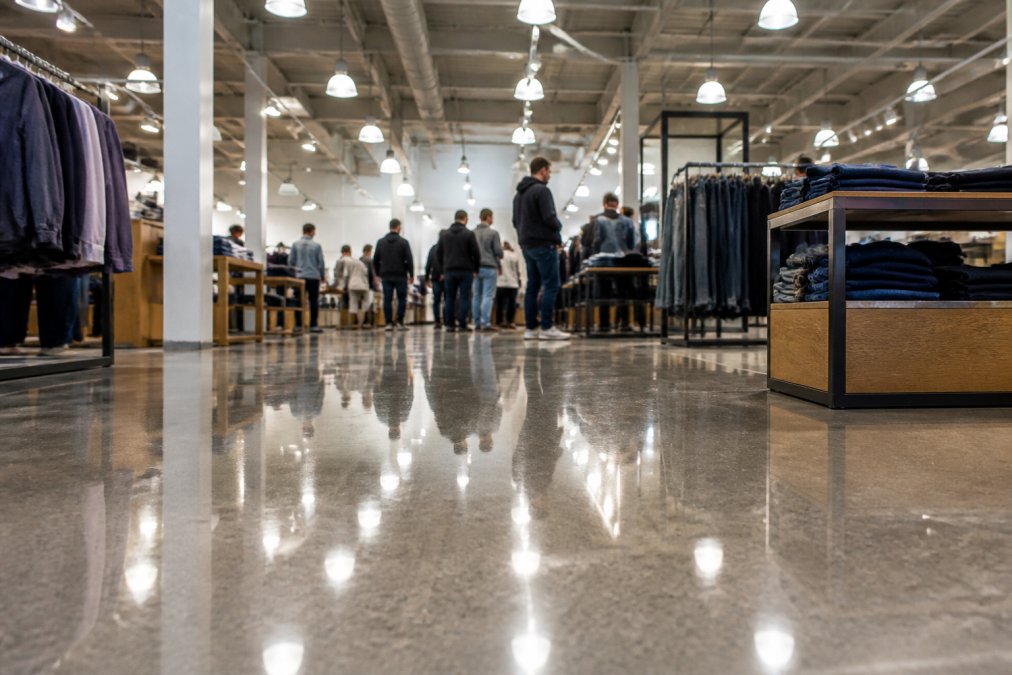
Polished concrete thrives in high-traffic retail environments. The surface hardens over time through densification, which means it actually becomes more durable with age, opposite to most flooring materials that degrade.
The abrasion resistance of properly polished and densified concrete is exceptional. Foot traffic, rolling carts, and merchandise movement don't easily mark or scratch the surface. This durability matters enormously for retail, where foot traffic is constant and merchandise is constantly being moved.
The slip coefficient is a legitimate concern. Polished concrete, especially high-gloss finishes, can be slippery when wet. This is a real safety issue in retail spaces. Anti-slip additives exist and should be included in any polished concrete installation serving the public. The ADA (Americans with Disabilities Act) provides guidance on slip resistance for public flooring, polished concrete can meet these standards with proper treatment, but it requires intentional specification.
Moisture vapor transmission is another consideration. If your retail space has basements or lower levels with potential moisture issues, polished concrete needs proper moisture mitigation underneath. A moisture barrier or epoxy primer prevents moisture from compromising the densifier and sealer. This is essential groundwork that affects both cost and performance.
Heavy foot traffic actually favors polished concrete over alternatives. The surface doesn't chip, crack, or develop the worn spots that plague VCT. A retail space with 500+ customers daily sees measurable performance differences within the first year. Polished concrete maintains its appearance; cheaper alternatives show visible wear.
Impact on Retail Branding, Lighting, and Customer Experience
Here's an angle most flooring guides miss entirely: polished concrete affects how customers perceive your retail space.
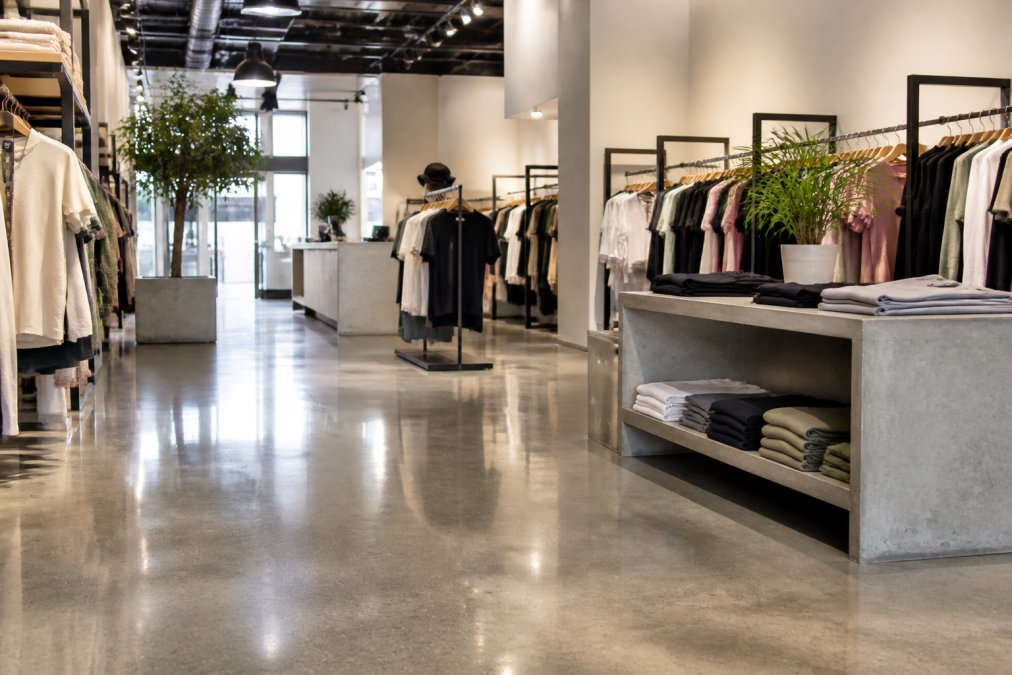
The reflective properties of a polished concrete floor amplify overhead lighting. This creates a brighter, more open feel without installing additional light fixtures. For retail, that's a direct cost savings on electricity and HVAC (since brighter spaces feel cooler). The reflective index of polished concrete can reduce lighting costs by 10-15% compared to matte flooring alternatives.
The aesthetic impact is substantial. Polished concrete signals modernity and sophistication. High-end retail, concept stores, and showrooms increasingly use polished concrete as a design statement. It communicates quality and intentionality, customers subconsciously respond to that. A luxury showroom with polished concrete floors conveys different values than the same space with VCT tile.
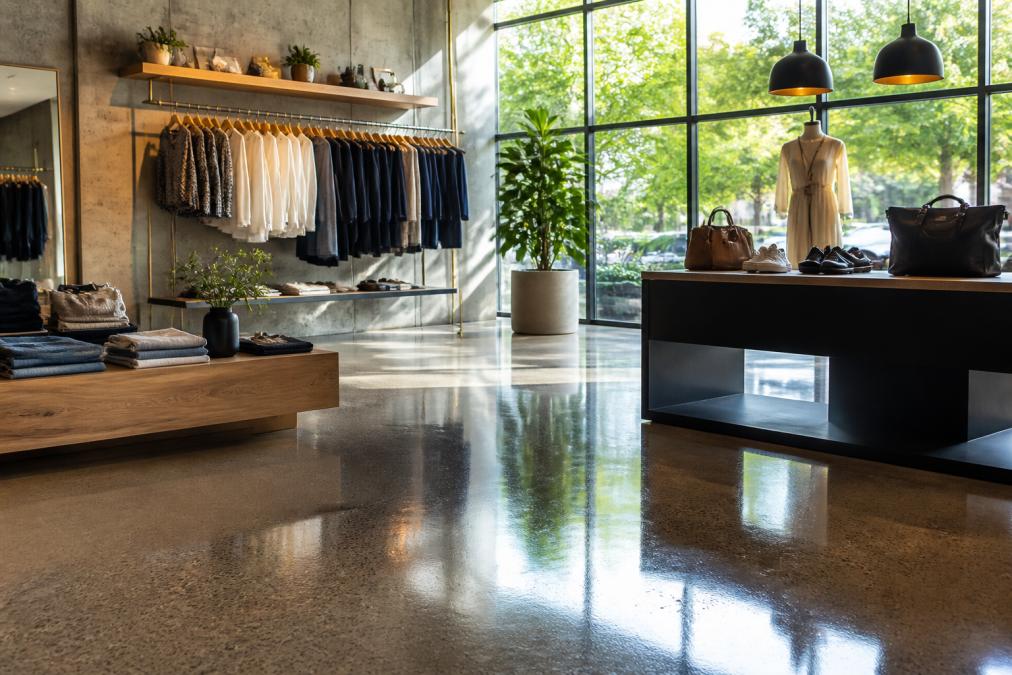
Customization through staining allows brand integration. A retail space can stain the concrete to match brand colors or incorporate logos subtly into the floor design. That level of environmental branding isn't possible with generic tile or carpet.
The durability also affects customer experience indirectly. A floor that maintains its appearance over years projects competence and care. Conversely, a floor showing wear signals neglect. For retail, where customers make snap judgments about quality, the floor matters more than most business owners realize.
The downside: polished concrete can feel cold and hard underfoot in spaces where comfort matters. A showroom is fine; a retail space where customers stand for extended periods might benefit from softer alternatives. This is a use-case consideration, not a universal drawback.
Verdict: When Polished Concrete Delivers ROI for Retail
Polished concrete is worth the cost for retail when these conditions align:
High foot traffic. If your store sees hundreds of customers daily, the durability premium of polished concrete justifies the upfront expense. The surface maintains its appearance where cheaper alternatives show visible wear within 2-3 years.
Long-term occupancy. If you own the space or have a multi-year lease, the 20-30 year lifespan of polished concrete makes economic sense. If you're month-to-month or planning to relocate soon, the upfront cost isn't justified.
Branding and aesthetics matter. If your retail concept relies on a modern, sophisticated aesthetic, polished concrete supports that narrative. For budget retailers where customers expect low prices above all else, the visual premium doesn't translate to sales lift.
Maintenance simplicity is valuable. If your operation can't absorb quarterly stripping and waxing labor, polished concrete's low-maintenance profile is worth paying for upfront.
Lighting costs are significant. If your retail space has high overhead lighting expenses, the reflective properties of polished concrete reduce electricity consumption meaningfully.
Polished concrete is not worth the cost if:
- You're in a short-term lease or temporary space
- Your retail concept competes on price, not brand perception
- Your space has moisture issues that require expensive mitigation
- You need maximum slip resistance without special treatment
- Your budget is severely constrained and upfront costs override lifecycle value
The real answer to "is polished concrete worth the cost for retail?" is conditional. For the right retail scenario, it's an excellent investment. For others, alternatives deliver better value. Work with a flooring partner who understands retail-specific needs and can evaluate your space against these criteria. The difference between a good flooring decision and a poor one often comes down to matching the material to the actual use case, not just chasing the lowest upfront cost. Contact Hamptons Carpet One Floor and Home for a consultation and cost analysis tailored to your retail space.
Frequently Asked Questions
What are the downsides of polished concrete for retail?
Polished concrete can be slippery when wet, which poses safety risks in retail environments with customer foot traffic. The hard, reflective surface may also feel cold and industrial, which doesn't suit all retail aesthetics. Initial installation requires significant substrate preparation and downtime. Additionally, high-gloss finishes can show footprints and dust, requiring frequent cleaning in busy stores. Finally, while durable, polished concrete cannot be easily patched like some alternatives, repairs typically require refinishing larger sections.
How does polished concrete maintenance compare to vinyl tile or carpet?
Polished concrete requires minimal maintenance: regular sweeping and occasional damp mopping suffice for most retail environments. Vinyl composition tile (VCT) demands regular stripping and waxing every 6-12 months, significantly increasing labor costs over time. Carpet requires frequent vacuuming and professional cleaning. Polished concrete's low-maintenance profile reduces staffing demands and downtime, making it cost-effective for retail over a 10-20 year lifecycle. However, polished concrete needs professional refinishing every 5-10 years depending on foot traffic intensity.
Is polished concrete slippery and a safety risk for retail customers?
Standard polished concrete can be slippery when wet or with dust, creating slip hazards. However, this can be mitigated through anti-slip additives during application or by applying non-slip coatings to high-traffic zones. Many retail installations use a matte or satin finish rather than high-gloss, which reduces reflectivity and slip risk while maintaining durability. Proper maintenance, keeping the floor dry and clean, also minimizes slip incidents. Retail owners should specify anti-slip specifications during installation and ensure compliance with ADA slip-resistance standards.
What factors influence total cost per square foot for commercial concrete polishing?
Several factors drive cost: existing concrete condition and surface preparation required, desired finish level (matte, satin, or high-gloss), aggregate exposure depth, application of densifiers and sealers, and local labor rates. Heavily damaged substrates requiring extensive grinding cost more. Projects requiring rapid turnaround or working around active retail operations incur higher labor costs. Geographic location and contractor expertise also affect pricing. Retail-specific requirements like anti-slip additives or stain options add to the base cost. Request detailed quotes that itemize surface preparation, grinding stages, densifier application, and sealer costs.
Does polished concrete increase retail store value and customer perception?
Polished concrete enhances retail aesthetics and creates a modern, upscale appearance that can positively influence customer perception. The light-reflective properties improve lighting efficiency, reducing energy costs and creating a brighter shopping environment. This modern aesthetic appeals to contemporary retail concepts and can justify premium positioning. However, resale value impact depends on the retail sector, high-end boutiques and showrooms benefit more than traditional discount retailers. The durability and low-maintenance profile also signal professionalism to customers, potentially supporting brand positioning and reducing operational disruptions from floor repairs.
This article was written using GrandRanker