 review
Is Radiant Heating Under New Floors Worth It? 2026 Guide
Table of Contents
- Is Radiant Heating Under New Floors Worth It? The Bottom Line
- Pros and Cons of Radiant Floor Heating Systems
- Electric Radiant Floor Heating vs. Hydronic: Which System Makes Sense
- Best Flooring for Radiant Heat: Material Compatibility Guide
- Radiant Floor Heating Cost Per Square Foot and Long-Term Expenses
- Radiant Heat Maintenance: System Longevity and Care Requirements
- Radiant Heating vs. Forced Air: Energy Efficiency and Comfort Comparison
- Impact on Home Resale Value and Smart Thermostat Integration
Is Radiant Heating Under New Floors Worth It? 2026 Guide
Last Updated: July 29, 2026
When homeowners consider whether is radiant heating under new floors worth it, they're weighing comfort against cost and long-term savings against upfront investment. At Hamptons carpet one floor and Home, we've worked with countless Suffolk County residents navigating this decision. The answer depends entirely on your climate, flooring choice, usage patterns, and how long you plan to stay in the home. This guide cuts through the marketing and gives you what actually matters: honest pros and cons, material compatibility rules, cost breakdowns, and the specific scenarios where radiant heating makes sense.
Is Radiant Heating Under New Floors Worth It? The Bottom Line
Radiant floor heating delivers genuine comfort advantages, warm feet, no cold spots, allergen-free operation, and can reduce energy consumption by 10-15% in the right conditions. However, installation costs run between $6 and $20 per square foot depending on system type and existing subfloor conditions, and compatibility issues with certain flooring materials can negate efficiency gains entirely.
The real decision comes down to three factors: your climate zone, the flooring material you've chosen, and your timeline. In cold climates where forced air systems create drafts and dead zones, radiant heating justifies the premium. In moderate climates, the ROI weakens significantly. If you're planning to install hardwood or certain luxury vinyl products, you've narrowed your options, some materials don't work well with radiant systems and can warp or fail under sustained heat.
Is radiant heating under new floors worth it for YOU depends on whether you're willing to accept the installation complexity, material restrictions, and long-term maintenance costs.
Pros and Cons of Radiant Floor Heating Systems
Key Advantages
Radiant floor heating creates uniform thermal comfort by rising from the floor itself rather than blasting warm air that creates drafts and cold spots. Your feet stay warm, the room feels balanced, and allergy sufferers benefit immediately because the system doesn't circulate dust, pollen, or pet dander through ducts.
Energy efficiency is significant. Radiant systems operate at lower water temperatures than traditional boilers, reducing heat loss through distribution pipes. Zoning capabilities mean you can heat only occupied rooms, cutting operating costs for homes with unused bedrooms or seasonal spaces. In well-insulated homes with proper thermostat control, homeowners report 10-15% reductions in heating bills compared to forced air baselines.
Installation under new floors avoids major retrofit hassle, you're embedding the system during construction when subfloors are accessible. The system becomes invisible, requiring no vents or registers. Resale appeal in cold climates is strong; radiant heating is seen as a luxury amenity that justifies premium pricing.
Significant Drawbacks
Installation disruption is severe. Running hydronic lines or electric mats under flooring requires careful coordination with subfloor preparation and underlayment selection. Any mistake, a punctured line, improper spacing, incompatible underlayment, can require tearing up newly installed flooring to repair, with costs ballooning quickly.
Flooring compatibility is a hard constraint that eliminates many popular options. Solid hardwood expands and contracts with temperature changes; radiant heat accelerates this, causing cupping, warping, and finish failure. Certain luxury vinyl planks soften under sustained heat and develop permanent indentations. You're limited to tile, stone, concrete, engineered hardwood with specific specs, and certain vinyl products, which narrows aesthetic choices considerably.
Long-term maintenance costs are often underestimated. Hydronic systems require annual flushing, inhibitor treatment, and pressure checks. Boilers fail. Circulating pumps wear out. Repair costs run $500-$2,000+ when problems surface, and locating leaks in embedded tubing requires specialized equipment. Many homeowners discover too late that their radiant system has become a liability they can't afford to fix.
Retrofitting or modifications are expensive and sometimes impossible. If you decide to remove radiant flooring and install something else, you're left with a subfloor embedded with tubing or electric mats, which adds cost to any future flooring project.
Resale value gains are inconsistent. In cold climates, radiant heating is a genuine selling point. In moderate or warm climates, buyers often see it as unnecessary complexity. If the system has any history of problems or maintenance neglect, it becomes a liability that reduces buyer confidence.
Electric Radiant Floor Heating vs. Hydronic: Which System Makes Sense
Electric Radiant Systems
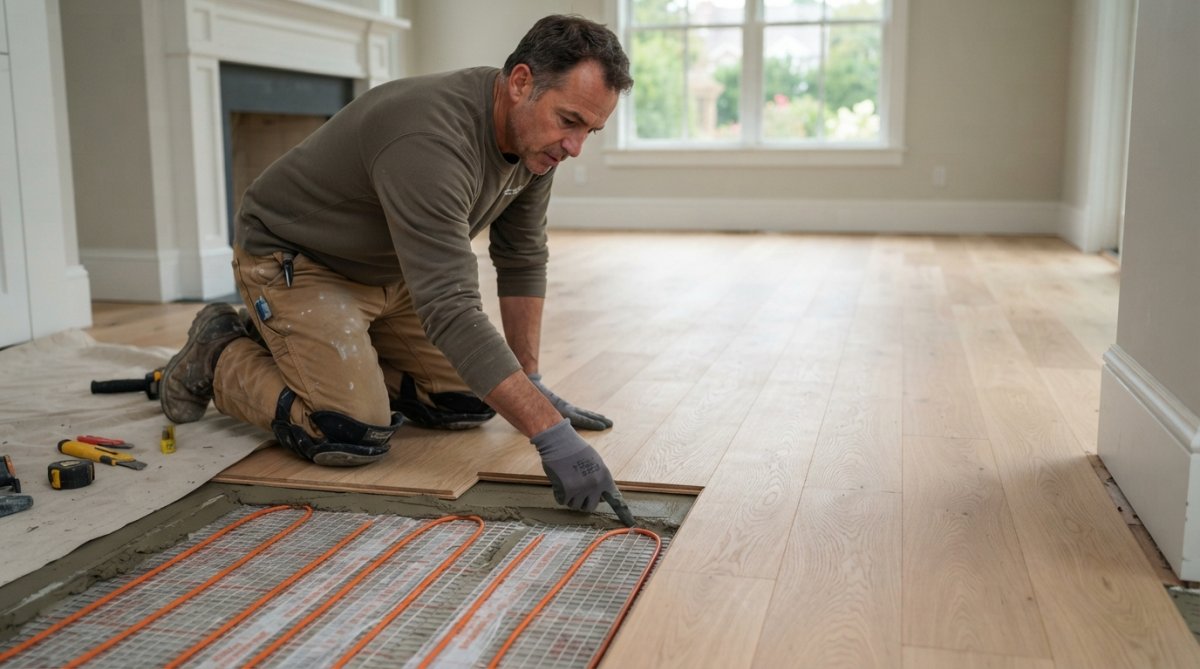
Electric radiant heating uses thin heating mats or cables embedded beneath flooring. Current flows through resistance wire, generating heat directly without water, boilers, or circulation pumps. Installation is simpler than hydronic systems, the mats roll out, connect to a thermostat, and the flooring goes down on top.
Cost is the primary advantage. Electric systems run $6-$15 per square foot installed, compared to $12-$20 for hydronic. For small spaces like bathrooms and kitchens, the lower price makes radiant heating accessible to more homeowners. No boiler, no pipes, no annual maintenance beyond thermostat checks.
The critical limitation is efficiency. Electric heating costs significantly more to operate than hydronic systems, especially in climates requiring extended heating seasons. A 200-square-foot bathroom heated electrically can add $30-$60 per month to winter utility bills. Electric systems also create dead zones if heating mats are spaced poorly, leaving cold spots.
Best application: Electric radiant heating makes sense for small, heavily used spaces where comfort matters more than energy savings, luxury bathrooms, entryways, kitchens.
Hydronic Radiant Systems
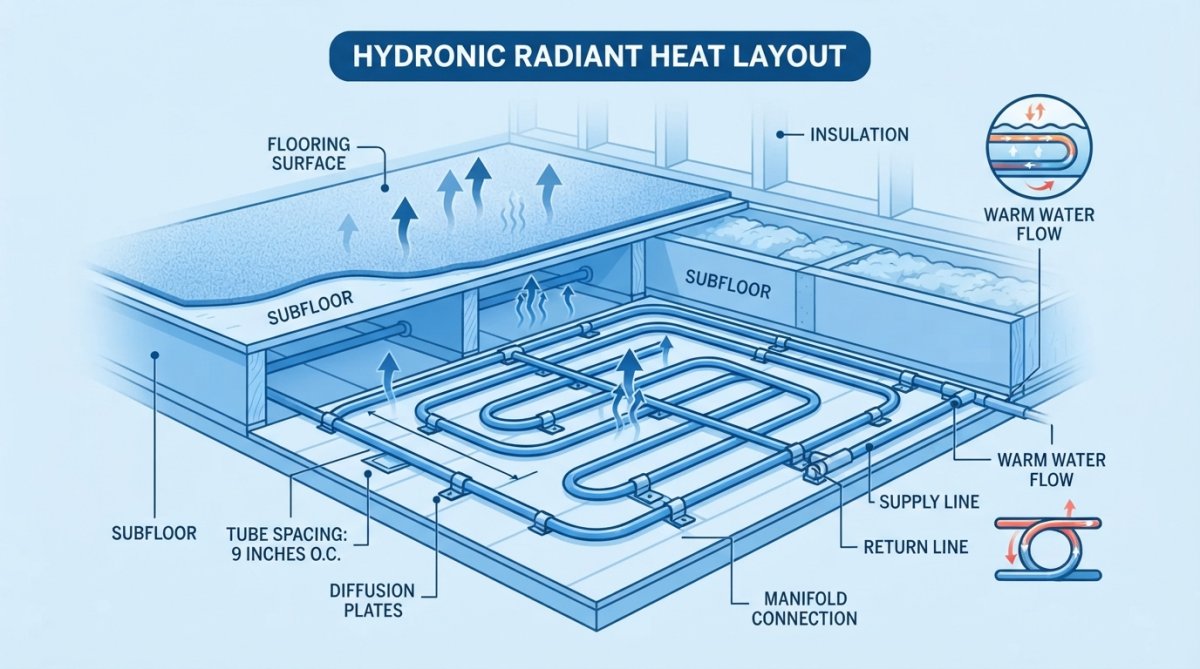
Hydronic systems circulate warm water through tubing embedded beneath flooring. A boiler heats the water; a circulating pump distributes it through zones; a thermostat controls temperature. The system can be integrated with existing HVAC or installed as a standalone heating source.
Operating costs are 30-50% lower than electric systems because water retains heat efficiently and circulates only when needed. Zoning is precise, you can heat individual rooms independently, cutting energy waste dramatically. In cold climates with multi-story homes, hydronic radiant heating combined with smart zoning can reduce annual heating costs by 15-25% compared to forced air.
Installation complexity is the tradeoff. Hydronic systems require coordination with plumbing, boiler placement, circulating pump installation, and zone valve setup. Mistakes during installation can mean costly repairs after flooring is installed.
Maintenance requirements are real. Annual flushing prevents mineral buildup. Inhibitor chemicals must be monitored. Circulating pumps fail eventually, with replacement costs of $800-$1,500. Boiler repairs run $500-$3,000+. Over 20 years, maintenance and repairs can total $5,000-$10,000.
Hydronic systems also require a heat source. If you're replacing an existing boiler, the cost is manageable. If you're adding radiant heating to a home with forced air, you need either a separate boiler or a hybrid system, both expensive options.
Best application: Hydronic radiant heating justifies the complexity and cost in cold climates where you're already replacing a boiler, building a new home, or renovating a large space.
Best Flooring for Radiant Heat: Material Compatibility Guide
Choosing flooring for radiant heating systems is where most homeowners encounter hard constraints. Not every beautiful floor works well with sustained heat beneath it.
Ideal Flooring Options
Tile and stone are the gold standard for radiant heating. Ceramic, porcelain, and natural stone conduct heat efficiently and don't expand or contract problematically under temperature fluctuations. Heat distribution is even, and the thermal mass of tile helps regulate temperature swings. Cost runs $8-$20 per square foot installed, with premium natural stone reaching $30+.
Engineered hardwood with specific specifications can work with radiant heating, but selection is critical. Look for engineered products with cross-grain construction, moisture content between 6-9%, and manufacturer approval for radiant systems. Avoid solid hardwood entirely. Engineered hardwood costs $6-$15 per square foot, but radiant-approved options skew toward the higher end.
Luxury vinyl plank (LVP) marketed as radiant-compatible can work if you choose carefully. Thicker planks (4mm+) with rigid core construction handle heat better than thin, flexible products. However, sustained temperatures above 85 degrees Fahrenheit can soften vinyl and cause permanent indentations. Radiant-compatible LVP costs $4-$10 per square foot.
Concrete is excellent for radiant heating, especially in modern designs. Concrete conducts heat efficiently and can be stained or polished for aesthetic appeal. Cost runs $3-$12 per square foot depending on finish complexity.
Materials to Avoid
Solid hardwood is incompatible with radiant heating. The sustained heat causes wood to expand and contract unpredictably, leading to cupping, warping, and finish failure. Even engineered hardwood can fail if it doesn't meet strict specifications.
Cork is too sensitive to heat and moisture. Radiant systems can cause cork to shrink, crack, and separate from the subfloor.
Certain vinyl products fail under radiant heat. Thin, flexible LVP and budget vinyl products can soften and develop indentations. Read manufacturer specifications carefully; if the product doesn't explicitly approve radiant heating, assume it won't work.
Wool carpet and natural fiber rugs trap heat and reduce system efficiency. Most radiant heating advocates skip carpet entirely.
Thick underlayment defeats the purpose. Standard carpet underlayment insulates the floor from radiant heat, reducing efficiency by 20-40%. Select products specifically designed for radiant systems, thin, thermally conductive materials that don't block heat transfer.
Radiant Floor Heating Cost Per Square Foot and Long-Term Expenses
Understanding the true cost of radiant heating requires separating installation investment from operating and maintenance expenses.
Installation Investment
Electric radiant systems cost $6-$15 per square foot installed. A 2,000-square-foot home would run $12,000-$30,000 for whole-home coverage. Labor represents 40-50% of total cost.
Hydronic systems cost $12-$20 per square foot for tubing, installation, and zone valve setup. Add $3,000-$8,000 for boiler installation if you're adding a dedicated heat source. For a 2,000-square-foot home, expect $24,000-$48,000 total, or $36,000-$56,000 if boiler replacement is required.
Complications like damaged subfloors or existing plumbing conflicts add $2,000-$10,000 to the project. Flooring compatibility also drives costs, radiant-approved engineered hardwood or premium vinyl adds $3-$8 per square foot to flooring costs.
Operating and Maintenance Costs
Electric systems cost $0.15-$0.30 per kilowatt-hour to operate. A 200-square-foot bathroom heated during a 5-month heating season costs roughly $200-$400 for the season. Whole-home electric radiant heating runs $1,000-$2,000+ annually.
Hydronic systems cost significantly less to operate, roughly $600-$1,200 annually depending on boiler efficiency and climate.
Maintenance costs for hydronic systems include annual boiler service ($150-$300), circulating pump inspection ($100-$200), and inhibitor treatment ($50-$150). Every 5-10 years, expect circulating pump replacement ($800-$1,500) or boiler repairs ($500-$3,000). Over 20 years, maintenance and repair costs total $5,000-$15,000.
Electric systems require minimal maintenance, but they offer no efficiency improvements that offset higher operating costs.
Radiant Heat Maintenance: System Longevity and Care Requirements
Radiant heating systems are durable when properly maintained but can fail catastrophically if neglected.
Hydronic systems require annual professional service. A technician should flush the system, check water chemistry, test pressure, and inspect circulating pump operation. This prevents mineral buildup that reduces heat transfer efficiency. Annual service costs $150-$300.
Inhibitor chemicals must be monitored. Testing and rebalancing costs $50-$150 annually.
Circulating pumps fail every 10-15 years depending on usage and maintenance. Replacement costs $800-$1,500 installed.
Boiler maintenance includes annual inspection, cleaning, and efficiency testing. Boiler lifespan is 15-25 years; replacement costs $3,000-$8,000. If your radiant system is tied to a standalone boiler, plan for replacement as a major expense within 20 years.
Leak detection is expensive and disruptive. If a hydronic line ruptures beneath flooring, locating the leak requires thermal imaging or pressure testing, $500-$1,500. Repair requires accessing the subfloor, which typically means removing flooring. Total cost for a single leak can exceed $3,000-$10,000.
Electric systems require minimal maintenance. Longevity depends on installation quality; failure can occur within 5-10 years if mats were damaged during installation. Replacement of electric heating mats costs $4,000-$15,000 for whole-home systems.
Radiant Heating vs. Forced Air: Energy Efficiency and Comfort Comparison
Forced air systems heat air and distribute it through ducts to registers in rooms. This approach is fast, but creates temperature stratification, hot air rises, leaving floor-level areas cold. Drafts near registers feel uncomfortable. The system cycles on and off, creating temperature swings of 2-4 degrees.
Radiant heating eliminates these problems. Heat rises from the floor uniformly, maintaining consistent temperature throughout the room. No drafts, no cold corners, no dust circulation. The system operates continuously at low intensity rather than cycling on and off, reducing temperature swings to 1 degree or less.
Energy efficiency comparison is nuanced. Forced air systems lose 15-30% of heat through ductwork. Radiant systems avoid this loss because heat is generated where it's needed. Radiant systems require lower water temperatures (typically 95-110 degrees versus 140-160 for forced air radiators), which improves boiler efficiency by 5-10%.
In practice, energy savings depend entirely on thermostat discipline and climate. A homeowner with a programmable thermostat who heats only occupied rooms using radiant zoning can save 20-30% annually compared to forced air heating the entire home continuously.
Forced air systems integrate with air conditioning and humidity control. Radiant heating provides no summer cooling, which means you need a separate AC system.
Impact on Home Resale Value and Smart Thermostat Integration
Radiant floor heating's impact on resale value varies dramatically by climate. In cold climates like the Northeast, radiant heating is seen as a luxury amenity that justifies premium pricing, buyers expect to pay 2-5% more for homes with radiant systems in good condition. In moderate climates, radiant heating has minimal impact or can even be a liability if buyers perceive it as unnecessary complexity.
The condition of the system matters enormously. A well-maintained hydronic system with no history of leaks or repairs is a selling point. A system with documented repairs or maintenance neglect becomes a red flag that reduces buyer confidence.
Smart thermostat integration enhances radiant system efficiency and appeal. Modern thermostats can control zoning precisely, learning occupancy patterns and adjusting temperature accordingly. However, not all radiant systems integrate easily with smart thermostats. Older hydronic systems with manual zone valves require retrofitting. Budget $300-$800 for smart thermostat installation and integration.
Smart controls improve efficiency by 5-15% depending on occupancy patterns and climate. For homeowners planning to stay long-term, smart integration is worthwhile.
The decision whether is radiant heating under new floors worth it ultimately rests on your specific situation: climate, flooring preferences, budget tolerance, and how long you plan to stay. In cold climates with tile or stone flooring, radiant heating delivers genuine comfort and efficiency gains that justify the investment. In moderate climates or with incompatible flooring, the ROI weakens significantly. At Hamptons carpet one floor and Home, we help homeowners in Suffolk County evaluate these tradeoffs by discussing climate impact, material compatibility, and long-term maintenance costs. If you're planning a flooring installation and considering radiant heating, start with a consultation to understand whether your chosen materials, climate, and usage patterns support the investment.
| Factor | Electric Radiant | Hydronic Radiant | Forced Air |
|---|---|---|---|
| Installation Cost | $6-$15/sq ft | $12-$20/sq ft | $4-$8/sq ft |
| Annual Operating Cost | $1,000-$2,000+ | $600-$1,200 | $800-$1,500 |
| Maintenance Burden | Minimal | Moderate (annual service) | Low |
| Flooring Compatibility | Good with vinyl/tile | Excellent with tile/stone | All materials work |
| Comfort Level | High (small spaces) | Very high (whole home) | Moderate (drafts common) |
| Zoning Capability | Limited | Excellent | Good |
| Resale Value Impact | Minimal to moderate | Moderate to strong (cold climates) | Neutral |
Research from the U.S. Department of Energy indicates that properly maintained radiant systems in cold climates can reduce heating energy consumption by 10-15% compared to forced air baselines, though actual savings depend heavily on thermostat programming and occupancy patterns. DOE guidance on radiant heating systems provides technical specifications for homeowners evaluating system design.
For flooring material guidance specific to radiant systems, consult the National Association of Home Builders standards for radiant floor heating, which publishes approved material lists and installation specifications that manufacturers reference. This prevents costly compatibility failures.
Smart thermostat integration recommendations come from HVAC industry best practices for radiant system automation, which documents how modern controls improve efficiency and user experience with radiant heating systems.
Frequently Asked Questions
What are the main pros and cons of radiant floor heating under new floors?
Radiant heating offers exceptional comfort with even heat distribution, eliminates cold spots and drafts, and works well with smart thermostat control for energy management. It's allergen-free compared to forced air systems. However, installation is complex and expensive, it requires compatible flooring materials, and repairs can be costly if leaks develop in hydronic systems. Upfront costs are significantly higher than traditional HVAC, though long-term operating costs may offset this over time.
How does radiant floor heating cost per square foot compare to traditional heating systems?
Radiant heating installation typically requires substantial upfront investment due to materials, labor, and subfloor preparation. Pricing depends on system type (electric vs. hydronic), home size, existing subfloor conditions, and your region. Electric systems are generally less expensive to install than hydronic but cost more to operate. For accurate pricing on your specific project, contact Hamptons Carpet One Floor and Home for a detailed quote, costs vary significantly based on your home's layout and existing infrastructure.
What's the best flooring for radiant heat, and can I use carpet?
Tile, stone, and concrete are ideal for radiant heating because they conduct heat efficiently. Engineered hardwood and vinyl work well if they have low thermal resistance. Carpet and thick area rugs can insulate the floor and reduce heat transfer, making radiant heating less effective. Underlayment thickness matters, thinner underlayment allows better heat distribution. If you prefer carpet, choose low-pile options with minimal padding. Hamptons Carpet One Floor and Home can recommend specific flooring products compatible with your radiant system.
Does radiant heating add value to a home's resale value?
Radiant floor heating is viewed as a luxury upgrade by many buyers, particularly in bathrooms and kitchens, which can enhance perceived home equity and appeal. However, resale value increase depends on your regional market, buyer preferences, and overall home condition. In some areas, buyers view it as a premium feature; in others, the investment may not fully return at sale. It's most valuable when combined with other modern upgrades and in markets where luxury amenities command premium prices.
Is radiant heating more energy-efficient than forced air systems?
Radiant heating can be more energy-efficient because it heats objects and people directly rather than warming air, reducing heat loss through ducts and minimizing drafts. Thermal mass in flooring helps retain heat longer, lowering energy consumption. However, actual efficiency depends on system type, insulation quality, thermostat control, and usage patterns. Smart thermostats maximize efficiency by enabling precise zoning and scheduling. Electric radiant systems typically cost more to operate than hydronic systems powered by efficient heat pumps or boilers.
This article was written using GrandRanker