 Ultimate guide
Is Refinishing Hardwood Floors Worth It? A Cost & ROI Guide
Table of Contents
- Is Refinishing Hardwood Floors Worth It? The ROI Reality
- Signs Your Hardwood Floors Need Refinishing
- Hardwood Floor Refinishing Cost Per Square Foot: Budget Breakdown
- DIY vs Professional Hardwood Floor Refinishing: Which Wins?
- How Long Does Hardwood Floor Refinishing Last?
- Refinishing vs Replacement: When Refinishing Makes Sense
- Impact on Home Value and Resale Appeal
- Post-Refinishing Care: Protecting Your Investment
Last Updated: June 25, 2026
Hardwood floors are one of the most durable and sought-after home features, yet they don't stay pristine forever. The question of whether refinishing hardwood floors is worth it comes up for nearly every homeowner who notices their once-gleaming floors looking dull, scratched, or worn. At Hamptons carpet one floor and Home, we've guided countless Suffolk County homeowners through this decision, and the answer is almost always yes, with important caveats that depend on your floor's condition, wood type, and goals.
The real calculation involves structural integrity, finish type, wood species, and how refinishing affects your home's resale value. Below is a diagnostic framework to help you determine not just whether to refinish, but which approach makes the most sense for your situation.
Is Refinishing Hardwood Floors Worth It? The ROI Reality
Refinishing hardwood floors is worth it for most homeowners because the cost is a fraction of full floor replacement, and the visual and financial return is substantial. Restored hardwood floors consistently rank among the top features buyers notice during home showings.
Solid hardwood floors can be sanded and refinished multiple times over their 50 to 100-year lifespan. You're restoring a structural and aesthetic asset, not patching a problem.
What Refinishing Actually Restores
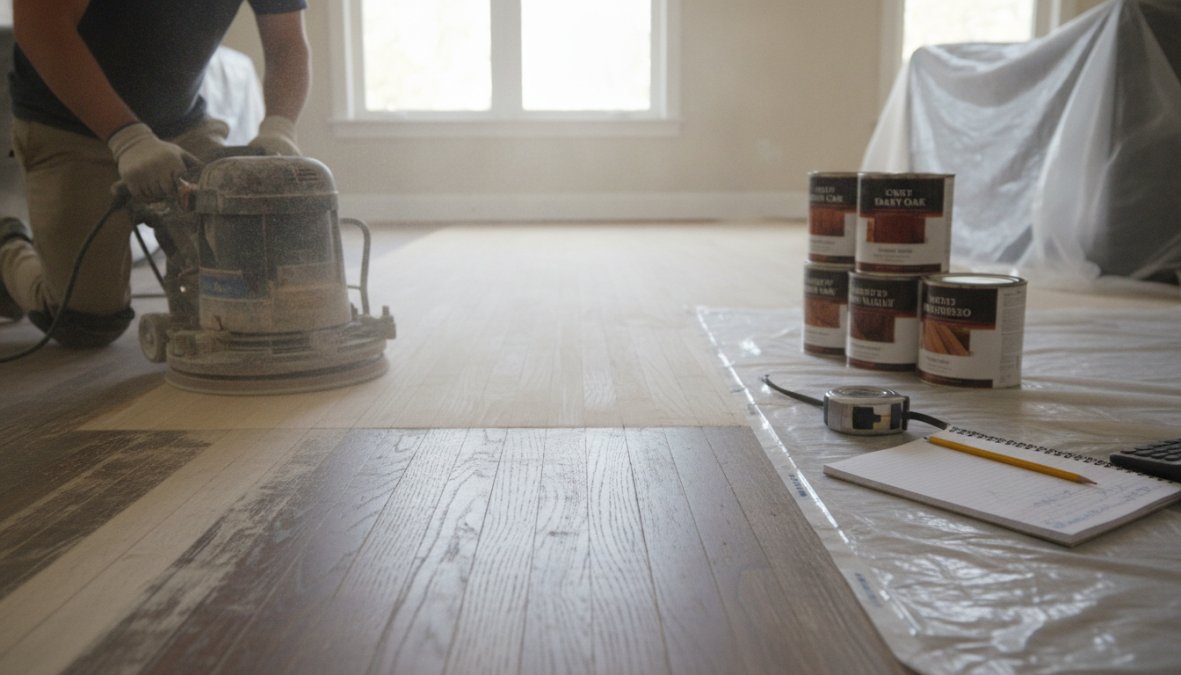
Refinishing removes the damaged surface layer through sanding, exposes fresh wood grain, and applies a new protective coat of polyurethane or similar finish. The process addresses surface scratches, discoloration from sun exposure or water stains, worn finish that has lost sheen, minor dents and gouges, and uneven coloring.
What refinishing cannot fix: deep structural damage, warped or cupped boards caused by moisture intrusion, or boards sanded to their wear layer limit. Those situations require replacement.
Signs Your Hardwood Floors Need Refinishing
Your hardwood floors need refinishing when the protective finish has worn through, exposing bare wood to moisture, foot traffic, and debris. Catching this at the right stage prevents more expensive damage and preserves more of the wear layer for future refinishing cycles.
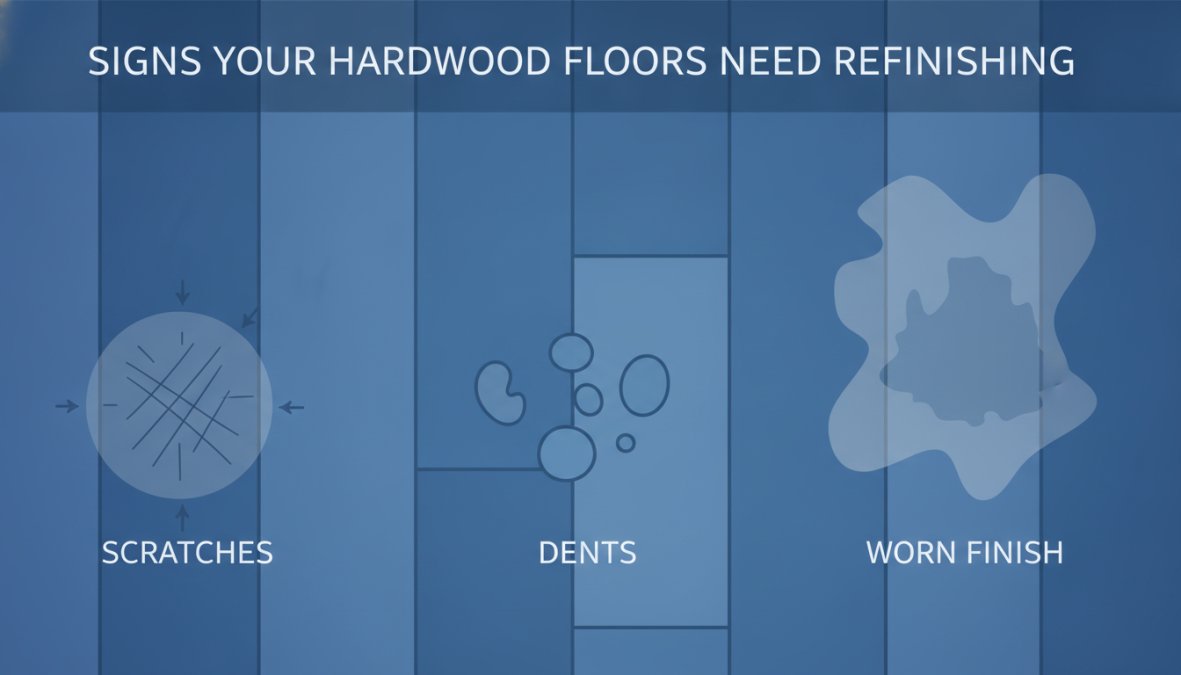
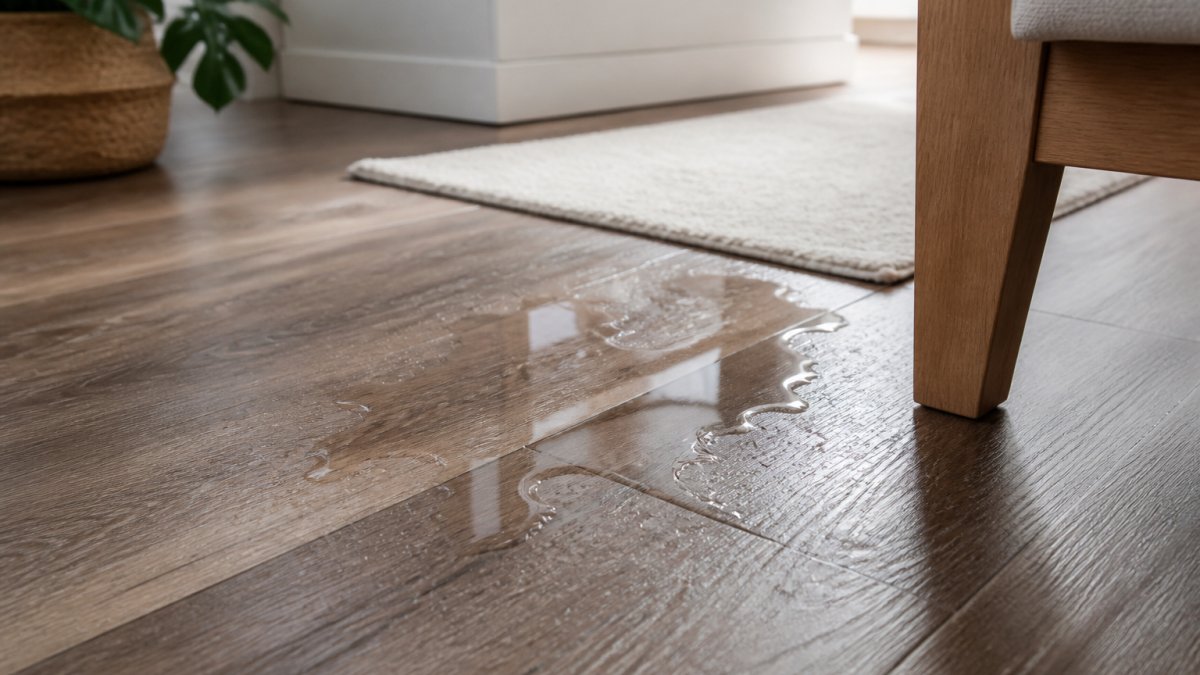
Clear signs include finish peeling or flaking in high-traffic zones, grey or black discoloration where moisture has penetrated the wood, and floors that feel rough or splinter-prone underfoot. A simple water test works: drop water beads on the surface. If water soaks in rather than beading up, the finish is compromised.
Visual Damage vs. Structural Issues
Visual damage lives in the finish layer: scratches, scuffs, dullness, minor staining. Structural issues go deeper into the wood itself.
Signs of structural problems that refinishing alone won't solve:
- Boards that flex or bounce underfoot (subfloor issue)
- Cupping or crowning across board width (moisture damage)
- Gaps wider than 1/8 inch between boards that weren't there before
- Soft, spongy spots indicating rot
If you're seeing only visual damage, refinishing is your solution. If structural issues are present, consult a flooring professional before committing to any surface treatment.
Hardwood Floor Refinishing Cost Per Square Foot: Budget Breakdown
Hardwood floor refinishing cost per square foot varies based on region, scope of work, and whether you hire a professional or take the DIY route. Professional refinishing typically costs a fraction of new floor installation, making it one of the highest-ROI home improvement projects available.
According to National Wood Flooring Association guidance on floor care costs, refinishing costs are significantly lower than new floor installation.
Factors That Drive Price Variation
Several variables affect refinishing cost:
- Floor condition: Heavily damaged floors require more sanding passes and labor
- Square footage: Larger areas reduce per-square-foot cost
- Number of coats: Standard projects use 2-3 coats of polyurethane
- Staining: Adding a new stain color increases labor and material cost
- Dust containment systems: Professional-grade containment reduces cleanup
- Wood species: Harder species require more aggressive sanding and take longer
- Geographic market: Coastal markets like Suffolk County tend to run higher than national averages
Professional vs. DIY Cost Comparison
| Factor | DIY Refinishing | Professional Refinishing |
|---|---|---|
| Equipment cost | Drum sander rental + edger | Included in service |
| Finish materials | Purchased separately | Included in service |
| Dust containment | Limited | Professional-grade systems |
| Risk of damage | High for inexperienced users | Low |
| Result quality | Variable | Consistent |
| Time required | 3-5 days for average room | 2-3 days including curing |
| Best for | Small areas, experienced DIYers | Whole-home projects, resale prep |
DIY vs Professional Hardwood Floor Refinishing: Which Wins?
For whole-home projects or floors destined for resale, professional refinishing wins decisively. A drum sander is unforgiving, pausing too long in one spot, using the wrong grit, or sanding against the grain can leave permanent gouges requiring additional work.
DIY refinishing makes sense only in narrow circumstances: small rooms, homeowners with prior experience, or projects where budget constraints are severe and some imperfection is acceptable.
The Hidden Costs of DIY Refinishing
Advertised savings often evaporate when accounting for drum sander and edge sander rental, multiple sandpaper grits, buffing pads, polyurethane finish, stain, respirators, and potential repair costs if sanding goes wrong.
Why Professional Results Matter for Resale Value
Buyers notice the difference between professionally finished and DIY floors. Swirl marks, uneven staining, and visible lap lines in polyurethane are telltale signs of amateur work. For homeowners preparing to sell, finish quality directly influences buyer perception and offer prices.
How Long Does Hardwood Floor Refinishing Last?
A professionally refinished hardwood floor lasts between 7 and 10 years under normal residential conditions. With proper maintenance, some floors extend well beyond that range. Finish type, foot traffic level, and maintenance consistency all affect longevity significantly.
Finish Type and Durability: Water-Based vs Oil-Based
The choice between water-based and oil-based polyurethane is one of the most consequential refinishing decisions.
Water-based finish:
- Dries faster (2-4 hours between coats)
- Lower VOC content, better for indoor air quality
- Clearer appearance that preserves natural wood tone
- Slightly less durable than oil-based under heavy traffic
- Better choice for light-colored woods like maple or ash
Oil-based finish:
- Longer drying time (8-12 hours between coats, 24-48 hours before light foot traffic)
- Higher VOC emissions during application and curing
- Adds warm amber tone that deepens over time
- Generally more durable and harder surface
- Better choice for darker woods or traditional aesthetics
Neither finish is universally superior. The right choice depends on your wood species, tolerance for VOC exposure, and desired aesthetic.
VOCs, Health Impact, and Long-Term Protection
VOCs (volatile organic compounds) are released during application and curing of oil-based finishes. According to EPA guidance on indoor air quality and VOC exposure, indoor VOC levels can be two to five times higher than outdoors during floor finishing. Proper ventilation, staying out during curing, and choosing low-VOC water-based finishes are the most effective mitigation strategies.
Full hardness and chemical curing for oil-based finishes takes 30 days. Placing rugs or heavy furniture before full curing can trap moisture and damage the finish.
Refinishing vs Replacement: When Refinishing Makes Sense
Refinishing makes sense when the hardwood floor's structural integrity is sound, the wear layer has sufficient thickness for sanding, and damage is primarily cosmetic. Replacement becomes necessary when boards are rotted, severely warped, or sanded to the point where no material remains above the tongue-and-groove joint.
The cost difference between refinishing and replacement is significant enough that refinishing should always be evaluated first. Full hardwood floor installation involves material costs, subfloor preparation, acclimation time, and installation labor that far exceed refinishing costs.
Engineered vs Solid Hardwood: Refinishing Limitations
Solid hardwood floors can typically be refinished 5 to 10 times over their lifespan. Engineered hardwood is different.
Engineered hardwood consists of a thin veneer of real wood over a plywood core. Thin-veneer engineered products (under 2mm) often cannot be sanded without cutting through to the core. Thicker-veneer engineered floors (3mm or more) may tolerate one or two light refinishing passes.
According to Consumer guidance on engineered vs solid hardwood from the National Wood Flooring Association, homeowners should verify their floor's construction and veneer thickness before scheduling refinishing.
Wood species also affects the process. Softer species like pine dent and scratch more easily and require gentler sanding. Harder exotic species like Brazilian walnut are dense enough that standard sanding equipment struggles, requiring slower passes and more frequent paper changes.
Impact on Home Value and Resale Appeal
Refinished hardwood floors have measurable positive impact on home value and buyer perception. Real estate professionals consistently cite hardwood flooring condition as one of the top factors influencing buyer offers and time on market.
Buyers factor the cost of future renovations into their offers. Worn or damaged floors signal deferred maintenance, and buyers discount accordingly. Refinishing before listing removes that objection and positions the home as move-in ready.
The return on investment for pre-sale refinishing tends to be strong because refinishing cost is modest relative to the price adjustments buyers request for damaged floors.
Post-Refinishing Care: Protecting Your Investment
Post-refinishing care is the most overlooked part of the refinishing equation. A beautifully refinished floor can be damaged within weeks if the curing process is disrupted or protective measures aren't in place.
Critical rules for the first 30 days after refinishing:
- No area rugs for at least 2 weeks. Rugs trap moisture and can bond to the finish before it fully cures.
- Felt pads on all furniture legs. Hard furniture feet scratch even cured polyurethane.
- No wet mopping. Use a barely damp microfiber mop only, and dry immediately.
- Avoid harsh cleaning products. Use pH-neutral hardwood floor cleaners only.
- Control humidity. Keep indoor humidity between 35% and 55% year-round to prevent gapping, cupping, and finish stress.
For long-term maintenance, a screen-and-recoat (buffing and recoating) every 3-5 years extends finish life without requiring full sanding. This process scuffs the existing finish lightly and applies a fresh polyurethane coat at a fraction of full refinishing cost.
According to Hardwood floor maintenance best practices from the Hardwood Manufacturers Association, regular maintenance and recoating cycles can double the interval between full refinishing projects.
| Post-Refinishing Step | Timing | Frequency |
|---|---|---|
| Avoid area rugs | First 2 weeks | One-time after each refinish |
| No heavy furniture | First 30 days | One-time after each refinish |
| Felt pads on furniture | Immediately | Ongoing, replace as needed |
| pH-neutral cleaning only | Day 1 onward | Weekly |
| Screen and recoat | After 3-5 years | Every 3-5 years |
| Full refinish | After 7-10 years | As needed based on wear |
Deciding whether to refinish, recoat, or replace your hardwood floors is more nuanced than most online guides suggest. The condition of your wear layer, your wood species, your finish preference, and your timeline all factor into the right answer. Hamptons carpet one floor and Home serves homeowners throughout Suffolk County, NY, with expert floor assessments and professional refinishing guidance tailored to your specific floors and goals. Visit us to get a professional evaluation of your hardwood floor condition and a clear recommendation on the best path forward.
Frequently Asked Questions
How much value does refinishing hardwood floors add to a home?
Refinishing hardwood floors typically returns 60-80% of the investment at resale, depending on the local market and overall home condition. In Suffolk County, where hardwood flooring is a premium feature, well-executed refinishing enhances curb appeal and can justify a higher asking price. However, the return depends on quality of work, professional refinishing adds more value than visibly DIY results.
What's the average hardwood floor refinishing cost per square foot?
Professional refinishing typically costs $3-8 per square foot, depending on wood condition, finish type (water-based finishes are often pricier than oil-based), and local labor rates. DIY materials alone run $1-3 per square foot, but equipment rental, sanding supplies, and stain add up quickly. For a 1,000 sq ft floor, expect $3,000-8,000 professionally or $2,000-4,000 for DIY if done correctly.
How many times can you refinish hardwood floors?
Solid hardwood can typically be refinished 6-10 times over its lifetime, depending on the wear layer thickness. Each sanding removes a thin layer of wood. Engineered hardwood has a veneer and can usually be refinished only 1-2 times. Once the wear layer is too thin, replacement becomes necessary. Professional assessment of your floor's remaining material is essential before committing to refinishing.
Is it cheaper to refinish or replace hardwood floors?
Refinishing is almost always cheaper, typically 50-70% less than replacement. Replacement costs $8-15+ per square foot installed, while refinishing runs $3-8. However, if floors have structural damage, moisture issues, or deep gouges affecting the wear layer, replacement may be the only option. Refinishing works best for cosmetic damage like scratches, dents, and discoloration.
Can you refinish hardwood floors yourself, and should you?
DIY refinishing is possible but challenging. You'll need to rent sanding equipment, manage dust containment (critical for health), apply stain evenly, and coat with polyurethane, all requiring precision. Common mistakes include uneven sanding, dust in the finish, and improper curing time. Professional contractors have experience with different wood species, finish types, and VOC management. For most homeowners, professional refinishing delivers better results and avoids costly errors.
This article was written using GrandRanker