 Comparison
Luxury Vinyl Plank vs Hardwood: A 2026 Comparison
Table of Contents
- Luxury Vinyl Plank vs Hardwood: Key Differences at a Glance
- Pros and Cons of Luxury Vinyl Plank Flooring
- Pros and Cons of Hardwood Flooring
- Cost of Luxury Vinyl Plank vs Hardwood: Material and Installation
- Durability of LVP vs Hardwood: Wear Resistance and Longevity
- Waterproof Flooring Options: Moisture and Water Resistance
- Resale Value of LVP vs Hardwood: Long-Term Home Equity Impact
- Installation Methods: Click-Lock, Glue-Down, and Floating Floors
Last Updated: July 17, 2026
When choosing between flooring materials, the decision between luxury vinyl plank vs hardwood shapes your home's appearance, long-term value, maintenance burden, and indoor air quality. At Hamptons carpet one floor and Home, we've guided thousands of Suffolk County homeowners through this choice. The answer depends less on which material is "better" and more on matching it to your lifestyle and budget. Below, we'll evaluate both options across durability, cost, moisture resistance, and resale impact.
Luxury Vinyl Plank vs Hardwood: Key Differences at a Glance
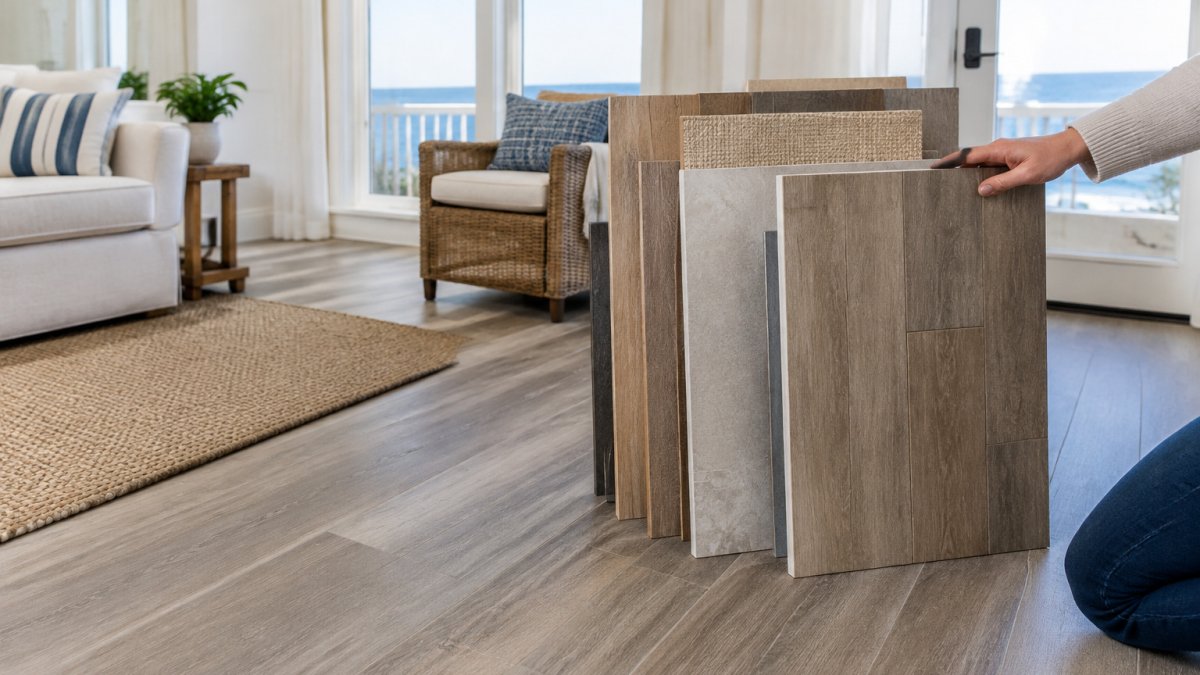
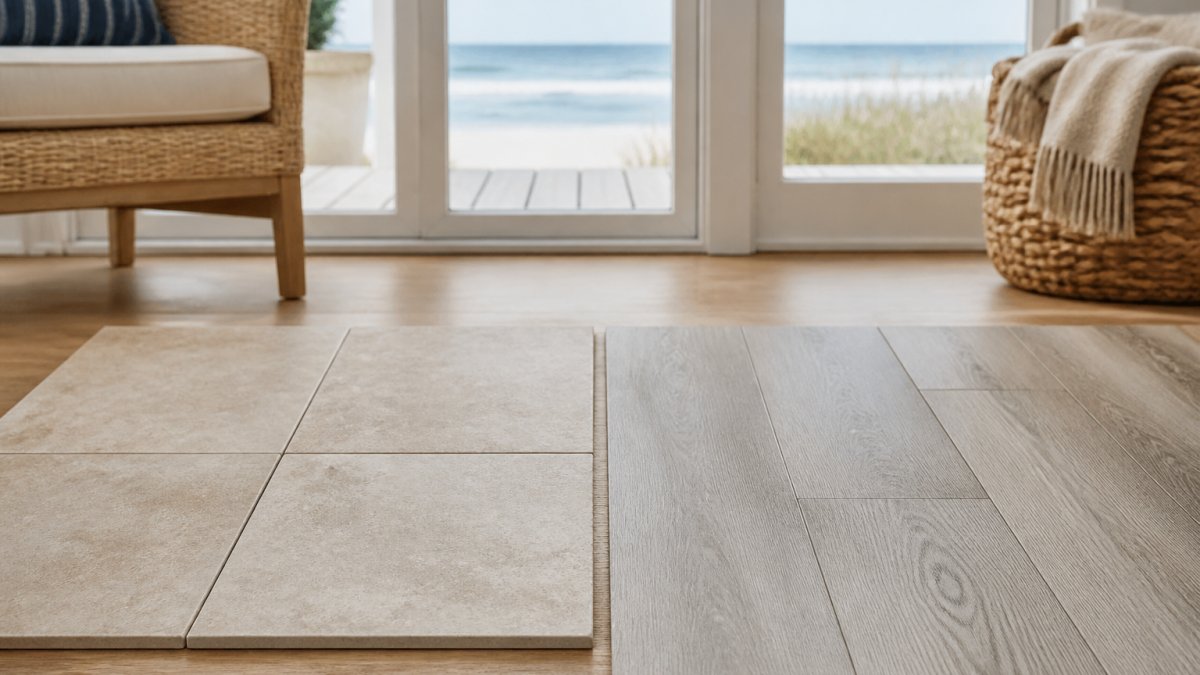
Hardwood is solid or engineered real wood that develops character over time and can be refinished repeatedly. Luxury vinyl plank is a synthetic composite, typically a photographic wood-grain layer bonded to a rigid or flexible core, designed to mimic wood's appearance while delivering superior water resistance and durability in high-traffic or moisture-prone spaces.
Hardwood excels in living rooms and bedrooms where moisture isn't a factor and you want authentic wood that appreciates with age. LVP dominates kitchens, bathrooms, basements, and homes with pets or young children where waterproof performance and scratch resistance matter more than the "real wood" feel.
| Feature | Luxury Vinyl Plank | Hardwood |
|---|---|---|
| Water Resistance | 100% waterproof | Susceptible to warping |
| Scratch Resistance | High (wear layer protection) | Moderate (can be refinished) |
| Installation Cost | $3-$7 per sq ft installed | $7-$20 per sq ft installed |
| Refinishing | Cannot be refinished | Can be sanded/refinished 3-5 times |
| Resale Value Impact | Modest premium | Strong premium (8-15% value lift) |
| Lifespan | 15-20 years | 25-30+ years (with refinishing) |
| Maintenance | Minimal (sweep and damp mop) | Regular care (avoid moisture, periodic sealing) |
| Installation Time | 1-3 days | 3-7 days (solid) or 1-2 days (engineered) |
Pros and Cons of Luxury Vinyl Plank Flooring
LVP Advantages
Luxury vinyl plank delivers exceptional value for busy households. The waterproof core means you can install it anywhere: kitchens, bathrooms, basements, laundry rooms, even mudrooms. Water spills don't penetrate the planks, avoiding the cupping, warping, and mold growth that plague hardwood in moisture-heavy areas.
The wear layer on quality LVP products like Mannington Adura Max and Shaw Floortè Pro Series resists scratches, scuffs, and stains remarkably well. Homes with pets or young children see far fewer visible marks after five years compared to hardwood. Installation is fast, most rooms complete in one to three days, and click-lock systems require no glue, making DIY installation feasible.
Maintenance is minimal. A weekly sweep and occasional damp mop keep LVP looking new. Modern LVP replicates wood grain, texture, and hand-scraped finishes so convincingly that most people can't tell the difference at arm's length.
LVP Disadvantages
Luxury vinyl plank cannot be refinished. Once the wear layer shows significant damage, deep gouges, or staining that won't clean, your only option is full replacement. Hardwood, by contrast, can be sanded and refinished three to five times, effectively extending its lifespan indefinitely.
Resale value is another constraint. Hardwood typically adds 8-15% to home value; LVP adds modest appeal but doesn't command the same premium. If you're selling within 10 years, hardwood in main living areas often outperforms LVP financially.
Some LVP products emit volatile organic compounds (VOCs) during and shortly after installation. While regulations have tightened, budget-tier LVP can off-gas odors and contribute to indoor air quality concerns. Premium brands like Mannington and Shaw invest in lower-VOC formulations, but cost reflects this.
Finally, certain subfloor conditions, extreme moisture, radiant heating systems, or uneven surfaces can cause issues with floating LVP installations. Proper subfloor preparation is non-negotiable.
Pros and Cons of Hardwood Flooring
Hardwood Advantages
Hardwood flooring is the gold standard for home value and longevity. A well-maintained solid hardwood floor lasts 25-30+ years, and because it can be sanded and refinished multiple times, it essentially has unlimited lifespan.
The aesthetic is unmatched. Real wood develops patina, grain character, and warmth that synthetic materials cannot replicate. Hardwood appeals to buyers emotionally and signals quality, permanence, and craftsmanship.
Resale impact is substantial. Homes with hardwood in main living areas command 8-15% higher sale prices in many markets, and appraisers consistently value hardwood as a premium feature. If you're planning to stay 10+ years or eventually sell, hardwood in high-visibility rooms almost always pays for itself.
Refinishing capability is the hidden superpower. Scratches, dents, and worn finishes can be sanded away and the floor re-stained or re-sealed without replacement.
Hardwood Disadvantages
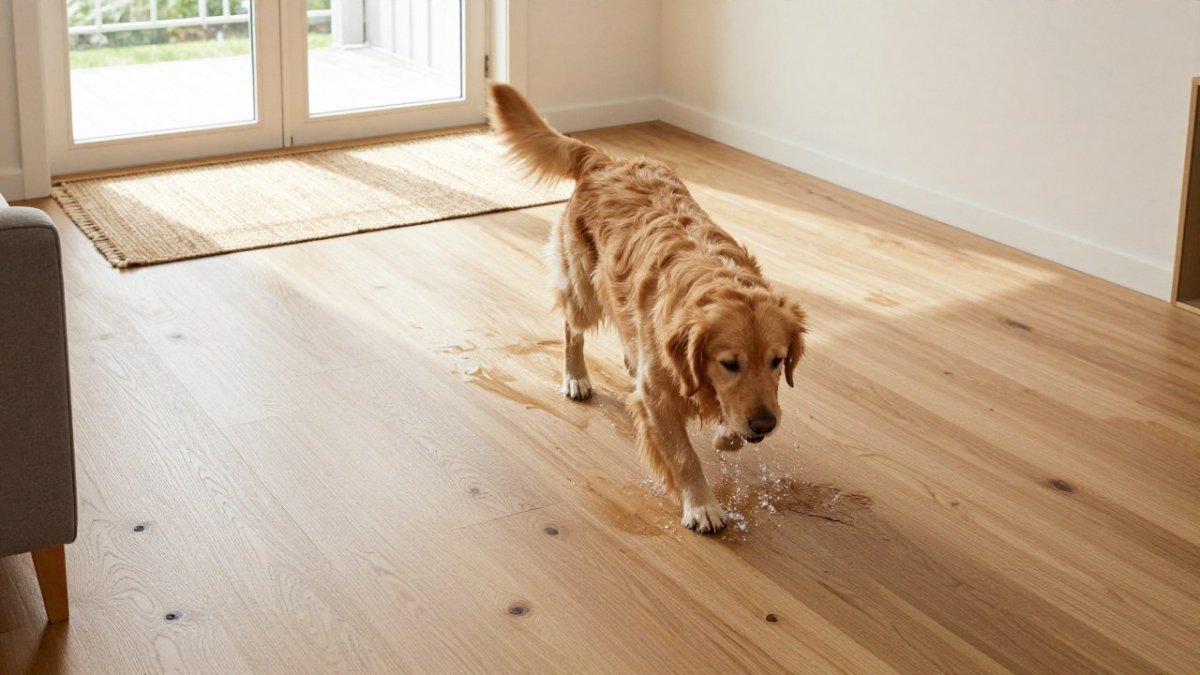
Hardwood is moisture's enemy. Solid hardwood expands and contracts with humidity changes, leading to cupping, crowning, or gapping. Kitchens, bathrooms, and basements are off-limits for solid hardwood unless you invest in engineered hardwood, which costs more than LVP and still carries moisture risk.
Installation is complex and expensive. Solid hardwood typically requires professional installation ($7-$20 per square foot installed), and the process takes 3-7 days. If your subfloor is uneven, damp, or requires extensive leveling, costs balloon quickly.
Maintenance is demanding. Hardwood needs regular cleaning with wood-specific products, periodic resealing or refinishing, and vigilant protection from spills. A water spill left unattended for hours can cause permanent staining or swelling.
Hardwood scratches and dents more visibly than LVP, especially softer species like oak. While refinishing solves this, frequent refinishing becomes expensive and disruptive.
The upfront cost is higher. Quality solid hardwood materials run $5-$12 per square foot, plus $7-$20 per square foot for installation. A 1,000-square-foot room can easily exceed $15,000 installed, compared to $6,000-$10,000 for equivalent LVP.
Cost of Luxury Vinyl Plank vs Hardwood: Material and Installation
LVP material costs typically range from $2-$7 per square foot. Installation adds $1-$3 per square foot for click-lock systems, bringing total installed cost to $3-$7 per square foot. A 1,000-square-foot kitchen runs $3,000-$7,000 installed.
Hardwood material costs span a wider range: solid hardwood runs $5-$12 per square foot; engineered hardwood runs $3-$10 per square foot. Installation adds $7-$20 per square foot for solid hardwood or $6-$15 per square foot for engineered hardwood. A 1,000-square-foot room in solid hardwood costs $12,000-$32,000 installed.
The critical difference emerges over 20 years. LVP has a hard replacement cycle: at 15-20 years, the wear layer degrades and you replace the entire floor. Hardwood requires periodic refinishing (every 7-10 years at $3-$5 per square foot) but no replacement. Over 30 years, hardwood's total cost of ownership is often lower despite higher upfront expense.
However, this calculation flips if you're selling or moving within 5-10 years. LVP's lower upfront cost and faster installation make it financially sensible for short-term ownership, while hardwood's resale premium justifies its expense only if you hold the property long enough to recoup the premium.
Durability of LVP vs Hardwood: Wear Resistance and Longevity
LVP durability is defined by the wear layer thickness, measured in mils. Premium LVP products feature 20-30 mil wear layers with protective coatings like Mannington's ScratchResist or Shaw's ArmourBead. These resist scratches, stains, and scuffs far better than hardwood. In high-traffic homes with pets or children, LVP shows minimal visible wear after 10 years; hardwood would show numerous scratches requiring refinishing.
The catch: once the wear layer is compromised, the plank is damaged permanently. LVP cannot be sanded or refinished.
Hardwood durability depends on wood species. Harder species like hickory and maple resist dents better than softer oak. However, all hardwood scratches more easily than LVP. The advantage is refinishing: those scratches can be sanded away, restoring the floor's appearance. A well-maintained hardwood floor with periodic refinishing lasts 30+ years; LVP typically lasts 15-20 years.
Choose LVP for maximum scratch and stain resistance in high-abuse environments. Choose hardwood for spaces where durability means longevity and the ability to refresh the floor's appearance over decades.
Waterproof Flooring Options: Moisture and Water Resistance
LVP is 100% waterproof. The core material does not absorb water. Spills, standing water, and high humidity do not penetrate the planks or cause swelling, warping, or mold growth. This makes LVP suitable for kitchens, bathrooms, laundry rooms, basements, and any moisture-prone space.
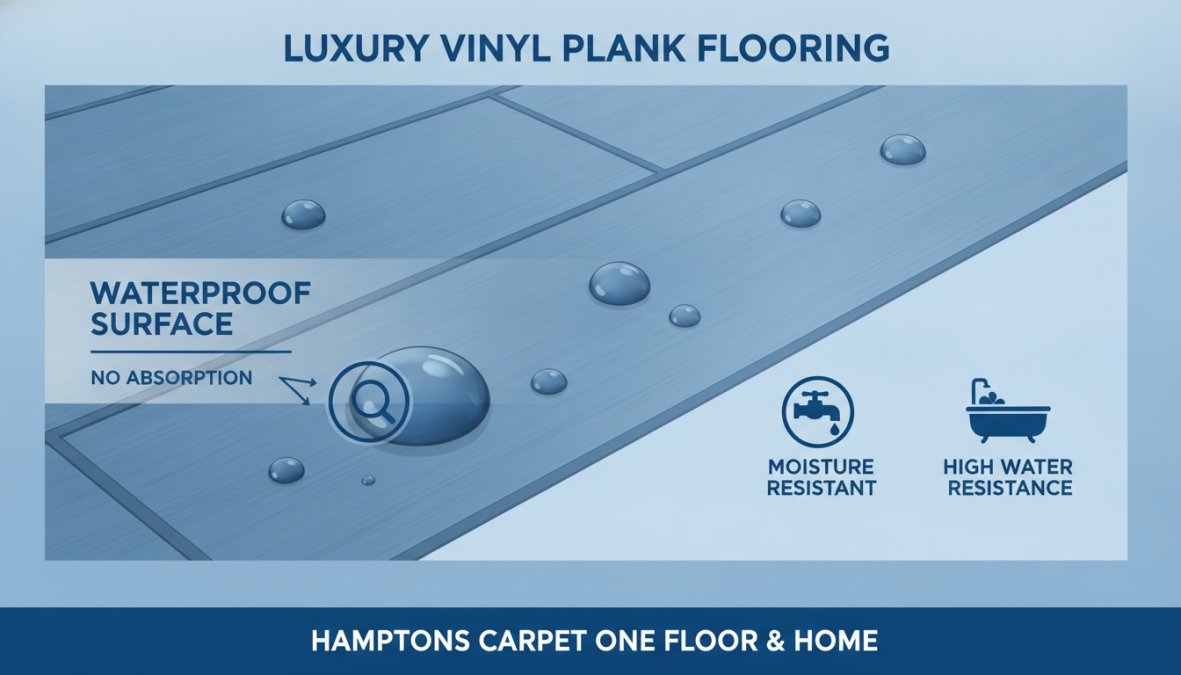
Premium LVP products like Mannington Adura Max feature HydroLoc core technology specifically engineered to prevent fluid seepage.
Hardwood is not waterproof. Solid hardwood absorbs moisture, causing expansion and contraction. High humidity or standing water leads to cupping, crowning, or gapping. Bathrooms and kitchens with hardwood require immediate cleanup of spills and careful humidity control. Many hardwood manufacturers void warranties if installed in bathrooms or basements.
Engineered hardwood offers moderate improvement. The plywood base resists moisture better than solid wood, making it suitable for kitchens and some basements. However, it is not waterproof; moisture can still damage the real wood veneer and cause edge swelling.
For moisture-prone spaces, LVP is the only choice if you want genuine water resistance.
Resale Value of LVP vs Hardwood: Long-Term Home Equity Impact
Homes with hardwood flooring in main living areas command an 8-15% resale premium in most markets. Appraisers view hardwood as a sign of quality and permanence. Buyers emotionally prefer hardwood, even if they understand LVP's practical advantages. This premium justifies hardwood's higher upfront cost if you're selling within 10-15 years.
LVP adds minimal resale premium, typically 2-5%. Buyers appreciate its practicality, especially in kitchens and bathrooms, but it doesn't signal the same perceived value as hardwood.
The resale calculus is:
- Hardwood in living areas and bedrooms: strong resale premium (8-15%)
- LVP in kitchens and bathrooms: appropriate choice, modest value lift
- Hardwood in kitchens/bathrooms: buyer concern, potential liability
- LVP in living areas: practical but doesn't command premium
If you're planning to sell within 5 years, prioritize hardwood in visible spaces and LVP in wet areas. If you're staying 15+ years, hardwood's longevity and refinishing capability make it the stronger financial choice overall.
Installation Methods: Click-Lock, Glue-Down, and Floating Floors
Luxury Vinyl Plank Installation:
Most modern LVP uses click-lock systems. Planks interlock without glue, allowing the floor to float above the subfloor on a thin underlayment. Click-lock installation is fast, one person can install 200-300 square feet per day, and DIY-friendly. Cost is minimal because no adhesive or fastening is required.
The trade-off: floating floors can feel slightly soft or bouncy in large open rooms. If planks separate slightly or the underlayment shifts, the floor can develop minor movement or noise.
Glue-down LVP installation uses adhesive to bond planks directly to the subfloor, creating a more solid feel and eliminating movement. However, installation is slower, more expensive, and requires professional application.
Hardwood Installation:
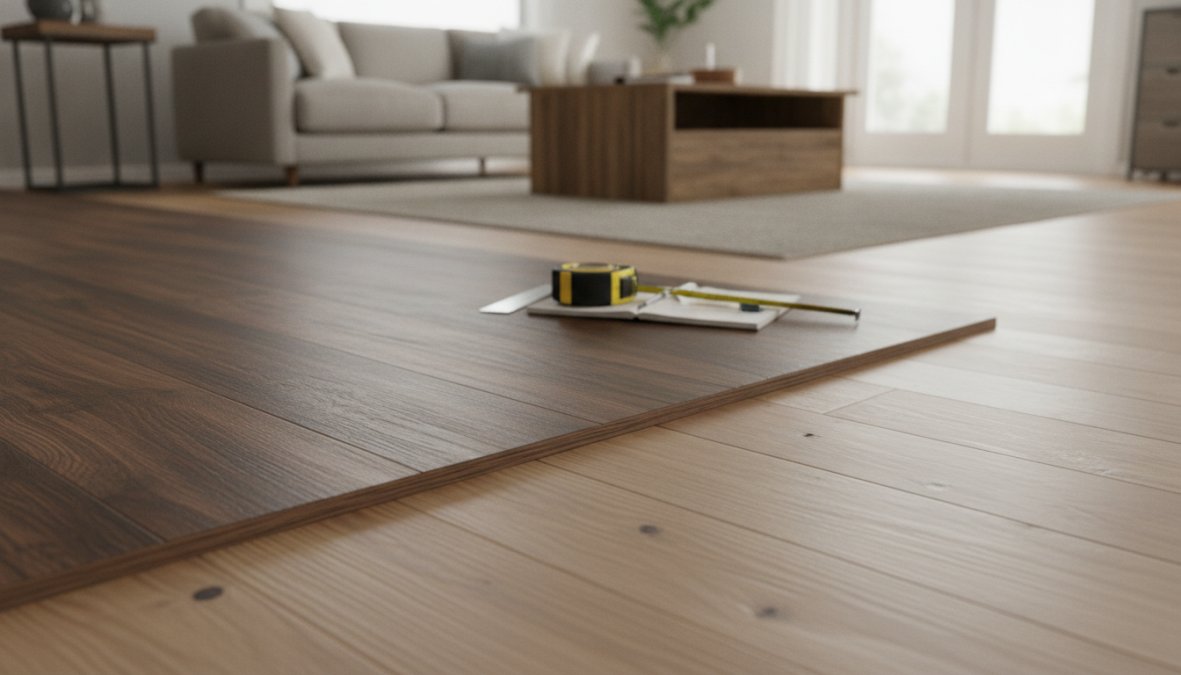
Solid hardwood is almost always nailed or stapled to the subfloor, creating a permanently fixed installation. This requires professional expertise and specialized equipment. The subfloor must be solid, level, and dry; any moisture or unevenness must be corrected before installation. Installation takes 3-7 days depending on subfloor preparation.
Engineered hardwood can be click-lock (floating), glue-down, or nailed. Click-lock engineered hardwood offers faster installation and works over radiant heating systems.
LVP click-lock is fast, affordable, and reversible. Hardwood installation is permanent, requires professional expertise, and subfloor preparation is critical. If your subfloor needs extensive leveling or moisture remediation, hardwood installation costs spike dramatically.
Choosing between luxury vinyl plank vs hardwood depends on your timeline, lifestyle, and which rooms you're flooring. For kitchens, bathrooms, and homes with pets and young children, LVP's waterproof durability and low maintenance are hard to beat. For living rooms, bedrooms, and long-term ownership, hardwood's resale value and refinishing capability justify the higher upfront cost. At Hamptons carpet one floor and Home, we help homeowners in Suffolk County match materials to actual use cases. We carry premium LVP options like Mannington Adura Max for moisture-prone spaces and can connect you with trusted hardwood specialists for main living areas. Visit Hamptons carpet one floor and Home to discuss your specific rooms, budget, and timeline, we'll recommend the material that delivers the best value for your home.
Frequently Asked Questions
Is luxury vinyl plank cheaper than hardwood flooring?
LVP generally has lower upfront material costs than solid hardwood, though pricing depends on quality, thickness, and brand. Installation costs vary by location and complexity. For current pricing on both materials and installation, contact Hamptons Carpet One Floor and Home directly for a quote tailored to your space and preferences.
Which is more durable: luxury vinyl plank or hardwood?
Durability of LVP vs hardwood differs by use case. LVP with a thick wear layer (typically 20+ mil) resists scratches and water damage exceptionally well, making it ideal for high-traffic areas and homes with pets. Solid hardwood is extremely durable and can be refinished multiple times, but it's more susceptible to moisture damage and scratching. Engineered hardwood offers a middle ground with better moisture tolerance than solid hardwood.
Will luxury vinyl plank increase my home's resale value like hardwood does?
Resale value of LVP vs hardwood favors hardwood significantly. Real hardwood, especially solid hardwood made from quality wood species, adds measurable home equity and appeals to buyers seeking natural materials. LVP, while practical and attractive, does not command the same resale premium. However, LVP's low maintenance and durability appeal to buyers in moisture-prone regions or active households.
Can I install luxury vinyl plank over existing hardwood floors?
Yes, many LVP products like Mannington Adura Max and Shaw Floortè Pro Series can be installed over existing hard surfaces, including hardwood, if the subfloor is clean, dry, and level. However, proper subfloor preparation is critical, inspect for moisture, ensure stability, and address any gaps or unevenness. Installation method (click-lock floating vs. glue-down) affects compatibility with existing floors. Consult with Hamptons Carpet One Floor and Home for specific installation guidance for your space.
This article was written using GrandRanker