 Comparison
Luxury Vinyl Tile vs Porcelain Tile for Mudrooms
Table of Contents
- Luxury Vinyl Tile vs Porcelain Tile for Mudrooms: Side-by-Side Comparison
- Pros and Cons of Luxury Vinyl Tile for Mudroom Flooring
- Pros and Cons of Porcelain Tile for Mudroom Flooring
- Is Luxury Vinyl Tile Waterproof for Mudroom Use
- Durability of Porcelain Tile vs LVT: Which Lasts Longer
- Best Flooring for Mudrooms: Installation and Maintenance
- Porcelain Tile Installation Cost vs Luxury Vinyl Tile
- Environmental Impact and Pet-Specific Considerations
Luxury Vinyl Tile vs Porcelain Tile for Mudrooms
Last Updated: July 9, 2026
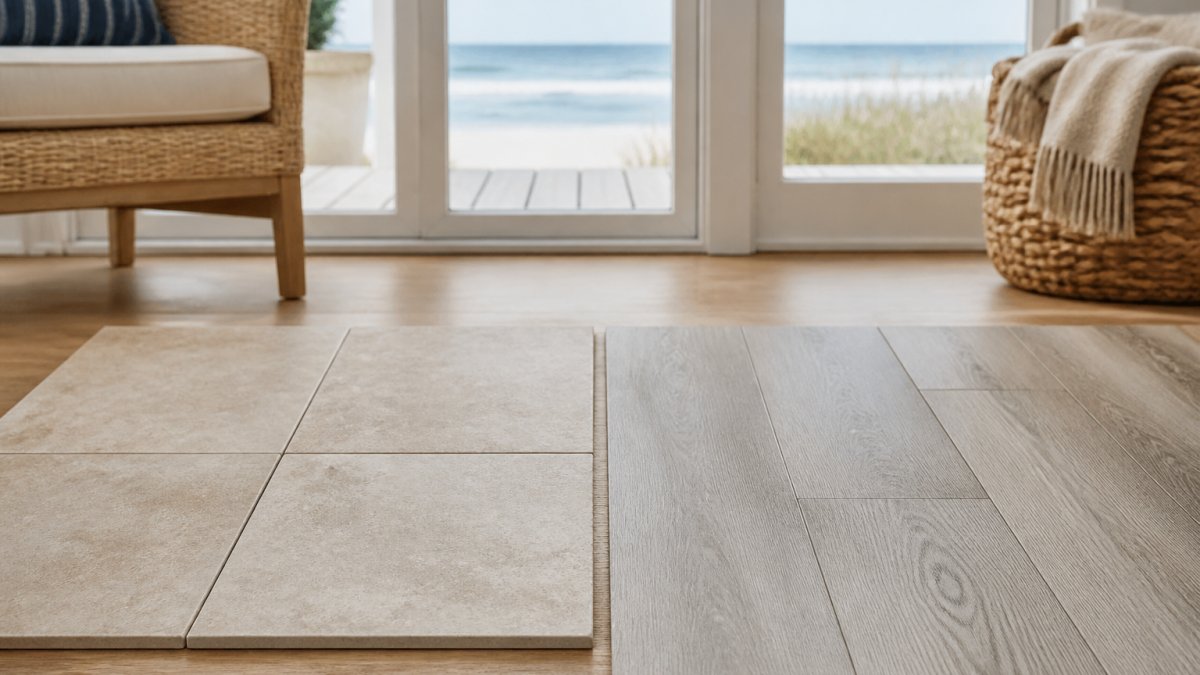
When choosing flooring for your mudroom, the decision between luxury vinyl tile and porcelain tile comes down to your priorities: comfort and ease of installation, or maximum durability and water resistance. Both materials excel in high-traffic entryways but handle moisture, wear, and maintenance differently.
Comparison Table: Key Specifications
| Feature | Luxury Vinyl Tile (LVT) | Porcelain Tile |
|---|---|---|
| Water Resistance | 100% waterproof core | 0.5% absorption rate |
| Durability (Years) | 15-25 years | 50+ years |
| Underfoot Feel | Warm, softer | Cold, hard surface |
| Installation Difficulty | DIY-friendly, click-lock | Professional recommended |
| Scratch Resistance | Good with wear layer | Excellent, nearly impervious |
| Maintenance | Sweep and damp mop | Grout maintenance required |
| Cost (Material) | $3-$9 per sq. ft. | $3-$10 per sq. ft. |
| Best For | Comfort, quick install | Longevity, heavy abuse |
Pros and Cons of Luxury Vinyl Tile for Mudroom Flooring
Luxury vinyl tile has become the go-to choice for homeowners seeking a balance between functionality and comfort. Its rigid core, protective wear layer, and attached underlayment make it inherently suited to moisture-heavy spaces.
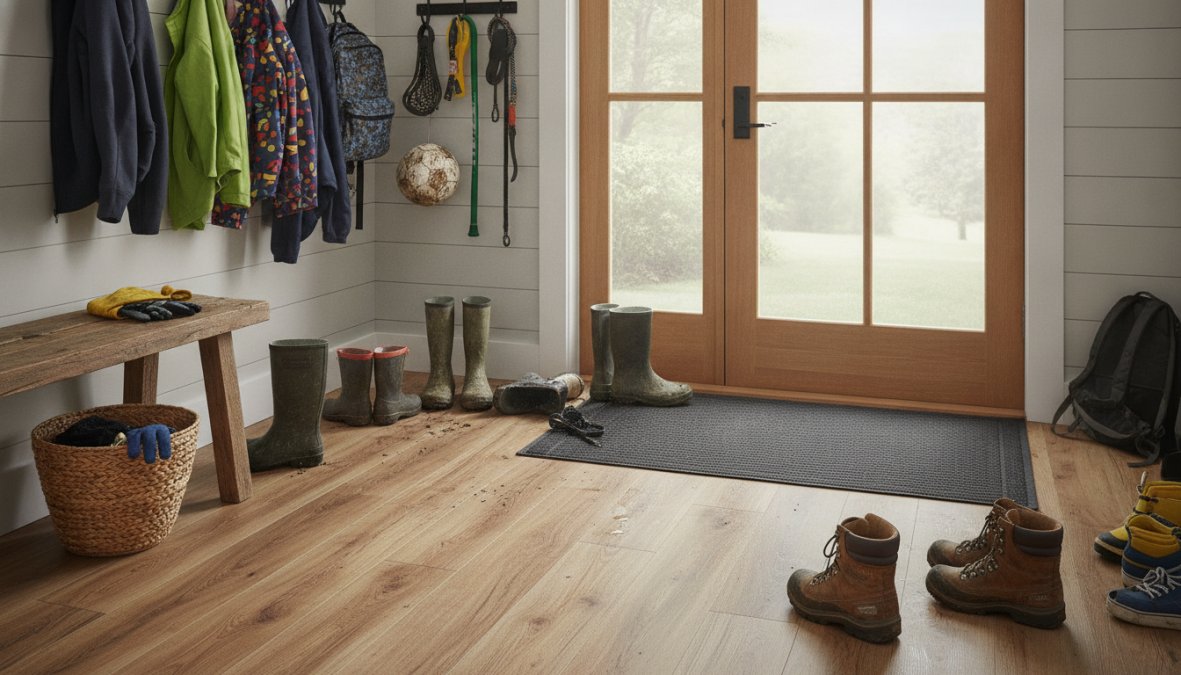
Why LVT Works in High-Traffic Mudrooms
The biggest advantage is its 100% waterproof core. Unlike ceramic tile, which relies on grout and sealant, LVT stops water at the surface. Spilled water, wet boots, and humidity won't cause swelling, warping, or mold growth beneath the surface.
Installation is another major win. Most luxury vinyl planks use click-lock systems requiring no adhesive or nails. DIY homeowners can complete a mudroom installation in a weekend. The material is also softer underfoot than porcelain, which matters when standing on hard floors for extended periods. Maintenance is straightforward: sweep and damp mop with mild soap. You don't need to worry about grout lines trapping moisture or requiring specialized sealants.
Limitations to Consider
The wear layer (typically 12-20 mils thick) can be compromised by sharp debris like gravel tracked in from outside. Once damaged, the vinyl becomes susceptible to staining and water infiltration. Luxury vinyl tile also has a finite lifespan of 15-25 years; in heavily trafficked mudrooms, you may see visible wear within 10-15 years.
Thermal expansion is another consideration. Luxury vinyl expands and contracts with temperature changes more than porcelain. In mudrooms with direct sunlight or significant seasonal temperature swings, this movement can create gaps at transitions or cause slight buckling if the subfloor wasn't properly prepared.
Pros and Cons of Porcelain Tile for Mudroom Flooring
Porcelain tile represents the "buy it once" flooring option. Its density, hardness, and low water absorption make it virtually indestructible under normal household use.
Why Porcelain Tile Excels in Demanding Spaces
Porcelain's water absorption rate of 0.5% or less means moisture cannot penetrate the material. It won't swell, warp, or develop mold, even in poorly ventilated spaces. Durability is unmatched: a properly installed porcelain floor lasts 50+ years with minimal maintenance. Scratches, dents, and impact damage that would compromise luxury vinyl barely register on porcelain.
From a design perspective, porcelain offers superior aesthetic versatility. Modern tiles replicate stone, concrete, and wood with photorealistic detail. Large-format tiles reduce grout lines, creating a cleaner look. For homeowners planning long-term residence or concerned about resale value, porcelain's permanence and visual quality are significant assets.
When Porcelain Tile May Not Be Ideal
The cold, hard surface of porcelain tile is uncomfortable compared to the cushioned feel of LVT. Installation requires professionals; the material is brittle and demands precision cutting. Labor costs can equal or exceed material costs.
Grout maintenance becomes a permanent responsibility. Grout lines trap dirt and moisture. Sealing grout when first installed and resealing every 1-3 years is necessary to maintain water resistance. In a mudroom, this can become a twice-yearly task.
Repairing porcelain tile is difficult and expensive. A cracked tile requires professional removal and replacement, costing hundreds of dollars. Luxury vinyl allows individual planks to be replaced without affecting adjacent material.
Is Luxury Vinyl Tile Waterproof for Mudroom Use
Yes, luxury vinyl tile is 100% waterproof at the core level. However, "waterproof" doesn't mean "water-impervious in all conditions." Water sitting on the surface cannot soak through to the subfloor, but water reaching the edges of planks or the perimeter can seep beneath if the subfloor isn't sealed.
Understanding the Moisture Barrier in LVT
LVT's waterproof rating applies to the material itself, not the installation seams. Proper subfloor preparation is critical for mudroom installations. The wear layer also plays a role; if damaged, the vinyl can eventually absorb moisture at the damaged site.
Subfloor Preparation to Maximize Water Resistance
Concrete subfloors must be completely dry and sealed before installation. A moisture barrier prevents ground moisture from wicking up through the concrete. For wood subfloors, ensure all surfaces are dry and properly sealed, as wood naturally absorbs and releases moisture with seasonal humidity changes.
Apply a moisture barrier or waterproofing sealant where the vinyl meets walls, door frames, and transitions. This prevents water from traveling horizontally beneath the flooring.
Durability of Porcelain Tile vs LVT: Which Lasts Longer
Porcelain tile and luxury vinyl tile occupy opposite ends of the durability spectrum.
Scratch Resistance and Impact Durability
Porcelain tile is nearly impervious to scratching. Its hardness means everyday impacts from boots and dropped objects leave no visible marks. Luxury vinyl tile's wear layer protects against normal wear, but sharp debris can penetrate it. Once compromised, the vinyl becomes susceptible to staining and water infiltration.
Impact resistance favors porcelain as well. The material won't dent from dropped tools or heavy objects. LVT, particularly at seams, can dent if heavy objects are dropped repeatedly in the same spot, potentially trapping water and accelerating deterioration.
Long-Term Longevity and Wear Layer Performance
Porcelain tile's lifespan is essentially unlimited if installed correctly. A 50+ year lifespan is conservative; many installations last 75+ years with minimal maintenance beyond grout resealing.
Luxury vinyl tile's lifespan depends on the quality of the wear layer and traffic intensity. Premium LVT with 20-mil wear layers can last 20-25 years in moderate-traffic mudrooms. Budget LVT with 12-mil wear layers may show significant wear within 10-15 years. In a busy family mudroom, expect the lower end of that range.
Best Flooring for Mudrooms: Installation and Maintenance
Both materials are practical for mudroom use but require different approaches.
DIY Installation: Which Is Easier
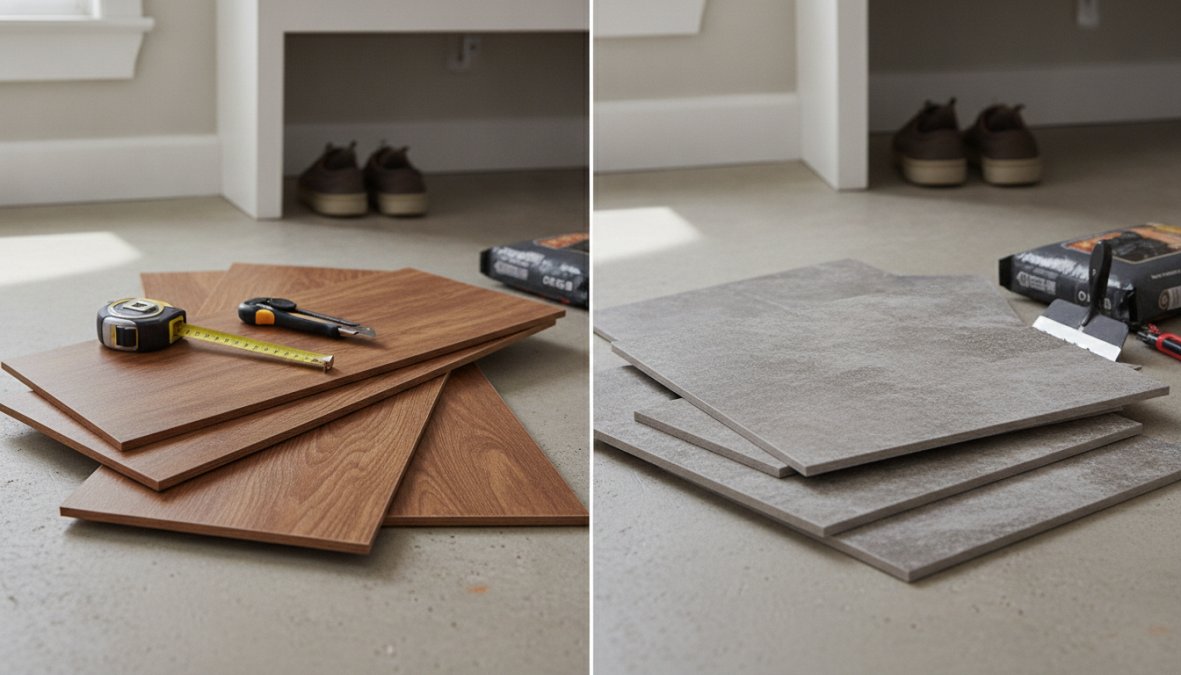
Luxury vinyl tile is dramatically easier to install. The click-lock system requires no adhesive, nails, or specialized tools beyond a miter saw and spacers. Most homeowners complete a mudroom installation in 1-2 days. Mistakes are easily corrected.
Porcelain tile demands professional installation. The material is brittle and prone to cracking during cutting. Grout application requires skill to avoid voids or uneven joints. A poorly installed porcelain floor will fail prematurely.
Cleaning and Maintenance Routines
Luxury vinyl tile's maintenance is minimal. A weekly sweep removes dirt and debris. A damp mop with mild soap handles spills and tracked-in mud. Avoid harsh chemicals and excessive water.
Porcelain tile requires similar basic cleaning but adds grout maintenance. Grout lines trap dirt and moisture. Quarterly cleaning with a grout brush prevents staining. Grout sealing should be reapplied every 1-3 years. In a mudroom, this can become a twice-yearly task.
Grout Maintenance vs. Seamless Vinyl Construction
Luxury vinyl tile's seamless construction means no grout lines to trap water, dirt, or organic growth. This is a major advantage in moisture-heavy spaces. Porcelain tile's grout lines are a perpetual maintenance point. Even sealed grout will eventually degrade, especially in mudrooms where temperature fluctuations and moisture exposure accelerate deterioration.
Porcelain Tile Installation Cost vs Luxury Vinyl Tile
Cost is often the deciding factor, but the comparison requires looking beyond material price to total installed cost.
Material Cost Breakdown
Luxury vinyl tile material costs range from $3-$9 per square foot. A 200-square-foot mudroom costs $600-$1,800 in material. Porcelain tile material costs range from $3-$10 per square foot, with the same space running $600-$2,000. The overlap is significant.
Installation Labor and Professional Fees
Luxury vinyl tile professional installation costs $2-$5 per square foot. For a 200-square-foot mudroom, expect $400-$1,000 in labor. Many homeowners install LVT themselves, eliminating this cost.
Porcelain tile installation typically costs $5-$15 per square foot. For the same space, expect $1,000-$3,000 in professional installation.
Total installed cost for a mudroom:
- LVT: $1,000-$2,800 (material + DIY labor or minimal professional help)
- Porcelain: $1,600-$5,000 (material + professional installation)
Long-Term Value and Home Resale Impact
Porcelain tile's permanence adds resale value. Buyers view a porcelain mudroom floor as a finished, maintenance-free feature. However, this advantage only materializes if the floor is installed correctly and properly maintained. A poorly installed porcelain floor with deteriorated grout actually detracts from home value.
The break-even point is roughly 15-20 years, where porcelain's longer lifespan and lower maintenance costs offset the higher initial investment.
Environmental Impact and Pet-Specific Considerations
VOCs and Indoor Air Quality in LVT
Luxury vinyl tile contains polyvinyl chloride (PVC), which can off-gas volatile organic compounds (VOCs) during and after installation. Off-gassing typically peaks in the first 48-72 hours and continues at lower levels for weeks.
Look for LVT products certified by FloorScore or GreenGuard, which verify lower VOC emissions. Proper ventilation during and after installation significantly reduces off-gassing exposure. Porcelain tile produces no VOCs and is inert and non-toxic.
Pet-Specific Performance Metrics
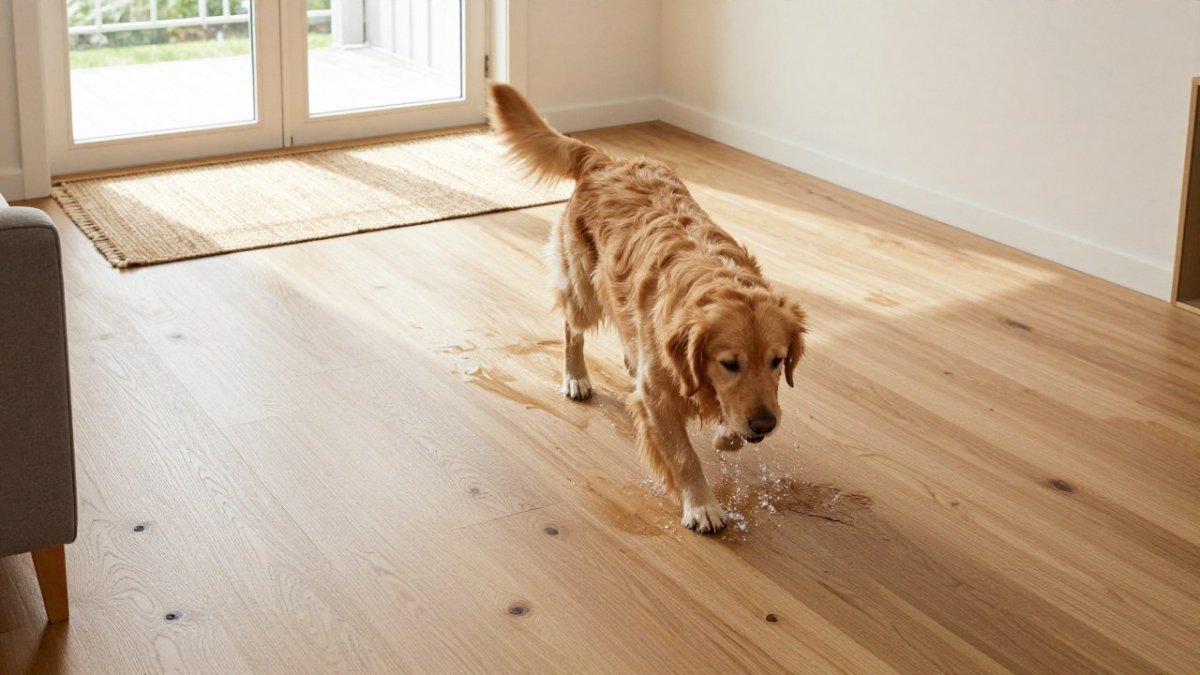
Both materials are pet-friendly with different strengths. Luxury vinyl tile's softer surface is easier on pets' joints and paws. The material is also quieter, a significant advantage if you have active dogs.
However, pet urine presents a challenge for LVT. If urine reaches seams or edges and isn't cleaned immediately, it can seep beneath the flooring. Porcelain tile, with its impermeable surface and sealed grout, contains pet accidents more effectively. For households with multiple pets or pets prone to accidents, porcelain's superior containment is a practical advantage.
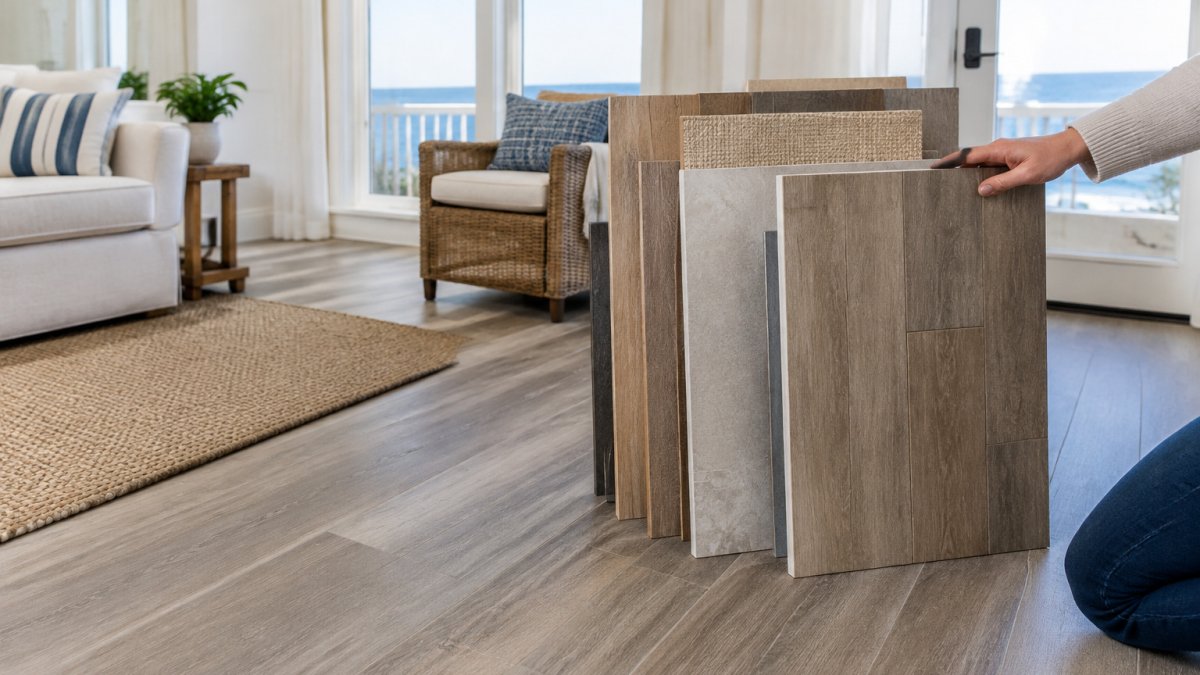
Choosing between luxury vinyl tile and porcelain tile for mudrooms depends on your priorities and timeline. If you value comfort, ease of installation, and lower upfront cost, luxury vinyl tile is the practical choice. If you prioritize durability, low maintenance, and long-term value, porcelain tile's 50+ year lifespan justifies the higher investment. Schedule a consultation to explore samples of both materials in your mudroom's lighting and traffic patterns.
FloorScore certified products for low-VOC flooring
Tile Council of North America durability standards
EPA guidance on indoor air quality and flooring materials
Frequently Asked Questions
Is luxury vinyl tile waterproof for mudrooms?
Yes, luxury vinyl tile is 100% waterproof at the core level, making it excellent for mudrooms where moisture exposure is constant. The moisture barrier prevents water from seeping into the subfloor. However, water can still damage the subfloor beneath if gaps or seams aren't properly sealed during installation. Proper subfloor preparation is critical to maximize water resistance and prevent long-term damage.
What is the durability of porcelain tile vs LVT in high-traffic mudrooms?
Porcelain tile offers exceptional durability with a lifespan of 50+ years and nearly impervious resistance to scratches and heavy wear. Luxury vinyl tile is also highly durable with excellent impact resistance and a strong wear layer, but it can be susceptible to scratching from sharp debris if the wear layer is compromised. For maximum longevity in heavy-traffic mudrooms, porcelain tile generally edges out LVT, though quality LVT with rigid core construction performs admirably.
Which is the best flooring for mudrooms: easier to install and maintain?
Luxury vinyl tile is significantly easier to install with click-lock systems requiring no glue or nails, making it ideal for DIY homeowners. Porcelain tile requires professional installation due to grouting and cutting demands. For maintenance, LVT wins, it requires simple sweeping and damp mopping. Porcelain tile requires grout maintenance and sealing, though the tile surface itself is easier to clean. If ease of installation and minimal maintenance are priorities, LVT is the better choice.
How much does porcelain tile installation cost compared to luxury vinyl tile?
Pricing depends on material quality, quantity, and your location in Suffolk County. For accurate pricing on both porcelain tile installation and luxury vinyl tile options, contact Hamptons Carpet One Floor and Home directly for a personalized quote. Generally, material costs for both range similarly, but porcelain tile typically requires higher professional installation labor due to grouting and finishing work, which can increase overall project cost.
Are there environmental concerns with luxury vinyl tile in mudrooms?
Some luxury vinyl tiles may contain VOCs (volatile organic compounds) that can affect indoor air quality. Look for products with low-VOC certifications or those with attached cork underlayment, which can help reduce off-gassing. Porcelain tile is generally considered more environmentally friendly as it contains no chemical off-gassing. If environmental impact is a concern, research specific product certifications or consult with Hamptons Carpet One Floor and Home about sustainable flooring options.
This article was written using GrandRanker