 Ultimate guide
Period-Accurate Flooring for Colonial Homes
Table of Contents
- Defining Period-Accurate Flooring for Colonial Homes
- Authentic Wood Species for Colonial Interiors: Hardwood vs Softwood
- Wide Plank Flooring for Historic Homes: Characteristics and Selection
- Reclaimed Wood Flooring Pros and Cons for Colonial Properties
- Finishing Historic Wood Floors: Oil, Wax, and Polyurethane Options
- Installation Methods for Period Accuracy and Subfloor Compatibility
- Modern Alternatives to Traditional Colonial Flooring Materials
- Maintenance and Care for Antique Floors in Coastal Environments
Last Updated: August 10, 2026
Defining Period-Accurate Flooring for Colonial Homes
Period accurate flooring for colonial homes means selecting materials and installation methods that reflect authentic construction practices, wood species, and finishing techniques used during the colonial era (roughly 1600s-1800s). Authentic period flooring decisions directly impact a home's architectural credibility, resale value, and long-term performance in coastal environments where salt air and moisture pose real challenges.
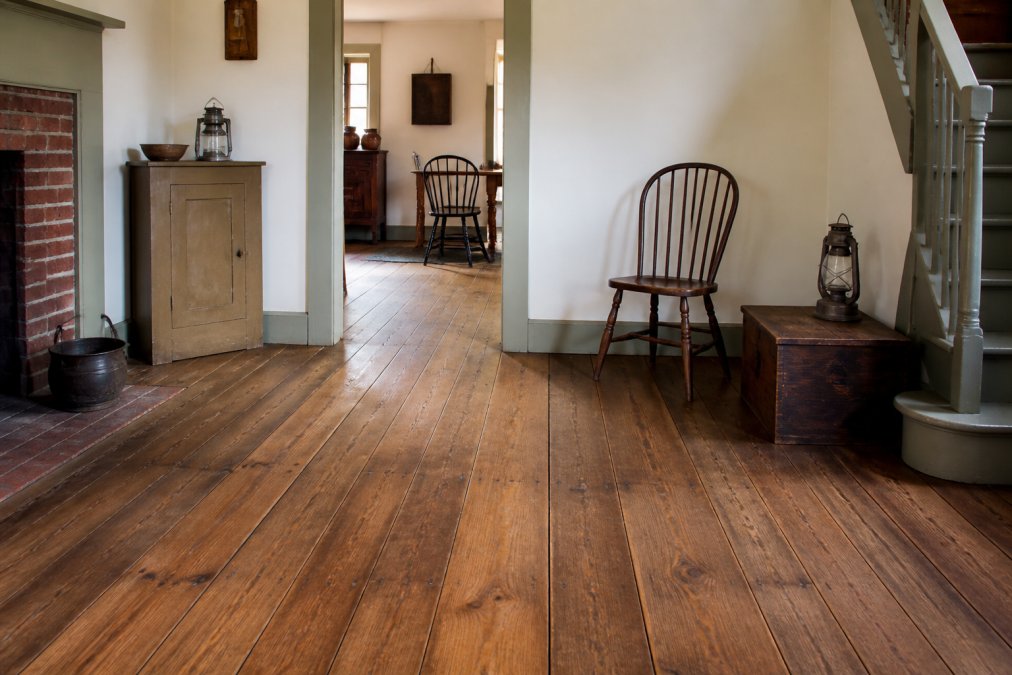
Colonial-era flooring relied on locally available materials and hand-milling techniques. Wide planks of heart pine, chestnut, oak, and native hardwoods dominated, rough-sawn and hand-planed with natural variations in color and grain that modern precision manufacturing has eliminated. Authentic period accurate flooring requires more research and careful sourcing than "rustic-look" laminate, but for homeowners committed to historic preservation, the authenticity pays dividends.
Authentic Wood Species for Colonial Interiors: Hardwood vs Softwood
Colonial builders worked with what grew nearby, creating substantial regional variation. In the Northeast, heart pine and chestnut dominated. These softwoods were preferred because they were abundant, easy to work with hand tools, and durable enough for heavy foot traffic when properly maintained.
Heart Pine remains the gold standard for colonial authenticity in the Northeast. It's technically a softwood but performs like a hardwood, with tight grain and natural resin content that resists wear. Original colonial heart pine came from old-growth trees with tight annual rings, creating wood denser and more durable than modern plantation-grown pine. Today's reclaimed heart pine carries genuine patina, though it commands premium pricing.
Chestnut was prolific in colonial America until the chestnut blight devastated the species in the early 1900s. Authentic colonial chestnut flooring is available only through reclamation. Its warm honey color deepens over time, but availability is limited and pricing reflects scarcity.
Oak appeared frequently in colonial homes, particularly in finer spaces. White oak has tighter grain and greater durability; red oak has more prominent grain. Colonial oak floors typically show hand-planing marks and varied plank widths absent from modern milled oak.
Maple was used in finer colonial spaces. Hard maple resists denting better than softer species, making it practical for high-traffic areas. Its pale color and fine grain made it a choice for homes where owners wanted a refined appearance.
The softwood versus hardwood choice depends on room function and regional authenticity. A colonial kitchen in New England should probably feature heart pine; a parlor in a wealthy mid-Atlantic home might showcase oak or maple.
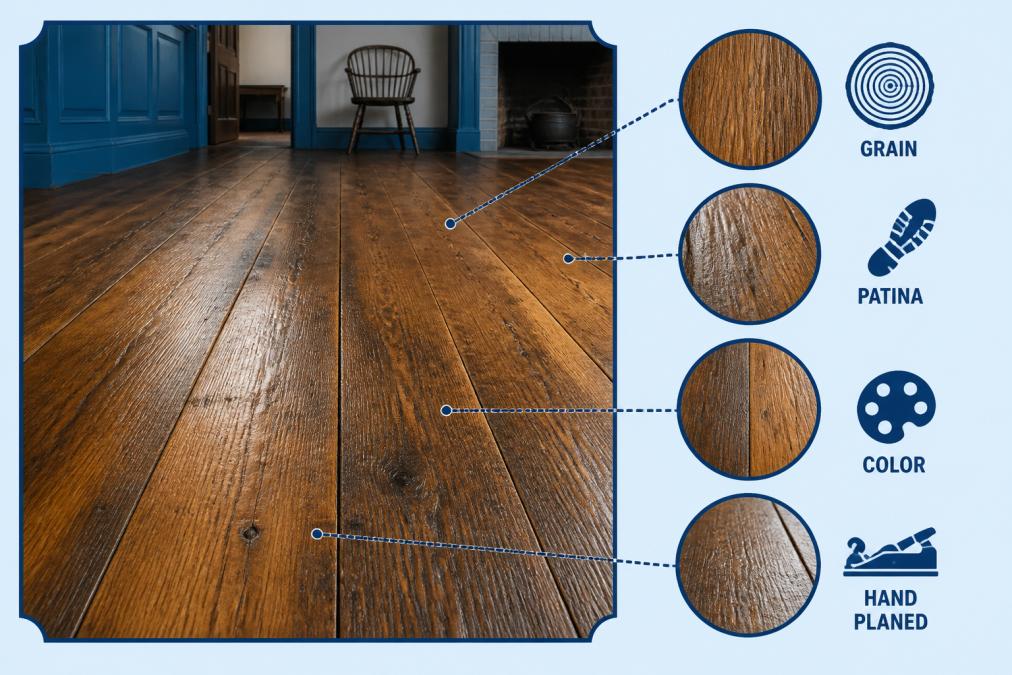
Wide Plank Flooring for Historic Homes: Characteristics and Selection
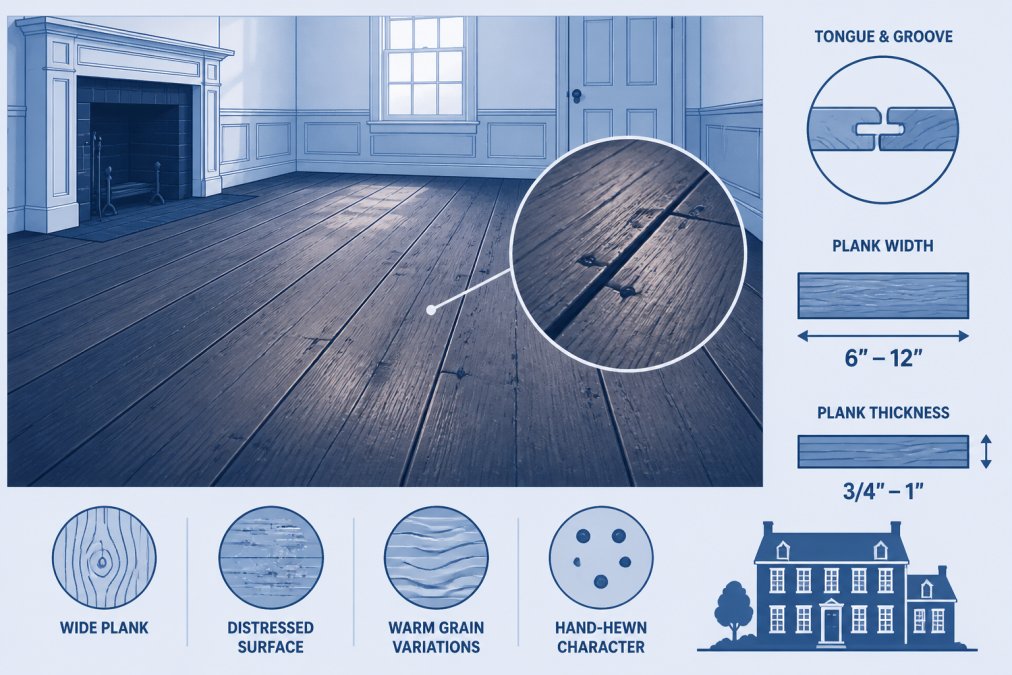
Wide plank flooring is synonymous with colonial authenticity. Colonial mills produced planks 8-16 inches wide, sometimes wider. Modern milling typically produces boards 3-5 inches wide, making authentic-width planks a deliberate choice for period accuracy.
Wide plank flooring serves both aesthetic and practical purposes. Visually, fewer seams create a more expansive, flowing appearance. Practically, wider planks mean fewer joints where moisture can penetrate, important in coastal environments.
Plank Width and Colonial Authenticity
Original colonial floors often featured planks 10-14 inches wide. Selecting 8-12 inch planks for your restoration captures this authenticity without requiring the rarest salvage material. For genuine period accuracy, solid wood is the only defensible choice; engineered alternatives compromise authenticity.
Grain Pattern and Hand-Planing Marks
Authentic colonial flooring shows visible evidence of hand-planing, subtle ridges and variations in surface texture that machine planing eliminates. Grain patterns vary dramatically within a single plank, with natural variation that results from hand-milling and aging. Custom-milled flooring can recreate this appearance, or you can source reclaimed planks carrying genuine hand-planing marks.
Distressed Finish and Patina
A distressed finish on new flooring mimics the wear patterns of centuries-old floors. Hand-scraped surfaces create the appearance of age without actual age. True patina, the darkening and subtle sheen from decades of foot traffic, cannot be rushed. Reclaimed flooring carries genuine patina; new flooring will take years to develop authentic patina.
Reclaimed Wood Flooring Pros and Cons for Colonial Properties
Reclaimed wood flooring carries genuine history. Salvaged from 18th- and 19th-century buildings, reclaimed timber shows hand-planing marks, nail holes, and patina that new flooring cannot replicate.
Advantages of Reclaimed Wood
Authenticity is the primary advantage. Reclaimed heart pine, chestnut, or oak carries actual age and character. Old-growth timber has tighter grain and greater density than modern plantation-grown wood, translating to superior wear resistance and better performance in coastal environments. Environmentally, you're reusing existing material rather than harvesting new timber.
Disadvantages of Reclaimed Wood
Cost is the primary disadvantage. Reclaimed flooring typically runs 2-3 times the price of new period-appropriate flooring. Availability is inconsistent, and you may need to wait for specific species.
Structural unpredictability is a real concern. Reclaimed planks may contain hidden nails or metal fragments that damage saw blades and delay projects. Moisture sensitivity requires careful management; reclaimed wood has been exposed to varying humidity levels for decades. Moving it to a new environment can cause cupping, warping, or checking. Proper acclimation before installation is essential.
Finishing Historic Wood Floors: Oil, Wax, and Polyurethane Options
How you finish period accurate flooring shapes both appearance and performance. Colonial floors were finished with oil, wax, or left natural. Modern polyurethane wasn't available until the 20th century.
Oil Finishes
Traditional oil finishes penetrate the wood rather than sitting on the surface. Linseed oil and tung oil were colonial standards. They enhance wood grain and create a natural, matte appearance that feels authentic to period interiors.
Oil finishes require regular maintenance, needing recoating every 1-3 years depending on traffic and coastal exposure. Oil doesn't provide the moisture barrier that polyurethane offers, making it less practical for kitchens, bathrooms, or coastal homes. Modern hard-wax oils combine plant oils with wax, creating a more durable surface that resists moisture better than traditional oil alone.
Wax Finishes
Beeswax and carnauba wax were applied over oil in colonial homes, creating a soft sheen and additional protection. Wax finishes age gracefully, developing character from foot traffic and maintenance patterns. However, wax is labor-intensive, requiring regular buffing and reapplication. In high-traffic areas or coastal environments, wax wears quickly and demands frequent maintenance.
Polyurethane Finishes
Water-based and oil-based polyurethane weren't available in the colonial era, but they're the practical choice for most modern coastal homes. Polyurethane creates a durable surface film that resists moisture, salt spray, and foot traffic far better than oil or wax. The trade-off is appearance; polyurethane creates a slightly plastic-like sheen. Matte and satin polyurethane finishes are more subtle and work better in period homes, particularly when applied to hand-scraped wood.
For coastal properties, polyurethane is often the most practical choice. A satin polyurethane over hand-scraped wide plank flooring captures aesthetic appeal while providing the durability coastal environments require. Hybrid approaches work well: oil the wood first to enhance grain, then seal with polyurethane.
Installation Methods for Period Accuracy and Subfloor Compatibility
How flooring is installed affects both appearance and performance. Colonial floors were nailed directly to wooden joists, often with no subfloor. Modern homes have engineered subfloors, and coastal properties demand specific moisture management strategies.
Understanding Historic Subfloor Systems
Colonial homes typically featured wooden joists spaced 16-24 inches apart with flooring nailed directly to them. There was no underlayment or moisture barrier. This worked because colonial homes were built with large overhangs, proper drainage, and ventilation designed to manage moisture naturally.
Modern coastal homes need different approaches. Salt air and humidity create moisture stress that colonial construction wasn't designed to handle. Before installing any flooring, have a structural engineer assess the joist system. Moisture is the critical issue; original colonial joists often lack the vapor barriers modern construction includes. In coastal environments, installing a moisture barrier under new flooring protects against moisture wicking, even though it's anachronistic to the period.
Tongue and Groove Installation
Colonial flooring typically used tongue and groove joinery, boards with interlocking edges that fit tightly together. This prevented gaps that would allow drafts and pests. Hand-nailing flooring (rather than using pneumatic nailers) is more authentic and creates a tighter fit, though it's slower and more expensive.
Acclimation and Moisture Management
Wood flooring expands and contracts with humidity changes. Before installation, flooring must acclimate to the building's humidity level, typically 7-14 days. In coastal environments, this acclimation period is critical; rushing installation can lead to cupping or warping as the wood adjusts to salt-air humidity levels.
Modern Alternatives to Traditional Colonial Flooring Materials
Not every homeowner can commit to authentic period-appropriate flooring. Cost, maintenance demands, or practical constraints make alternatives attractive.
Luxury Vinyl Plank (LVP)
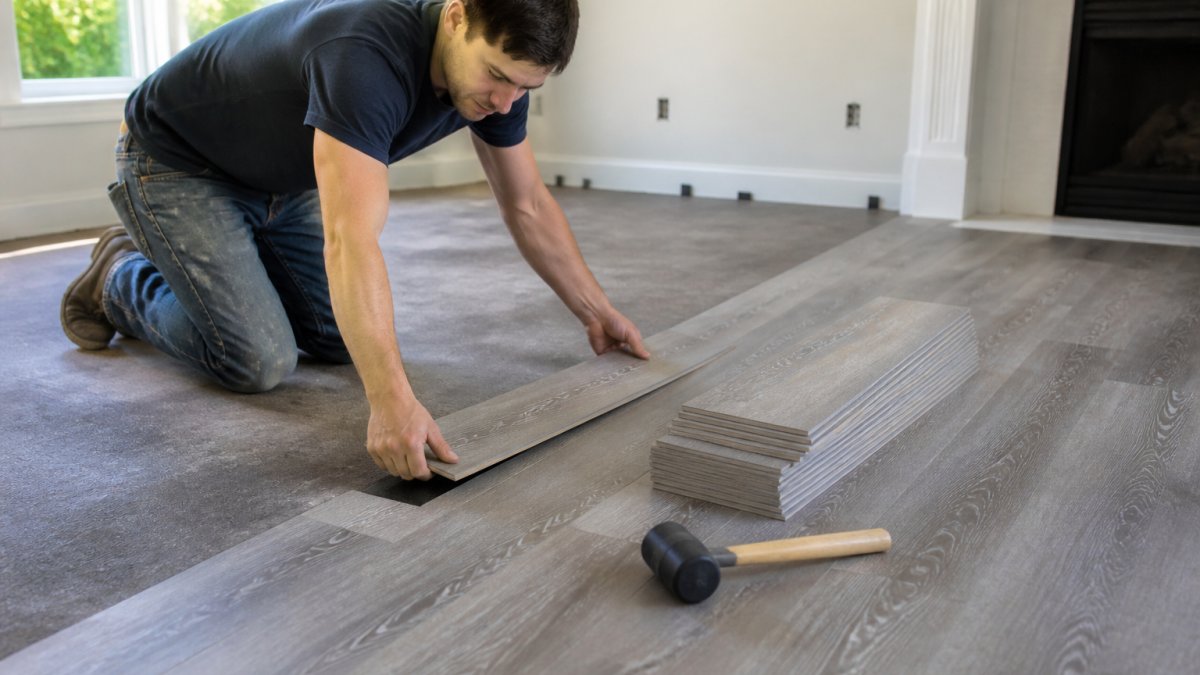
Luxury vinyl plank mimics wood appearance convincingly through high-resolution printing. LVP is waterproof, durable, and requires minimal maintenance, ideal for coastal homes. The trade-off is authenticity; LVP is unmistakably not wood and doesn't develop patina. For homeowners prioritizing practical performance over period accuracy, LVP is a legitimate choice.
Engineered Hardwood
Engineered hardwood features a hardwood veneer over a plywood core, providing greater dimensional stability than solid wood and making it more resistant to humidity fluctuations. Wide plank engineered options with hand-scraped finishes can approximate colonial appearance reasonably well. Cost is lower than reclaimed flooring but higher than LVP, with better coastal performance than solid wood without proper moisture management.
Porcelain and Ceramic Tile
Tile is practical for coastal homes; it's impervious to moisture and salt air. Modern porcelain can mimic wood appearance convincingly. Tile works well in kitchens and bathrooms where moisture is highest, paired with wood flooring in living areas. However, tile is cold underfoot and unmistakably not wood, which limits its appeal for period restoration.
Linoleum and Marmoleum
Linoleum and marmoleum offer sustainable alternatives with reasonable durability. They're softer underfoot than tile and available in colors and patterns that can complement colonial interiors.
Maintenance and Care for Antique Floors in Coastal Environments
Coastal humidity, salt air, and temperature fluctuations create unique maintenance challenges for antique flooring.
Moisture Management
Salt air carries moisture that penetrates into wood. Maintaining consistent indoor humidity between 35-55% is critical. Fluctuating humidity causes wood to expand and contract, creating checks or cupping over time. Monitor your flooring seasonally; significant movement between summer and winter indicates moisture control problems.
Salt Air Exposure
Salt spray accelerates finish degradation. If your home is oceanfront or very close to the beach, protective measures include keeping windows closed during storms, using air filtration systems, rinsing exterior surfaces regularly, and applying additional finish coats to high-exposure areas. Regular recoating is more frequent in coastal properties; oil-finished flooring may need annual recoating, while polyurethane typically lasts 5-7 years before needing refresh coats.
Regular Cleaning
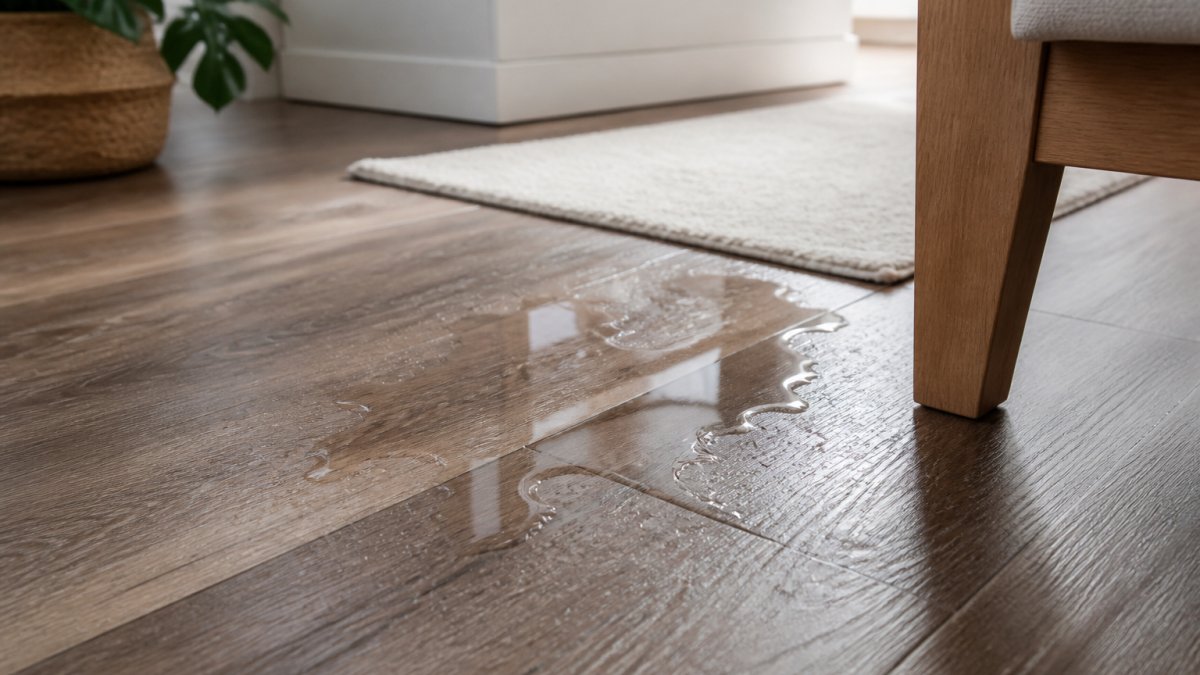
Dust and sand tracked in from coastal environments are abrasive. Regular vacuuming with soft brush attachment removes particles before they scratch finish. Damp mopping with minimal water is appropriate for polyurethane-finished floors; oil-finished floors should be dry-mopped. Avoid excessive water and wipe spills immediately.
Refinishing Schedules
Antique flooring in coastal environments typically needs refinishing every 5-10 years depending on traffic and finish type. For oil-finished flooring, refinishing is more frequent but less disruptive. For polyurethane-finished flooring, refinishing is less frequent but more involved, requiring sanding and multiple coats.
Coastal homeowners restoring or building colonial homes face genuine complexity in choosing period accurate flooring. Authentic materials and methods deliver unmatched character but demand maintenance commitment and careful attention to moisture management. Modern alternatives sacrifice some authenticity for superior practical performance.
At Hamptons carpet one floor and Home, we help homeowners throughout Suffolk County navigate these decisions. We work with you to understand the trade-offs and find flooring that performs as beautifully as it looks. Contact us for a consultation about your specific project and environment.
Frequently Asked Questions
What materials were used for flooring in early American colonial homes?
Early colonial homes primarily used wide plank hardwoods like oak, pine, and chestnut, often hand-planed with a natural finish or wax. Softwoods such as heart pine were common in less expensive homes. Flooring was typically laid in random widths without the precision of modern milling. In kitchens and service areas, clay tiles or brick were sometimes used. The choice depended on local wood availability and the homeowner's wealth.
Are wide plank floors considered period-accurate for colonial houses?
Yes, wide plank flooring is authentically colonial. Historic homes featured planks ranging from 4 to 12 inches wide, often in random widths rather than uniform boards. Wide plank flooring maintains architectural integrity and the aesthetic consistency expected in period-accurate restoration. Modern wide plank options with hand-scraped or distressed finishes can replicate the appearance of original colonial floors while offering contemporary durability.
How do I choose between reclaimed wood and new wide plank flooring for period accuracy?
Reclaimed wood offers authentic patina and grain patterns from genuinely aged timber, but sourcing is limited and environmental impact varies. New wide plank hardwood with distressed finishes provides consistent quality, wider availability, and lower environmental cost. For coastal properties like those in Suffolk County, new engineered hardwood or reclaimed alternatives may resist moisture and salt air better. Consult with a specialist installer to assess your subfloor and historic preservation goals.
What finishing technique best preserves the historic look of colonial wood floors?
Oil and wax finishes replicate the authentic appearance of colonial-era floors and allow wood to breathe, which is important for older homes with natural joist systems. Polyurethane offers superior durability and moisture resistance, critical for coastal environments. A hybrid approach, oil-based stain with polyurethane topcoat, balances period accuracy with practical performance in high-traffic or moisture-prone areas like kitchens and bathrooms in historic homes.
This article was written using GrandRanker