 Comparison
Polished Concrete vs Epoxy Flooring for Warehouses
Table of Contents
- Polished Concrete vs Epoxy Flooring: Key Differences
- Durability and Impact Resistance
- Chemical and Stain Resistance
- Installation Process and Operational Downtime
- Warehouse Flooring Cost Per Square Foot
- Epoxy Floor Maintenance Best Practices
- OSHA Flooring Requirements for Warehouses
- Which Option Wins for Your Warehouse
Last Updated: August 15, 2026
Polished Concrete vs Epoxy Flooring: Key Differences
When warehouse managers evaluate flooring options, the choice between polished concrete and epoxy flooring often comes down to a fundamental tension: do you enhance what's already there, or apply a protective layer on top? This distinction shapes everything from installation timelines to long-term maintenance costs.
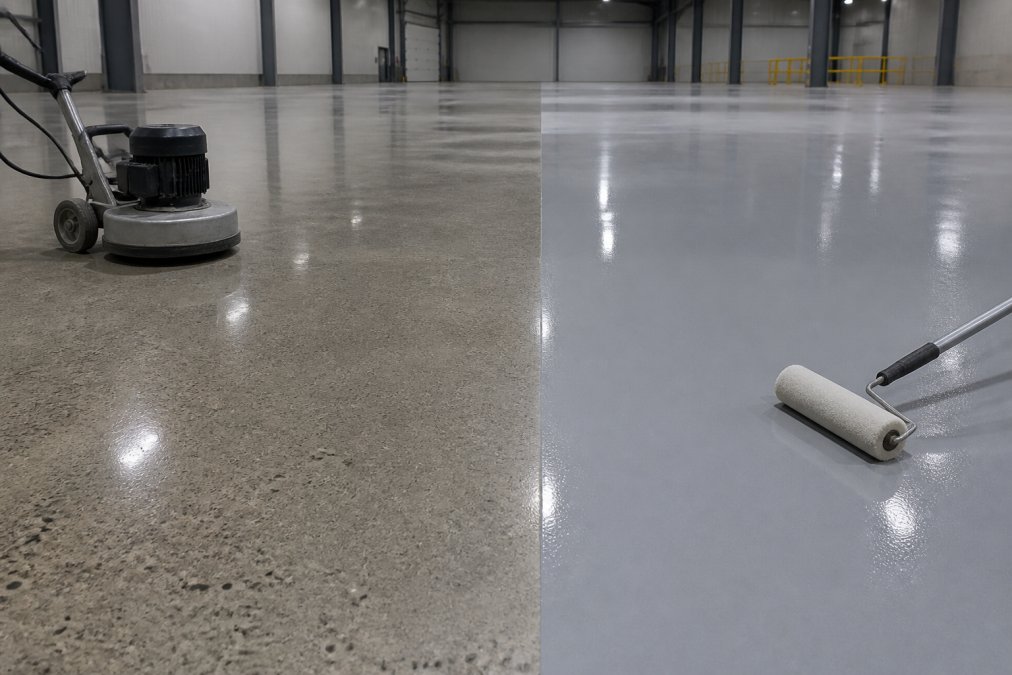
Polished concrete vs epoxy flooring represents two entirely different philosophies. Polished concrete works by grinding and densifying the existing concrete slab through diamond grinding and surface treatment, transforming it into a hard-wearing surface. Epoxy flooring, by contrast, applies a resinous coating system directly onto the substrate, creating a seamless, non-porous barrier. At Hamptons carpet one floor and Home, we help warehouse operators understand that neither option is universally "better", the right choice depends on your facility's traffic patterns, chemical exposure, and operational priorities.
The gap between these approaches widens when you examine durability, maintenance demands, and total cost of ownership. A polished concrete floor can last as long as the building itself, while epoxy flooring typically requires recoating every 5-10 years depending on traffic intensity. Yet epoxy offers superior chemical and stain resistance in harsh environments. Understanding where each excels prevents costly installation mistakes and operational disruptions down the road.
Durability and Impact Resistance
Polished concrete achieves exceptional durability through abrasion resistance and compressive strength. The diamond grinding process exposes aggregate within the concrete and densifies the surface using products like PROSOCO Consolideck LS, which penetrates the slab and creates insoluble calcium silicate hydrate. This increases surface hardness and reduces dusting. The result resists tire marks from forklifts and heavy machinery remarkably well, a key advantage in high-traffic distribution centers.
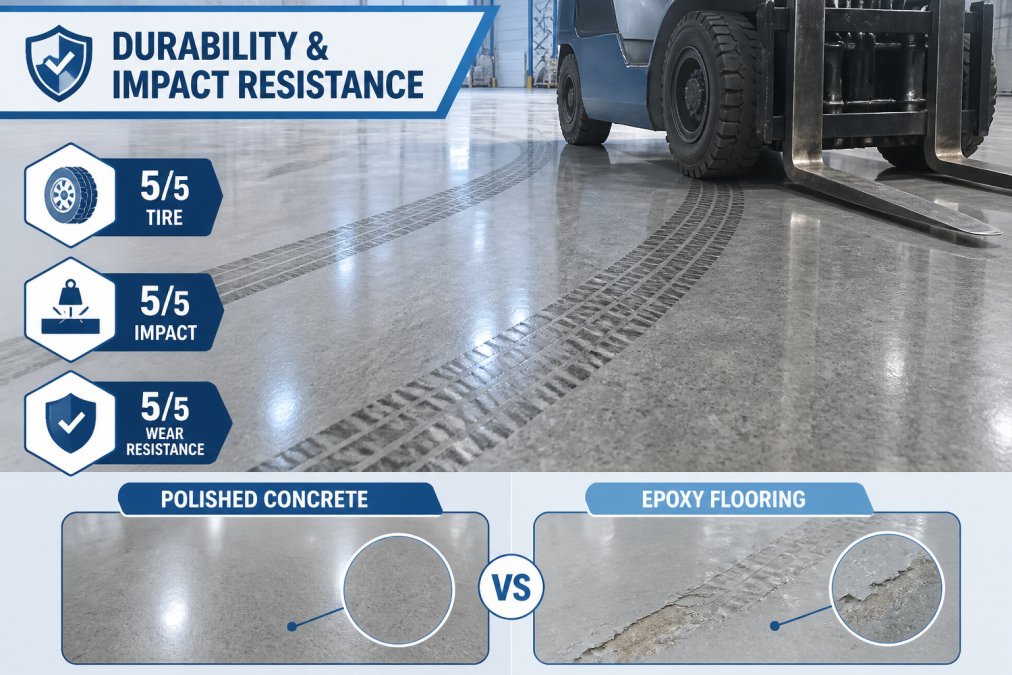
Epoxy flooring systems like ArmorPoxy II deliver different durability characteristics. These industrial-grade coatings are approximately four times thicker than regular floor paint, with customizable thicknesses ranging from 7 mils up to 1/4 inch (250 mils). This thickness absorbs impact from dropped pallets and rolling equipment more effectively than polished concrete alone. Epoxy's seamless surface prevents cracks from propagating through the substrate, a critical advantage when heavy machinery creates concentrated stress points.
The real difference emerges under extreme conditions. Polished concrete can develop surface spalling if subjected to repeated freeze-thaw cycles or sudden temperature swings, particularly in climate-controlled facilities that experience rapid transitions. Epoxy remains stable across wider temperature ranges because it sits as a protective layer above substrate vulnerabilities. However, epoxy can delaminate if the substrate shifts or if moisture vapor transmission becomes excessive, a problem that requires proper substrate preparation and moisture barriers.
For most warehouse applications, polished concrete handles forklift traffic and heavy equipment exceptionally well. Epoxy wins when impact resistance must be paired with chemical spill containment and seamless non-porous protection.
Chemical and Stain Resistance
Polished concrete's chemical resistance depends entirely on the densifier and sealer applied during finishing. PROSOCO Consolideck LS provides excellent hardness and reduces porosity, but polished concrete remains somewhat porous compared to epoxy. Acidic substances, alkaline cleaners, and petroleum products can penetrate the surface over time, causing discoloration and potential substrate damage. The surface densifier improves protection, yet polished concrete is fundamentally more vulnerable to chemical attack than sealed epoxy systems.
Epoxy flooring offers superior chemical resistance because it creates a completely non-porous, sealed barrier. Products like Sikafloor-264 Epoxy Coating feature 100% solids formulation with very good chemical resistance to oils, solvents, and industrial cleaners. This seamless surface prevents spills from seeping into the concrete substrate, critical in warehouses storing hazardous materials or processing food (Sikafloor-264 is USDA-approved for food areas). The impermeable finish also makes cleanup faster and more effective.
The practical implication: if your warehouse handles chemicals regularly, petroleum products, solvents, fertilizers, or food processing byproducts, epoxy is the safer choice. Polished concrete works well for general distribution centers and retail warehouses where spills are occasional and non-hazardous. The difference isn't academic: chemical penetration into polished concrete can weaken the substrate over years, eventually requiring expensive repairs or complete resurfacing.
Installation Process and Operational Downtime
Polished concrete installation begins with thorough substrate preparation. The existing concrete slab must be cleaned and assessed for cracks, moisture issues, and surface defects. Once cleared, crews use diamond grinding equipment to gradually expose aggregate and densify the surface across multiple passes. This process generates significant dust unless controlled with proper ventilation and dust containment systems. The grinding phase typically takes 3-5 days depending on floor area and existing concrete condition.
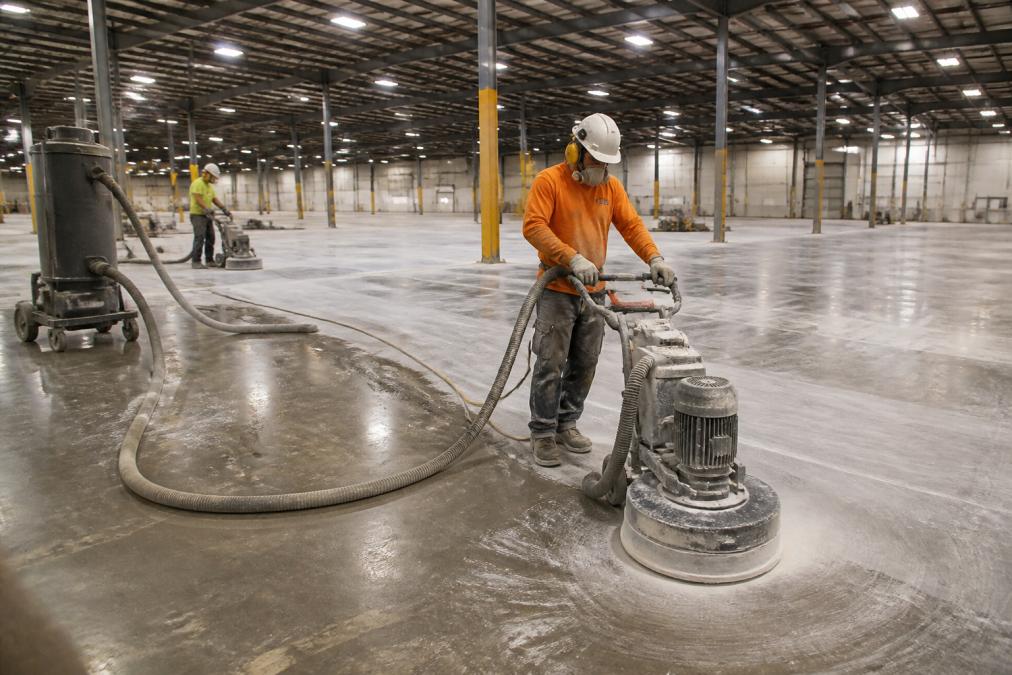
After grinding completes, crews apply the surface densifier (like PROSOCO Consolideck LS), which cures quickly, most floors reopen to traffic within one hour of treatment. This rapid turnaround is a major operational advantage. Many warehouses can schedule polishing during off-hours or weekends, minimizing disruption to daily operations.
Epoxy installation requires more extensive downtime. Substrate preparation is critical, concrete must be thoroughly cleaned, any cracks sealed, and moisture vapor emission tested to ensure the substrate won't cause coating failure. This preparation phase alone can take 2-3 days. Once the substrate is ready, epoxy coating is applied in multiple layers, each requiring curing time. Depending on the system and environmental conditions, full cure can take 5-7 days before the floor tolerates normal traffic. Some epoxy systems require specific temperature and humidity ranges during curing, potentially extending timelines in unfavorable weather.
The operational impact is substantial: polished concrete typically removes your floor from service for 3-5 days, while epoxy can require 7-10 days or longer. For high-volume distribution centers where every day of downtime costs money, this difference matters significantly.
Warehouse Flooring Cost Per Square Foot
Warehouse flooring cost per square foot varies dramatically between these two options, and the comparison requires looking beyond upfront installation pricing.
Polished concrete generally has lower initial costs. Diamond grinding and densification are labor-intensive but don't require expensive material inputs, primarily the densifier product and labor. Facilities typically invest $1-4 per square foot for basic polishing, though premium finishes with decorative aggregates or multiple polish levels can reach higher ranges. PROSOCO Consolideck LS costs approximately $83 per gallon, and coverage varies based on concrete porosity, but material costs remain relatively modest.
Epoxy flooring carries higher upfront costs. ArmorPoxy II and Sikafloor-264 require substantial material investment plus specialized installation expertise. Initial installation typically runs $2-6 per square foot depending on substrate condition, epoxy system thickness, and regional labor rates. Sikafloor-264 kits (20kg) range from $510-705, and multiple coats are often necessary for adequate protection. The higher material and labor costs create a steeper initial investment.
However, warehouse flooring cost per square foot becomes misleading without considering maintenance and lifecycle costs. Polished concrete requires regular maintenance: sweeping, occasional damp cleaning, and periodic resealing or repolishing every 3-5 years depending on traffic intensity. These recurring costs accumulate over time. Epoxy flooring, while more expensive upfront, requires minimal maintenance, primarily sweeping and occasional cleaning with mild detergents. The seamless, non-porous surface resists staining and doesn't need resealing.
Over a 15-20 year facility lifecycle, total cost of ownership often favors polished concrete in low-chemical environments and epoxy in high-traffic, chemically-exposed warehouses. Calculate your specific scenario: estimate installation costs, add annual maintenance expenses, factor in downtime costs during recoating cycles, and compare the totals across your expected facility lifespan.
Epoxy Floor Maintenance Best Practices
Epoxy floor maintenance best practices focus on preserving the coating's integrity and appearance with minimal intervention. The sealed, non-porous surface is your advantage, use it strategically.
Daily maintenance is straightforward: sweep or vacuum to remove dust and debris. This prevents particles from scratching the surface under foot traffic or equipment wheels. Weekly, damp-mop with a pH-neutral cleaner specifically formulated for epoxy floors. Avoid acidic or alkaline cleaners, which can degrade the coating over time. Many facilities use diluted mild dish soap or commercial epoxy-safe cleaners.
For spills, act quickly. The non-porous surface means liquids won't penetrate, but prolonged exposure to certain chemicals can soften or discolor epoxy. Wipe up spills immediately with absorbent materials, then clean the area with appropriate cleaner. Petroleum products, solvents, and harsh chemicals require prompt attention and thorough cleanup.
Avoid abrasive cleaning methods. High-pressure washers, wire brushes, and grinding equipment can damage the epoxy surface. Stick with soft-bristle brooms and microfiber mops. Similarly, minimize exposure to direct sunlight if your warehouse has skylights, UV exposure can cause yellowing in some epoxy formulations over time, though modern systems like ArmorPoxy II with UltraWear topcoat provide improved UV stability.
Inspect the floor quarterly for signs of wear, delamination, or coating failure. Early detection of problem areas allows targeted repairs rather than full resurfacing. Most minor damage can be patched without removing the entire coating. Recoating becomes necessary every 5-10 years depending on traffic intensity and chemical exposure, this is a planned maintenance cycle, not an emergency repair.
OSHA Flooring Requirements for Warehouses
OSHA doesn't mandate specific flooring materials for warehouses, but the agency enforces standards that your flooring must meet. Understanding these requirements prevents costly compliance issues and ensures worker safety.
The primary OSHA requirement is slip resistance. Wet or oily floors create fall hazards, and OSHA citations for inadequate slip resistance are common in warehouses. The coefficient of friction (COF) is the technical measure, OSHA generally expects floors to maintain a static COF of at least 0.50 when wet. Polished concrete can achieve this with proper surface treatment and maintenance, though the glossy finish creates slipping risks if not managed carefully. Epoxy flooring can exceed this standard, especially when formulated with nonskid additives like ArmorPoxy II's UltraWear wear layer.
OSHA also requires floors to be kept clean and in good repair. Cracks, spalling, and surface deterioration create tripping hazards and can cause equipment damage. Regular inspection and maintenance of your flooring, whether polished concrete or epoxy, demonstrates compliance with this general duty clause.
For facilities storing hazardous materials or handling chemicals, additional considerations apply. Epoxy flooring's seamless, non-porous surface helps contain spills and prevents chemical migration into the concrete substrate, reducing environmental contamination risks. Polished concrete's porosity can allow liquids to penetrate, potentially creating environmental liability.
Documentation matters. Keep records of flooring installation, maintenance activities, inspections, and any repairs. This documentation demonstrates to OSHA that you're maintaining a safe walking surface and taking slip-and-fall prevention seriously. Facilities with strong maintenance records typically face fewer citations and lower severity ratings when violations do occur.
Which Option Wins for Your Warehouse
The answer depends on your specific operational environment and priorities. Here's how to decide:
Choose polished concrete if: your warehouse handles general merchandise without significant chemical exposure, you prioritize minimal installation downtime, you want the longest-possible floor lifespan with lowest maintenance burden, or your budget is constrained and you can accept periodic maintenance cycles. Polished concrete excels in distribution centers, retail warehouses, and facilities where the concrete slab is in good condition. The rapid installation timeline and long lifespan make it attractive for operators who can plan maintenance strategically.
Choose epoxy flooring if: your warehouse processes chemicals, handles food products, experiences heavy forklift traffic with impact concerns, requires a completely seamless non-porous surface, or operates in a facility where chemical spill containment is critical. Epoxy wins in manufacturing plants, food processing facilities, hazardous material warehouses, and high-traffic loading docks. The superior chemical resistance and ease of cleaning justify the higher upfront cost and longer installation timeline.
The reality: many large warehouses use both. Polished concrete in general storage and receiving areas, epoxy in chemical storage zones or food processing sections. This hybrid approach balances cost, functionality, and risk management.
At Hamptons carpet one floor and Home, we recommend starting with a detailed facility assessment. Evaluate your current floor condition, traffic patterns, chemical exposure, and operational downtime tolerance. Then calculate total cost of ownership across your expected facility lifespan, not just upfront installation pricing. The choice becomes clear once you understand your true priorities and constraints.
Work with experienced installers who understand substrate preparation, moisture vapor transmission issues, and installation timelines. Shortcuts in preparation lead to premature failure, regardless of which option you choose. A properly installed polished concrete floor or epoxy system will deliver decades of reliable performance, but only if the foundation is solid.
Your warehouse flooring choice shapes operational efficiency, worker safety, and maintenance costs for years to come. Whether you prioritize rapid installation and minimal ongoing maintenance or need superior chemical resistance and seamless protection, the right decision comes from understanding your facility's unique demands. Hamptons carpet one floor and Home can help you evaluate your specific situation, assess substrate conditions, and recommend the flooring system that delivers the best long-term value for your operation. Contact us for a professional facility assessment and detailed cost analysis tailored to your warehouse environment.
Frequently Asked Questions
Is polished concrete better than epoxy for high-traffic warehouses?
Neither is universally better, it depends on your priorities. Polished concrete excels in durability and longevity, often lasting as long as the building itself with minimal maintenance. Epoxy offers superior chemical resistance and a seamless, non-porous surface easier to sanitize. For facilities with heavy forklift traffic and minimal chemical exposure, polished concrete wins. For food processing, pharmaceuticals, or chemical storage, epoxy is the stronger choice. Both meet OSHA slip resistance standards when properly finished.
What are the main downsides of polished concrete in industrial settings?
Polished concrete can become slippery when wet, though this is addressable with anti-slip additives. It requires substrate preparation to remove existing coatings, which adds installation time. Moisture vapor transmission through the concrete slab can cause issues if the building lacks proper vapor barriers. Additionally, while durable, polished concrete cannot be easily patched, repairs are visible. For facilities with frequent chemical spills or strict cleanliness requirements, epoxy's seamless surface is superior.
How does epoxy floor maintenance compare to polished concrete upkeep?
Epoxy requires more frequent attention but less intensive care. Best practices include sweeping daily to prevent dirt accumulation, damp mopping weekly with pH-neutral cleaners, and avoiding harsh chemicals that can degrade the coating. Polished concrete needs only sweeping and occasional damp cleaning, making it lower-maintenance overall. However, epoxy's seamless surface prevents bacteria and contaminant buildup, which is critical in food or pharmaceutical warehouses. Choose epoxy if you need sanitization; choose polished concrete if you prefer minimal ongoing effort.
Which flooring option is cheaper to install and maintain long-term?
Polished concrete typically costs less upfront and significantly less over time due to minimal maintenance and exceptional lifespan. Epoxy has higher initial installation costs and requires professional maintenance cycles every 3-5 years. However, epoxy's chemical resistance reduces replacement frequency in corrosive environments. Request quotes from Hamptons Carpet One Floor and Home to compare costs for your specific facility, as pricing depends on substrate condition, floor size, and local labor rates.
This article was written using GrandRanker