 Comparison
Pros and Cons of Waterproof Laminate Flooring
Table of Contents
- What Waterproof Laminate Flooring Actually Is
- The Pros: What Waterproof Laminate Gets Right
- The Cons: Where Waterproof Laminate Falls Short
- Waterproof Laminate vs Luxury Vinyl Plank: Which Wins Where
- Waterproof Laminate Cost Per Square Foot: What Drives the Number
- Laminate Flooring Maintenance Tips for Coastal and High-Traffic Homes
- Installation, Subfloor Prep, and Repairability
- Frequently Asked Questions
Last Updated: September 24, 2026
What Waterproof Laminate Flooring Actually Is
Waterproof laminate flooring is a rigid plank product built around a high-density fiberboard core that has been treated to resist moisture penetration from above and, in better lines, from below. The global waterproof laminate flooring market was valued at USD 1.69 billion in 2026 and is projected to grow at a CAGR of 8.72% through 2031, according to Research and Markets' waterproof laminate market report.
Waterproof vs. Water-Resistant: The Line Most Shoppers Miss
Water-resistant laminate shrugs off spills you wipe up promptly. Waterproof laminate is engineered to survive standing water for a defined window, usually 24 to 72 hours. That difference decides whether a plank survives a dishwasher leak or swells at the seams.
The Pros: What Waterproof Laminate Gets Right
The strongest argument for waterproof laminate is durability per dollar: it resists scratches, dents, and fading better than most flooring at its price point.
Three things it does well:
- Surface toughness. An AC4 wear layer stands up to pets, kids, and dragged furniture.
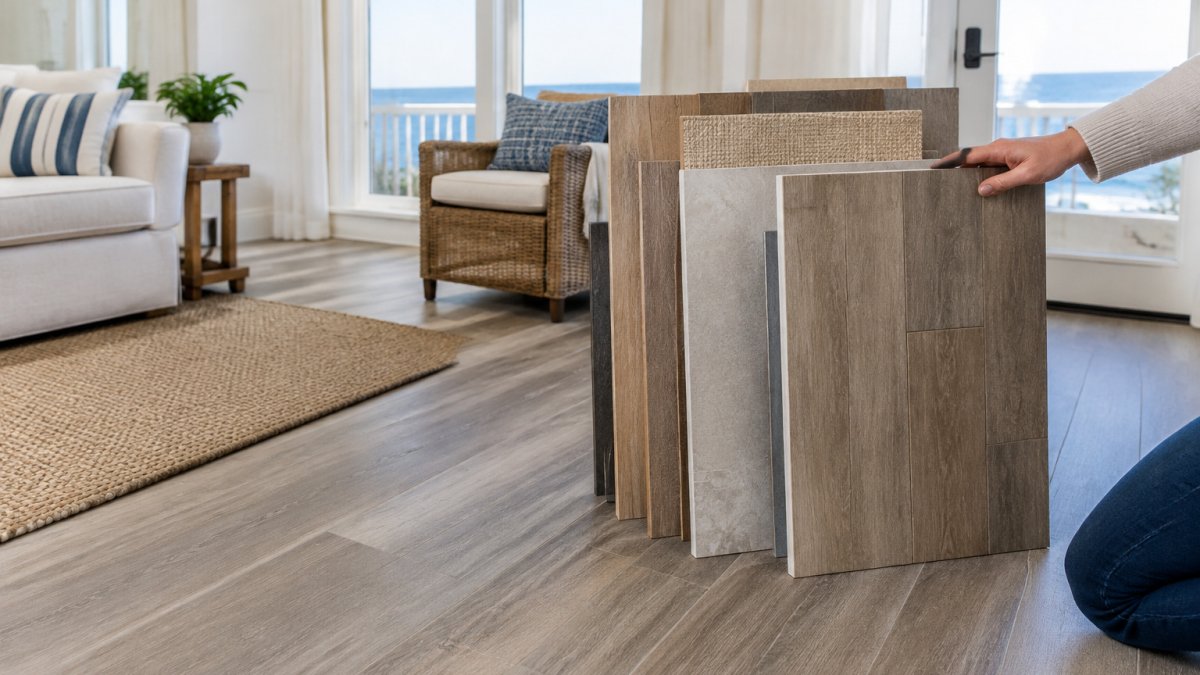
- Realistic visuals. Embossed-in-register textures read as real wood from standing height.
- Straightforward cleaning. No waxing, no specialty chemicals, just a damp mop.
Durability, Wear Layer, and Scratch Resistance
The wear layer is the transparent top coat that takes the abuse. Thicker wear layers mean better scratch and impact resistance, which matters most in kitchens and entryways. Core density does the rest: a denser core resists denting and stays dimensionally stable as humidity shifts.
The Wood-Look Aesthetic at a Lower Price Point
Waterproof laminate delivers a wood-look floor at a fraction of hardwood cost. The trade-off is tactile: laminate feels harder and cooler underfoot than engineered wood.
The Cons: Where Waterproof Laminate Falls Short
The biggest weakness is moisture at the seams. Standard laminate's HDF core can swell and warp when water reaches it, which is exactly why you must buy a specifically rated waterproof variant for moisture-prone rooms, as Manning Flooring's laminate pros and cons analysis notes.
Swelling Risk, Hollow Sound, and Warranty Limits
Three limitations show up again and again:
- Swelling risk if water reaches an exposed edge or an unsealed seam.
- Hollow sound underfoot compared to solid wood or luxury vinyl plank.
- Warranty limits that exclude flooding, standing water, and improper installation.
That last point matters. Even with waterproof materials, improper installation can cause moisture-related failures, per Engineer Hardwood Flooring's installation guidance. Warranties rarely cover installer error.
Waterproof Laminate vs Luxury Vinyl Plank: Which Wins Where
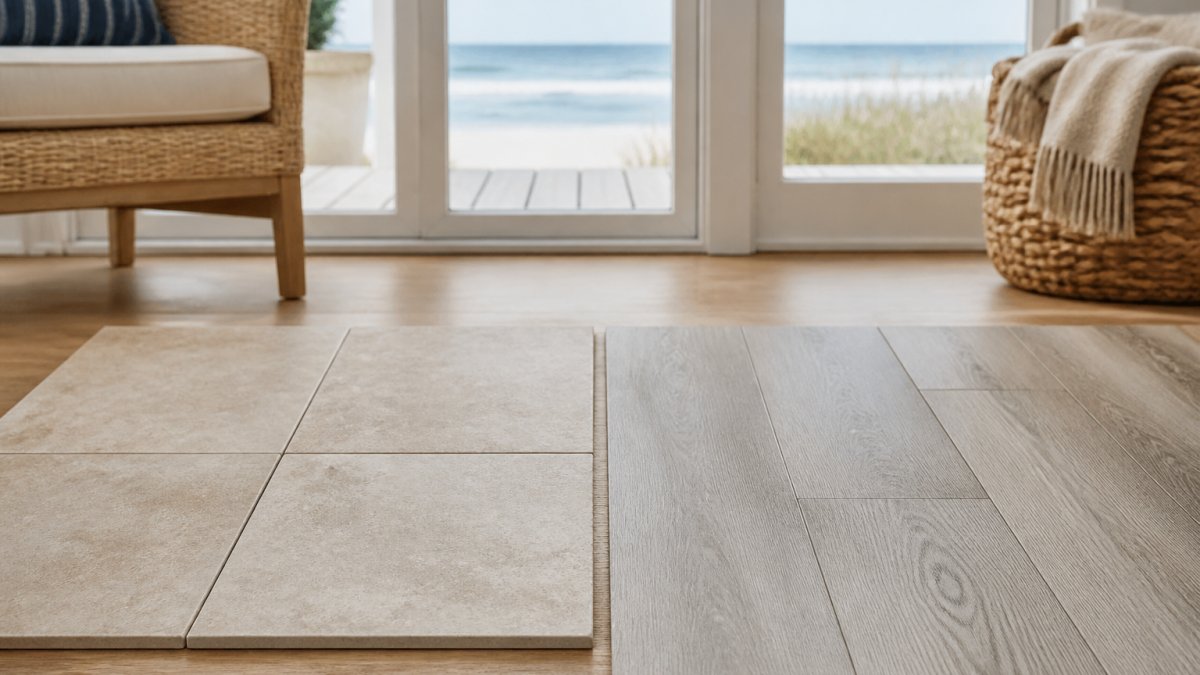
Luxury vinyl plank wins in wet rooms. Laminate wins on realism and surface toughness.
Here's the trade-off in plain terms:
| Factor | Waterproof Laminate | Luxury Vinyl Plank |
|---|---|---|
| Water tolerance | Spill protection, limited window | Fully waterproof core |
| Realism | Stronger wood texture | Good, slightly plastic feel |
| Scratch resistance | Higher | Moderate |
| Underfoot feel | Harder, hollow | Softer, warmer |
| Best for | Living areas, kitchens | Bathrooms, basements |
Waterproof Laminate Cost Per Square Foot: What Drives the Number
The cost of waterproof laminate flooring depends on several factors, including the specific product, wear layer, thickness, and installation requirements. Five variables move the number more than brand name does.
A Realistic Line-Item Breakdown
For a typical installed waterproof laminate project, costs can vary significantly based on factors like materials, underlayment, trim, labor, and subfloor preparation. Rooms over slab, in basements, or in older housing stock may incur additional costs.
The Warranty Fine Print Nobody Reads
Cost does not end at installation. Waterproof laminate warranties carry conditions that determine whether a claim is paid at all, and those conditions surprise most homeowners.
- Standing-water time limits. Most waterproof warranties specify a window, often 24 to 72 hours, to remove standing water. Water left past that window can void the claim even though the product is labeled waterproof.
- Flooding and appliance failures. Sudden discharge from a dishwasher, water heater, or supply line is typically excluded. Those are insurance claims, not warranty claims.
- Installation requirements. Warranties usually require a flat subfloor within tolerance, an approved underlayment, and perimeter expansion gaps. Installer error voids coverage regardless of product quality.
- Acclimation. Planks are generally required to acclimate in the room for about 48 hours before installation. Skipping it is a common reason claims get denied.
- Transferability. Some warranties transfer to a second owner; many do not, or transfer only within a short window after sale.
"Waterproof" is a product claim, not a warranty guarantee. Read the exclusions page before you buy, not after a leak. The exclusions list is usually one page and it tells you exactly what the manufacturer will not pay for.
Ask for a written quote that separates materials, labor, underlayment, trim, and subfloor prep. A single lump-sum number hides the prep cost, which is the line item most likely to grow once the old floor comes up.
Laminate Flooring Maintenance Tips for Coastal and High-Traffic Homes
Maintenance is where waterproof laminate either earns its price or fails early. The failure modes are predictable: grit scratches the wear layer, standing moisture reaches an exposed edge, and humidity swings stress the locking joints until they click, creak, or gap.
Grit Control Is the Highest-ROI Habit
Sand, road salt, and tracked-in soil act like sandpaper on the wear layer. Once the top coat is scratched through, the printed wood image dulls and the plank loses stain resistance. Entry mats do more for longevity than any cleaning product.
- Place a coarse-textured mat outside every exterior door and a finer microfiber mat just inside. The two-mat system traps most grit before it reaches the floor.
- Vacuum or sweep weekly with a soft-bristle head. Avoid beater bars; they can scuff the surface.
- In coastal homes, rinse entry mats weekly. Salt residue transfers to the floor and attracts moisture.
Damp-Mopping Without Damaging the Core
Waterproof laminate tolerates surface moisture, not saturation. The rule is damp, not wet.
- Use a pH-neutral cleaner diluted per the label. Vinegar, ammonia, and abrasives can dull the finish or attack the joint sealant.
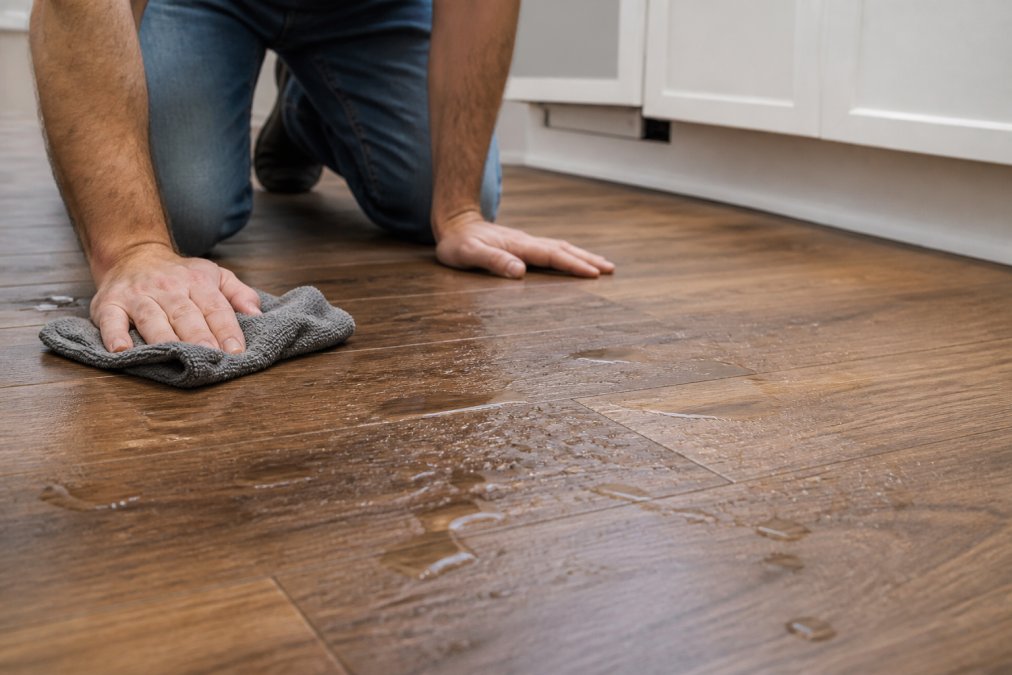
- Wring the mop until barely damp. A dripping mop pushes water into the seams, where swelling starts.
- Never let water pool at the base of cabinets, appliances, or exterior doors, the spots where a slow leak hides.
- Skip steam mops unless the manufacturer explicitly allows them. Steam drives moisture into the core and can void the warranty even on waterproof lines.
Humidity and Salt Air: What Actually Matters
Salt air itself does not dissolve laminate. The real threat in coastal homes is humidity swing, the daily and seasonal expansion and contraction of the core. A floating floor needs a stable environment to keep its expansion gaps working.
- Keep indoor relative humidity roughly between 35% and 55%. A hygrometer costs under $20 and tells you more about your floor's risk than any visual inspection.
- Run a dehumidifier in basements and closed-off rooms during humid months. Standing humidity stresses seams even when no water is visible.
- Do not block the perimeter expansion gap with caulk or heavy trim. The floor needs to move.
- After storms or plumbing work, check the perimeter for soft spots or lifted seams. Early detection is the difference between a plank replacement and a floor replacement.
Spills, Pets, and High-Traffic Zones
Even waterproof planks should be wiped promptly. The rating covers the surface and joint seal, not an indefinite soak.
- Blot spills with a dry cloth first, then damp-mop. Do not let liquid sit at a seam overnight.
- Place felt pads under all furniture legs and wide-surface cups under heavy pieces. A single dragged chair can gouge the wear layer.
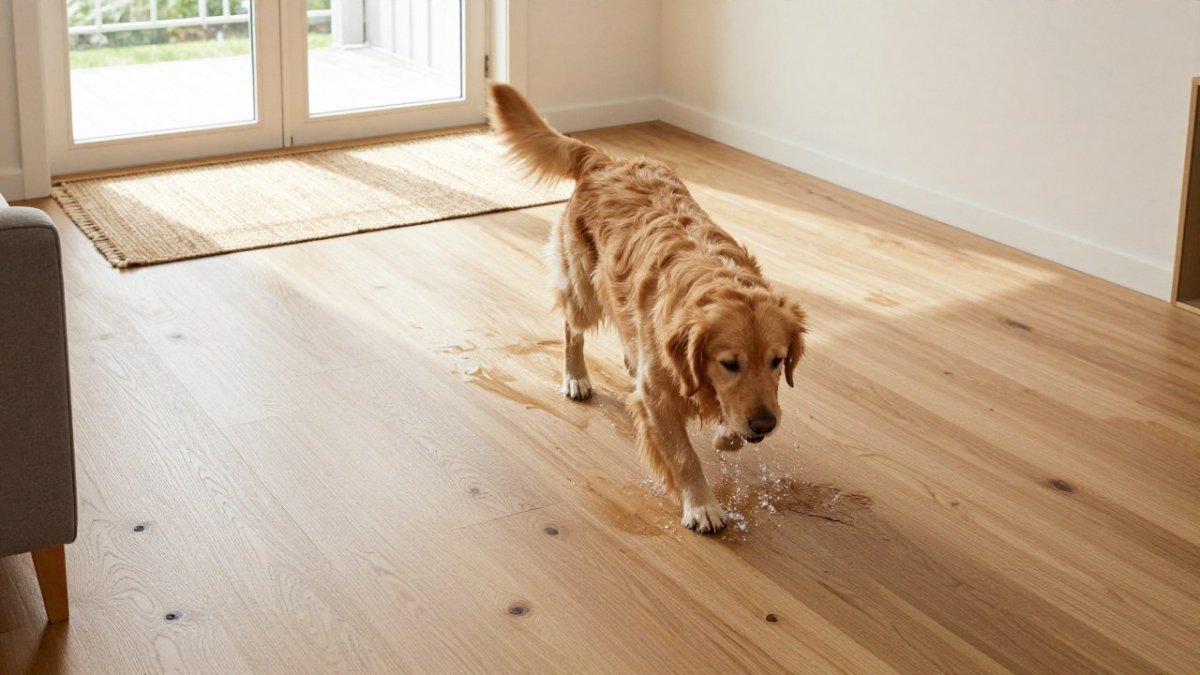
- Trim pet nails and place a mat under food and water bowls. Standing water at a bowl edge is a common cause of seam swelling in pet households.
- In kitchens, put a mat in front of the sink and dishwasher, two appliances behind many slow leaks that reach a floor.
A Simple Weekly and Seasonal Routine
- Weekly: sweep or vacuum, spot-clean with a damp microfiber pad, check entry mats.
- Monthly: damp-mop the whole floor with pH-neutral cleaner, inspect seams near appliances and exterior doors.
- Seasonally: check indoor humidity, inspect under sinks and around the dishwasher, and look for any lifted or gapping planks.
Waterproof laminate fails at the edges and the seams, not in the middle of the plank. Almost every maintenance habit that matters is really about keeping water and grit away from the joints.
Installation, Subfloor Prep, and Repairability
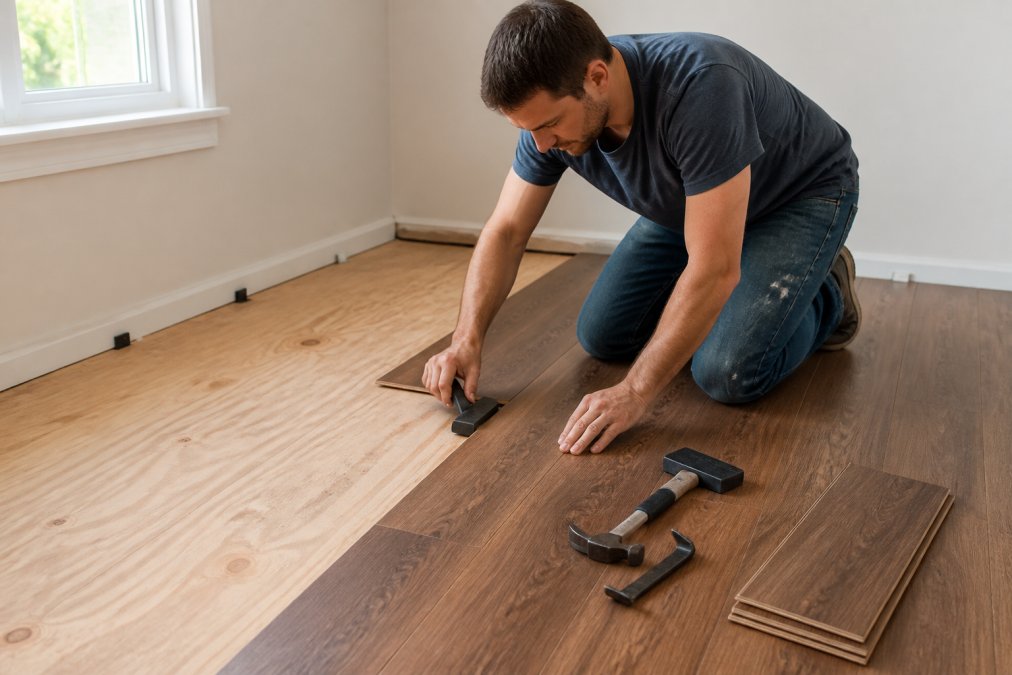
Subfloor prep decides whether a floating floor performs. The subfloor must be clean, dry, and flat within the manufacturer's tolerance, typically 3/16 inch over 10 feet. Skip it and you get hollow spots, clicking seams, and premature wear.
Frequently Asked Questions
Is waterproof laminate flooring actually worth it?
It depends on where you install it. Waterproof laminate handles spills, pet accidents, and damp mopping far better than traditional laminate, whose high-density fiberboard core swells when wet. For kitchens, entryways, and family rooms, it delivers a wood look at a lower cost than hardwood. For bathrooms or laundry rooms with standing water risk, industry guidance still points to porcelain tile or a fully impervious option instead.
Which is better, waterproof laminate or vinyl plank?
Neither wins everywhere. Waterproof laminate typically offers a more realistic wood texture and stronger impact resistance, while luxury vinyl plank handles moisture more forgivingly and feels warmer underfoot. Laminate's protection often depends on sealed seams and bevel coatings, so installation quality matters more. Vinyl plank is the safer pick for basements and bathrooms; laminate suits high-traffic living areas where looks and dent resistance matter most.
Can you install waterproof laminate flooring in a bathroom?
Most manufacturers advise against it. Current 2026 industry guidance notes that even waterproof-rated laminate is designed to resist spills, not standing water, and sudden leaks can still damage planks if left unaddressed. Bathrooms and laundry rooms carry constant humidity and puddling risk around tubs, toilets, and appliances. If you want a wood look in those rooms, luxury vinyl plank or porcelain tile is the more reliable choice.
How much does waterproof laminate cost per square foot?
The cost of waterproof laminate flooring varies depending on the brand, wear layer, and thickness. Installed pricing depends on subfloor condition, room size, and trim work, so request a quote for your space.