 Ultimate guide
Residential Flooring Services: Complete 2026 Guide
Table of Contents
- What Residential Flooring Services Include
- Types of Residential Flooring Materials
- Flooring Installation Cost: What to Expect
- Flooring Installation Timeline: How Long It Takes
- Hiring a Flooring Contractor: Key Considerations
- Flooring Maintenance and Long-Term Care
- Environmental Impact and Sustainable Flooring
- Residential Flooring Services for Specific Lifestyles
Residential Flooring Services: Complete 2026 Guide
Last Updated: July 6, 2026
Choosing the right residential flooring services can transform your home, but the process often feels overwhelming. At Hamptons carpet one floor and Home, we've guided thousands of Suffolk County homeowners through this decision. This guide covers everything from initial consultation through long-term maintenance, so you can make confident choices that match your lifestyle and budget.
What Residential Flooring Services Include
Professional flooring companies offer a complete ecosystem of services designed to simplify your project from start to finish.
In-Home Consultation and Measurement
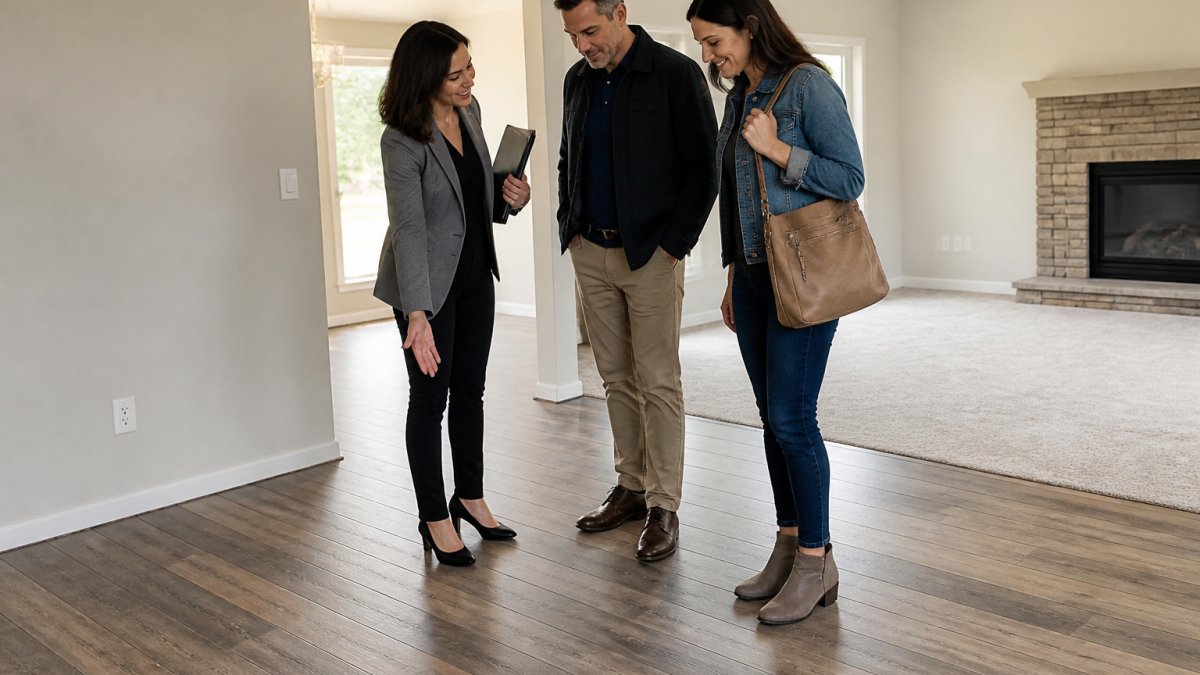
A professional contractor visits your home to assess your space, measure room dimensions precisely, evaluate subfloor condition, and discuss your lifestyle requirements. Professional measurements using laser tools eliminate guesswork and provide digital floor plans for reference throughout the project.
Design Selection and Sample Viewing
Quality service providers bring physical samples to your home so you can see flooring in your actual lighting conditions. Leaving samples for several days lets you observe how they look at different times of day with your existing furniture, helping you avoid decisions you'll regret after installation.
Types of Residential Flooring Materials
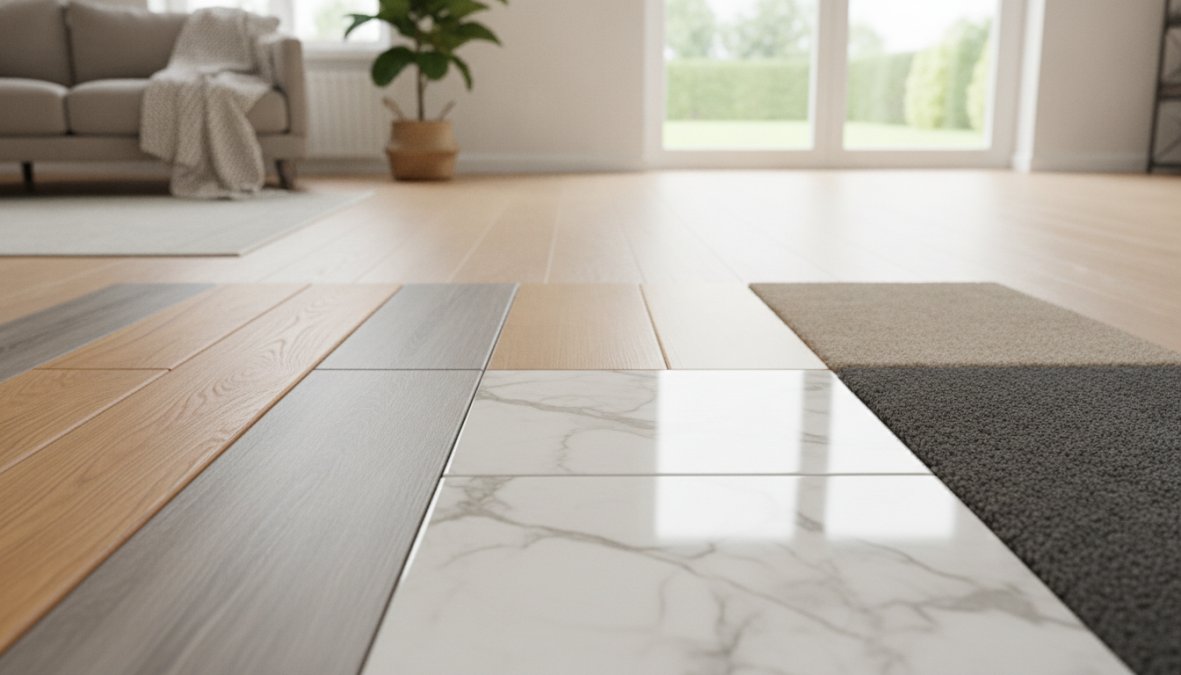
Each flooring type has distinct advantages, limitations, and price points that affect maintenance, durability, comfort, and how your home feels for the next 10-20 years.
Hardwood and Engineered Floors
Solid hardwood offers authentic wood grain, natural warmth, and can be refinished multiple times over its 25-30 year lifespan. Material costs range from $3-15 per square foot depending on wood species.
Engineered hardwood features a real hardwood veneer bonded to plywood, making it more stable in moisture-prone environments. It costs $2-10 per square foot and resists warping better than solid hardwood, though it cannot be refinished as many times.
Installation requires experienced professionals. Improper wood acclimation, inadequate subfloor preparation, or incorrect fastening causes cupping, crowning, or gaps between planks.
Vinyl Plank and Laminate Options
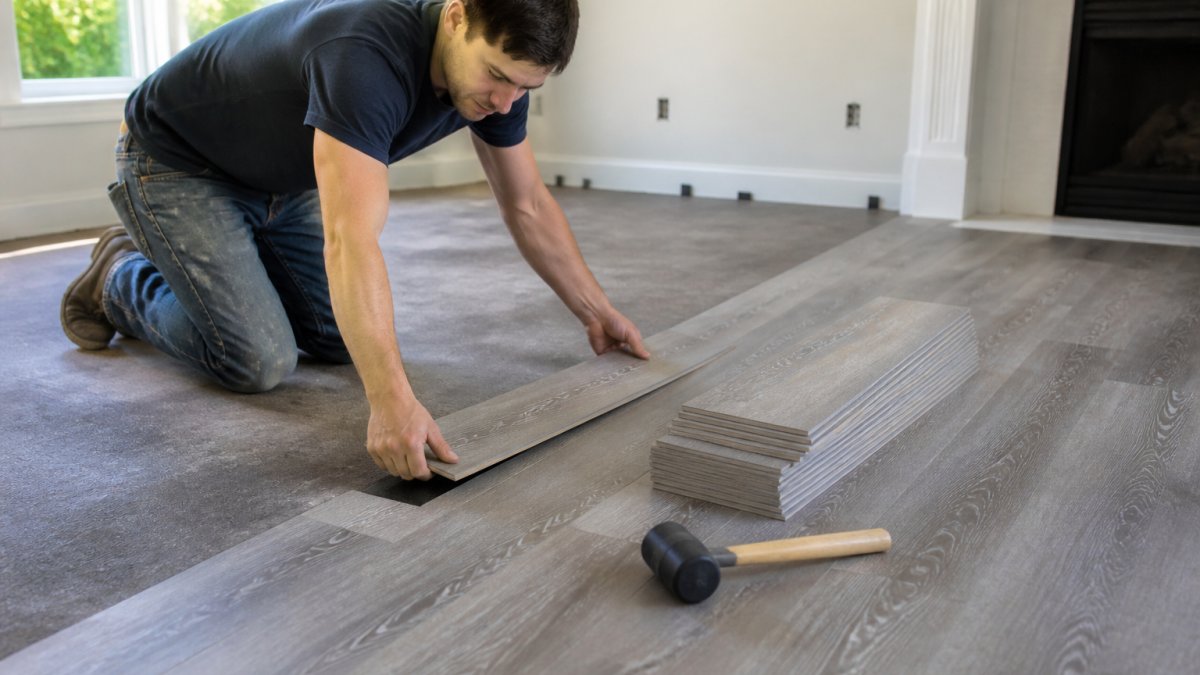
Luxury vinyl plank (LVP) offers authentic wood or stone appearance at a fraction of the cost. Modern vinyl features realistic textures and sophisticated color matching. Click-together systems don't require nails or adhesive, making installation straightforward. Vinyl's water resistance makes it ideal for kitchens, bathrooms, and basements. Lifespan typically ranges from 10-20 years, with costs from $1-8 per square foot.
Laminate consists of a photographic layer under a protective coating bonded to high-density fiberboard. Laminate costs $1-5 per square foot but is not waterproof, making it unsuitable for bathrooms. Both vinyl and laminate install quickly, lowering labor costs compared to hardwood.
Tile and Carpet Solutions
Porcelain tile is denser and more stain-resistant than ceramic, justifying its higher cost in high-traffic areas. Tile installation requires skilled labor to ensure proper substrate preparation and grout coverage.
Carpet provides warmth, comfort, and sound absorption. Modern fibers resist staining and wear better than older generations. Carpet works best in bedrooms and living rooms where water exposure is minimal.
Flooring Installation Cost: What to Expect
Material costs typically represent 40-60% of your total budget, with labor comprising the remainder. Room size significantly impacts per-square-foot costs because fixed expenses like subfloor preparation don't scale proportionally.
Pricing Factors and Material Costs
Hardwood ranges from $3-15 per square foot. Engineered hardwood costs $2-10 per square foot. Vinyl plank ranges from $1-8 per square foot, while laminate falls in the $1-5 range. Tile pricing varies from $1-20+ per square foot.
Subfloor condition determines whether installation is straightforward or complicated. A solid, level subfloor allows direct installation, while moisture damage, unevenness, or structural issues require repair or replacement before new flooring can be installed. These repairs can add $500-5,000+ depending on severity.
Labor Costs and Additional Expenses
Labor costs typically range from $3-15 per square foot depending on material type and complexity. Hardwood requires more skill than vinyl, so labor costs are higher. Removal and disposal of existing flooring adds $1-3 per square foot. Underlayment and moisture barriers add another $0.50-2 per square foot. Finishing work, baseboards, trim, and transitions between rooms can add $500-2,000 depending on room count and existing trim condition.
| Cost Component | Budget Range | Notes |
|---|---|---|
| Material | $1-15/sq ft | Varies by type and quality |
| Labor | $3-15/sq ft | Higher for hardwood, lower for vinyl |
| Removal/Disposal | $1-3/sq ft | Depends on existing flooring |
| Underlayment | $0.50-2/sq ft | Moisture barriers, padding |
| Trim/Transitions | $500-2,000 | Per project, not per square foot |
| Subfloor Repair | $500-5,000+ | Only if needed |
Financing and Warranty Options
Many flooring companies offer financing through third-party lenders, allowing you to spread costs over 12-60 months. Typical interest rates range from 0% promotional offers to 12-18%. Material warranties typically cover manufacturing defects for 5-25 years. Installation warranties are shorter, usually 1-5 years, covering workmanship issues.
Flooring Installation Timeline: How Long It Takes
Understanding the installation timeline helps you plan for home disruption and coordinate with other contractors.
Surface Preparation and Subfloor Repair
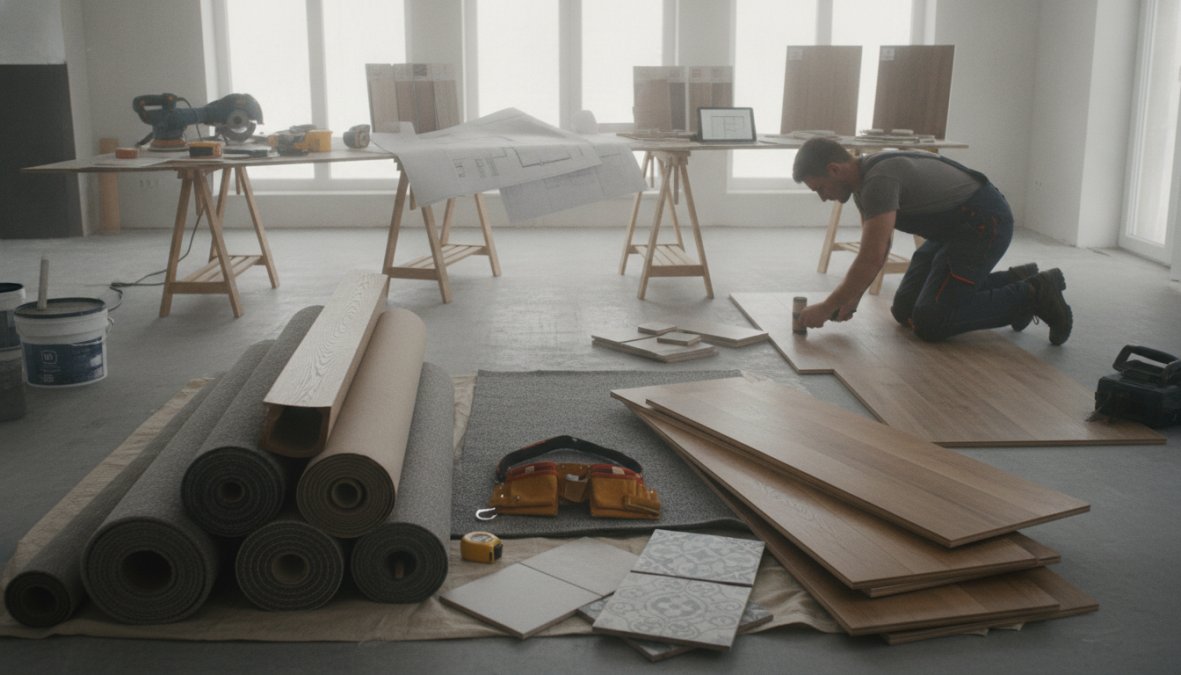
Surface preparation typically takes 1-3 days depending on existing flooring type and subfloor condition. Removing old carpet is relatively quick, usually one day. Removing tile takes longer to avoid damaging the subfloor. Subfloor leveling and repair can extend the timeline significantly if high spots need sanding or low spots need patching.
The contractor should provide a written timeline before work begins, accounting for drying time if moisture barriers or primers are applied.
Professional Installation and Finishing
Actual flooring installation typically takes 1-5 days depending on total square footage and material type. Vinyl plank installs fastest, with crews completing 500-1,000 square feet per day. Hardwood installation is slower, typically 200-400 square feet per day. Tile installation is slowest due to grout curing time, often requiring 3-7 days. Most contractors require 24-48 hours after installation before you can walk on new flooring.
Hiring a Flooring Contractor: Key Considerations
Selecting the right contractor determines whether your project runs smoothly or becomes a source of stress.
Evaluating Contractor Credentials and Experience
Verify licenses and insurance. A legitimate contractor carries general liability insurance and workers' compensation coverage. Request proof of both before work begins. Ask for references from recent projects and contact them to ask about timeline adherence, cleanliness, problem-handling, and satisfaction.
Review online ratings carefully. A contractor with 4.8 stars across 50 reviews is more reliable than one with 5.0 stars from 3 reviews. Look for patterns in negative reviews. Experience matters enormously, a contractor who has completed 500+ hardwood projects understands nuances that someone with 20 projects might miss.
DIY vs. Professional Installation Cost-Benefit Analysis
Vinyl plank flooring is genuinely DIY-friendly for many homeowners. Hardwood installation requires skill and specialized tools, and mistakes can be expensive to fix. Calculate the real cost of DIY work: if professional installation costs $5/square foot and takes you 40 hours, you're saving only $200 while spending 40 hours of your time.
Material waste also factors in. Professional installers typically waste 5-10% of material through efficient planning. DIYers often waste 15-25%, which can exceed labor savings. For most homeowners, professional installation of hardwood, tile, or engineered flooring makes financial sense.
Flooring Maintenance and Long-Term Care
How you maintain your flooring determines how long it lasts and how well it looks years after installation.
Routine Cleaning by Flooring Type
Hardwood requires gentle care. Vacuum regularly to remove grit that scratches the surface. Use a slightly damp microfiber mop for cleaning. Avoid standing water. Most hardwood floors need refinishing every 7-10 years depending on traffic and wear.
Vinyl plank is the lowest-maintenance option. Vacuum to remove dirt, then mop with a damp microfiber mop. Avoid excessive water and harsh chemicals. Most vinyl floors last 10-20 years without refinishing.
Laminate requires similar care to vinyl but avoid standing water which damages the fiberboard core. Tile needs regular grout maintenance. Grout sealing every 3-5 years prevents staining and moisture infiltration. Carpet requires regular vacuuming and professional cleaning every 12-18 months.
Refinishing and Restoration Options
Hardwood refinishing transforms a worn, dull floor into something that looks newly installed. The process involves sanding to bare wood, then applying new stain and finish. Refinishing costs $1-4 per square foot and takes 5-7 days including drying time.
Hardwood floor repair addresses gaps, cupping, or localized damage. Small gaps often close naturally during dry seasons. Cupping usually indicates moisture problems; addressing the moisture source is essential before refinishing. Vinyl and laminate cannot be refinished; surface damage is permanent. Tile can be refinished by regrouting, which refreshes appearance without replacing tiles.
Environmental Impact and Sustainable Flooring
Hardwood from sustainably managed forests represents a renewable resource. Look for Forest Stewardship Council (FSC) certification, which verifies responsible forest management. Reclaimed hardwood eliminates the need for new trees while adding character.
Engineered hardwood and laminate use byproducts from lumber mills, reducing waste. However, adhesives contain volatile organic compounds (VOCs) that off-gas after installation. Lower-VOC options exist but cost more.
Vinyl plank is petroleum-based and not biodegradable, but its durability means less frequent replacement. Consider the full lifecycle of your choice: material sourcing, manufacturing, transportation, installation, maintenance, and disposal. A material lasting 25 years with minimal maintenance might have lower environmental impact than a cheaper option requiring replacement in 10 years.
Residential Flooring Services for Specific Lifestyles
Your flooring choice should match your actual living situation.
Pet-Friendly and High-Traffic Solutions
Pet owners need flooring that withstands scratches, resists staining, and cleans easily. Vinyl plank excels in this category, it's virtually scratch-proof, stain-resistant, and cleans with a simple mop. Tile also works well. Hardwood is challenging with pets because claws scratch the finish.
Some vinyl and laminate products include antimicrobial treatments that inhibit odor-causing bacteria. Many homeowners use hardwood in living areas but vinyl in entryways and kitchens, creating zones matched to actual use patterns.
Moisture-Resistant Options for Kitchens and Bathrooms
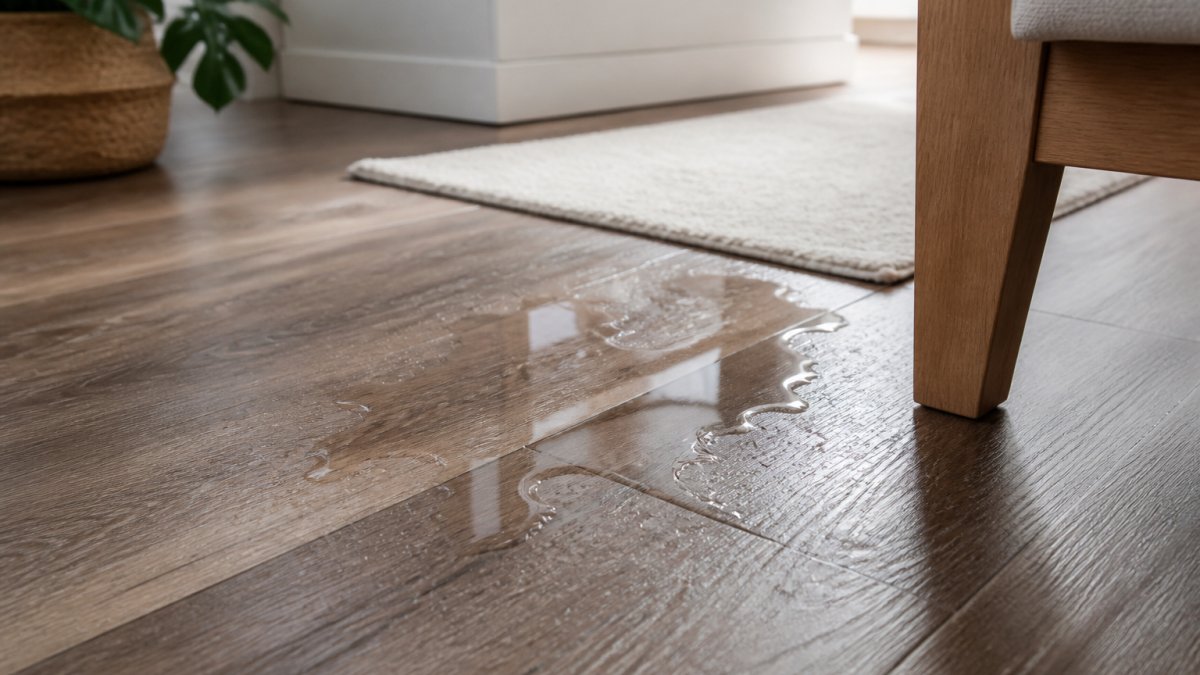
Kitchens and bathrooms require moisture-resistant flooring. Tile and porcelain are the gold standard, they're waterproof and durable with proper installation and adequate grout coverage. Vinyl plank works well in kitchens and bathrooms if the subfloor is properly prepared and sealed.
Hardwood is unsuitable for bathrooms and risky in kitchens. Moisture causes expansion and warping. Laminate should be avoided in bathrooms entirely. Ensure bathrooms have adequate exhaust fans running during and after showers. Kitchens need good ventilation over cooking areas.
Selecting residential flooring services requires balancing aesthetics, durability, maintenance requirements, and budget. The right choice depends on your specific situation, lifestyle, climate, traffic patterns, and long-term plans. At Hamptons carpet one floor and Home, we work with homeowners throughout Suffolk County to match flooring materials to real-world needs and ensure professional installation that lasts. Our team provides detailed consultations, brings samples to your home, and manages projects from start to finish with transparent pricing and clear timelines.
Frequently Asked Questions
What services do residential flooring companies provide?
Residential flooring services typically include in-home consultations and measurements, design selection assistance with samples, professional installation of materials like hardwood, laminate, vinyl plank, tile, and carpet, surface preparation and subfloor repair, removal of old flooring, and post-installation maintenance guidance. Many contractors also offer financing options, warranties, and refinishing services. Full-service providers handle everything from initial estimates through final cleanup.
How much does flooring installation cost on average?
Flooring installation costs vary significantly based on material type, room size, and labor complexity. Laminate and vinyl plank typically range from $3-$8 per square foot installed, while hardwood runs $8-$15 per square foot. Tile installation averages $5-$12 per square foot, and carpet ranges $2-$10 per square foot. Labor costs depend on surface preparation needs, subfloor repairs, and regional rates. Get multiple estimates from local contractors to compare pricing and warranty coverage for your specific project.
How long does residential flooring installation typically take?
Installation timeline depends on room size and material type. Small rooms (100-200 sq ft) may take 1-2 days, while larger projects span 3-7 days. Surface preparation and subfloor repair can add 1-3 days if needed. Hardwood and tile generally require longer installation than vinyl plank or laminate. Some contractors offer next-day installation on select in-stock products. Always ask your contractor for a detailed timeline including prep work, installation, and curing time before foot traffic is safe.
Should I hire a professional or install flooring myself?
Professional installation is recommended for most residential flooring services. Professionals have specialized tools, expertise in surface preparation, and warranty backing that DIY installation lacks. Mistakes in subfloor prep or underlayment can lead to costly repairs. While DIY saves labor costs (typically 40-50% of total project cost), professional installation ensures durability, proper moisture barriers, and correct seam placement, especially critical for hardwood, tile, and vinyl plank. For complex layouts or moisture-prone areas, professional installation is worth the investment.
[EXTERNAL_LINK: National Association of Home Builders flooring trends report | nahb.org]
[EXTERNAL_LINK: The Spruce guide to hardwood flooring maintenance and care | thespruce.com]
[EXTERNAL_LINK: Consumer Reports flooring material comparison and durability ratings | consumerreports.org]
This article was written using GrandRanker