 Ultimate guide
Is Soundproof Underlayment Worth It for Upstairs Bedrooms?
Table of Contents
- Is Soundproof Underlayment Worth It for Upstairs Bedrooms? The Real ROI
- What Is Acoustic Underlayment and How Does It Work?
- STC and IIC Ratings Explained: Understanding Sound Performance
- How to Reduce Impact Noise Between Floors: Underlayment Types and Performance
- Soundproofing Floor Cost: Installation, Materials, and Budget Breakdown
- Compatibility with Underfloor Heating and Weight Limits
- Common Myths About Acoustic Underlayment Debunked
- Installation Considerations for Hard Flooring and Laminate
Is Soundproof Underlayment Worth It for Upstairs Bedrooms?
Last Updated: June 27, 2026
Is it worth installing soundproof underlayment for upstairs bedrooms? The answer depends on your specific noise problem, budget, and home layout. At Hamptons carpet one floor and Home, we've helped countless Suffolk County homeowners evaluate this decision. Some installations deliver transformative results. Others barely move the needle. The difference comes down to understanding what acoustic underlayment actually does, and what it cannot do.
Is Soundproof Underlayment Worth It for Upstairs Bedrooms? The Real ROI
Install acoustic underlayment if you're dealing with impact noise: footsteps, dropped objects, furniture movement from the floor above. Underlayment absorbs vibrations before they travel through your floor system, addressing these problems effectively.
Skip it if your issue is airborne noise, voices, music, TV sound from adjacent rooms. Underlayment helps marginally with airborne noise. You'd need a complete floor system redesign to solve that problem properly.
The financial math works when you're already replacing flooring. Adding underlayment during installation costs 20-30% less than retrofitting it later. If your hard flooring is holding up fine, retrofitting probably doesn't justify the disruption and expense.
Consider your structural situation. Older homes with flexible floor joists benefit more from underlayment than newer construction with engineered joists. Flexible floors transmit more vibration, so dampening materials have more to work with.
When to Skip It
Not every bedroom needs acoustic underlayment. Be honest about your actual noise problem before spending money.
If the noise happens only occasionally, guests visiting, weekend activity, underlayment might be overkill. If your complaint is primarily about voices or music, underlayment alone won't solve it. You'd need structural changes: floating floor systems, isolation clips, or resilient channels in the ceiling below.
If your floor joists are already solid and don't flex when you walk across the room, underlayment provides minimal benefit. If you're renting or planning to move within three years, the investment won't pay back.
What Is Acoustic Underlayment and How Does It Work?
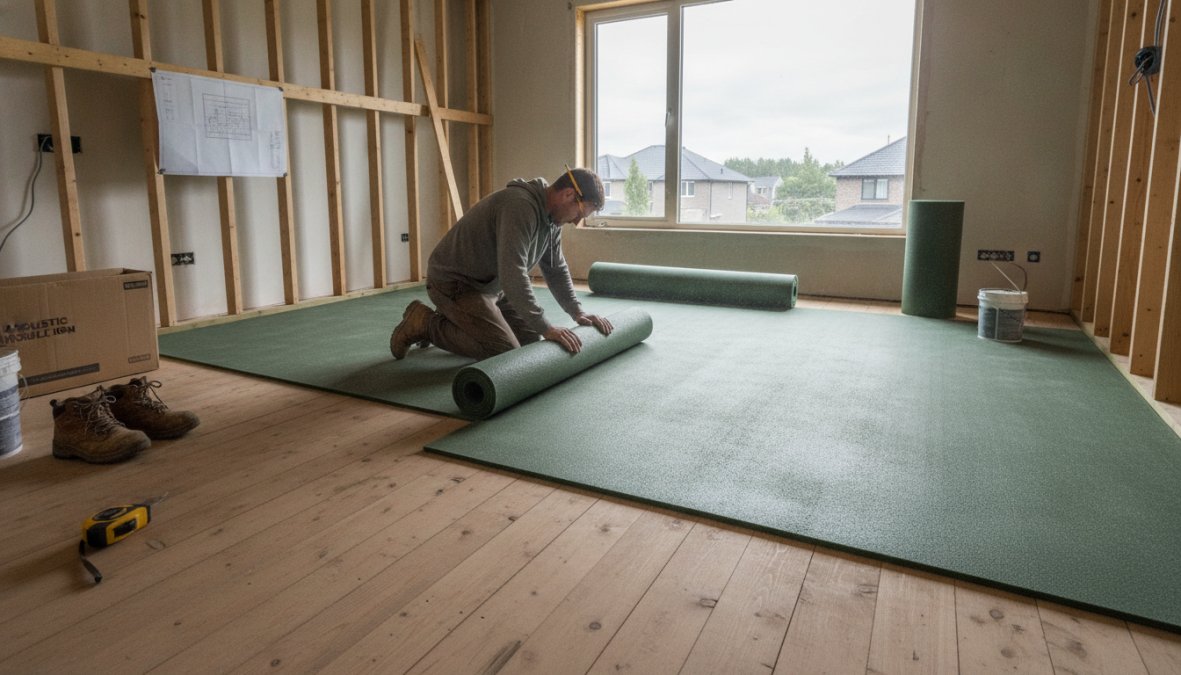
Acoustic underlayment is a material layer installed between your subfloor and finished flooring. It dampens vibrations before they travel through the floor structure to rooms below.
When someone walks on the floor above, their footstep creates vibrations in the hard flooring. Those vibrations would normally transmit directly into the subfloor and floor joists, which amplify the sound as it travels downward. Underlayment interrupts this path by compressing slightly under impact, absorbing energy that would otherwise become noise.
Effectiveness depends on the material's density and composition. Higher-density materials absorb more vibration. Underlayment also provides thermal insulation as a secondary benefit, though this is minor compared to its acoustic purpose.
STC and IIC Ratings Explained: Understanding Sound Performance
Two ratings define acoustic underlayment performance: STC and IIC.
STC (Sound Transmission Class) measures how well a material blocks airborne noise, voices, music, TV sound. The scale runs from 0 to 100. For bedroom applications, you'd want STC 50 or higher, though underlayment alone rarely achieves these ratings.
IIC (Impact Insulation Class) measures impact noise reduction, footsteps, dropped objects, furniture movement. This is the rating that matters for underlayment. The scale runs from 0 to 100, inverted: higher numbers mean better performance. An IIC rating of 60 is average. IIC 70 is good. IIC 80 is excellent.
What IIC Ratings Mean for Footstep Noise
An IIC improvement of 10 points represents roughly a 10-decibel reduction in impact noise. Baseline footstep noise without underlayment might measure 85 decibels in the room below. With IIC 70 underlayment, you'd expect closer to 75 decibels. This difference is significant enough that most people perceive it as meaningful noise reduction.
For bedrooms, aim for underlayment with an IIC rating of at least 60. If your upstairs neighbor is particularly loud, consider IIC 70 or higher. The cost difference is modest, usually 15-25% more per square foot, and the performance improvement is measurable.
How to Reduce Impact Noise Between Floors: Underlayment Types and Performance
Three main categories dominate the market: cork, rubber, and foam. Each has distinct performance characteristics, cost profiles, and installation requirements.
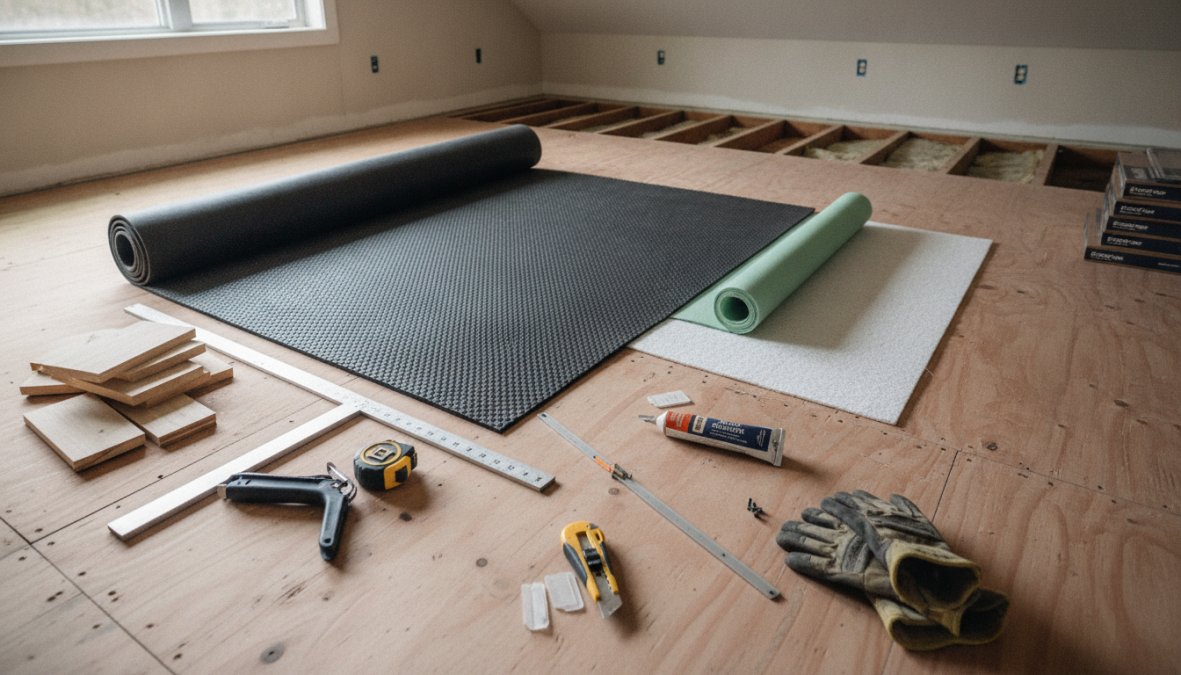
Cork Underlayment: Natural Sound Dampening
Cork is harvested from cork oak bark and compresses under weight, absorbing vibrations effectively. Cork underlayment typically ranges from 4-6mm thick and delivers IIC ratings between 50-65.
The advantage: cork is renewable, biodegradable, and provides decent thermal insulation. Many people prefer cork for aesthetic reasons.
The disadvantage: cork is expensive, typically 50-80% more costly than rubber or foam alternatives. It's also more susceptible to moisture damage. If your subfloor experiences any water exposure, cork deteriorates quickly.
Cork performs well for moderate noise problems in dry environments. If budget allows and you want an eco-friendly option, cork is solid.
Rubber Padding: Durability and Noise Reduction
Recycled rubber underlayment is made from post-consumer rubber and is dense, durable, and delivers strong impact noise reduction. Rubber typically provides IIC ratings between 60-75, making it effective for most residential applications.
Rubber's strength is durability. It resists moisture, doesn't compress permanently over time, and maintains performance for 20+ years. Installation is straightforward and forgiving. Many professional installers prefer rubber because it's reliable and predictable.
The disadvantage: rubber can have an odor when new, though this typically subsides within days to weeks. Rubber is also heavier than cork or foam.
For most homeowners, rubber represents the best balance of performance, durability, and cost.
Foam Underlay: Budget-Friendly Options
Foam underlayment is the most affordable option. It's lightweight, easy to install, and widely available. Foam delivers IIC ratings between 40-60, suitable for light to moderate noise problems.
The advantage is price and availability. Installation is simple enough for DIY projects.
The disadvantage: foam compresses permanently over time. After 5-10 years, foam loses effectiveness as it breaks down. It's also more sensitive to moisture and temperature fluctuations.
Foam works for budget-conscious homeowners dealing with moderate noise or for temporary solutions.
Soundproofing Floor Cost: Installation, Materials, and Budget Breakdown
Material costs vary significantly based on type and quality. Budget roughly 50 cents to 2 dollars per square foot for underlayment alone.
For a typical 200-square-foot bedroom:
- Foam underlayment: 100-400 dollars total
- Rubber underlayment: 200-600 dollars total
- Cork underlayment: 300-800 dollars total
Installation labor adds 1-3 dollars per square foot if you hire professionals. Total project cost for a 200-square-foot bedroom with new flooring and professional installation ranges from 2,000-5,000 dollars depending on flooring choice. Underlayment represents 10-20% of that total cost.
DIY vs. Professional Installation ROI
DIY installation saves 400-600 dollars in labor but introduces risk. Underlayment must be installed smoothly without wrinkles or gaps. Improper installation reduces acoustic performance by 20-30%.
Professional installers ensure proper seams, correct material orientation, and optimal compression. They also handle subfloor preparation, critical for underlayment performance. Hire professionals unless you have flooring installation experience.
Hidden Costs and Structural Considerations
Subfloor preparation, cleaning, leveling, repairing damaged areas, can add 300-500 dollars. If your subfloor has moisture issues, addressing those before underlayment installation is essential.
Flooring removal adds cost if you're replacing existing flooring. Disposal typically runs 100-300 dollars. Transition pieces where new flooring meets existing flooring in adjacent rooms add 50-150 dollars.
Compatibility with Underfloor Heating and Weight Limits
If your home has radiant floor heating, underlayment compatibility becomes critical. Not all underlayment works with radiant systems.
Radiant heating requires heat to transfer upward through the floor. Underlayment that's too thick or has too much thermal resistance blocks heat transfer, reducing system efficiency. For homes with radiant heating, specify underlayment rated for radiant compatibility, typically thinner underlayment (3-4mm maximum) with low thermal resistance.
Check your heating system specifications before choosing underlayment. Installing incompatible underlayment can reduce heating efficiency by 15-25%, costing money long-term in energy bills.
Underlayment adds minimal weight, typically 1-2 pounds per square foot. This is negligible for residential floor structures. For typical residential construction, underlayment weight is not a concern.
Common Myths About Acoustic Underlayment Debunked
Myth: Underlayment eliminates all footstep noise. Reality: Underlayment reduces footstep noise by 10-20 decibels, depending on material quality. It doesn't eliminate the problem entirely.
Myth: Thicker underlayment is always better. Reality: Thickness helps up to a point. Beyond 6-8mm, additional thickness provides minimal acoustic benefit and creates installation challenges.
Myth: Underlayment solves airborne noise problems. Reality: Underlayment addresses impact noise. Airborne noise requires different solutions: acoustic panels, mass, damping, or structural decoupling.
Myth: All underlayment products perform the same. Reality: Performance varies significantly. IIC ratings differ by 20-30 points between products. Read the specifications, not just the price tag.
Does Carpet Padding Count as Soundproofing?
Carpet padding provides some acoustic benefit, but it's not designed for acoustic underlayment purposes. Carpet padding typically has IIC ratings of 40-50, lower than dedicated underlayment products. Carpet also loses effectiveness over time as it breaks down under foot traffic.
Hard flooring with quality underlayment provides better long-term acoustic performance than carpet.
Will Underlayment Eliminate All Noise?
No. Underlayment reduces impact noise by 10-20 decibels. This is meaningful, the difference between "I can't sleep because of footsteps" and "I notice footsteps but can sleep through them." But complete silence is unrealistic.
Structural noise, creaking joists, and mechanical noise require different solutions. Set realistic expectations. Underlayment improves the situation significantly but doesn't transform your bedroom into a soundproof chamber.
Installation Considerations for Hard Flooring and Laminate
Proper installation is critical for underlayment effectiveness.
Floating Floor Installation Best Practices
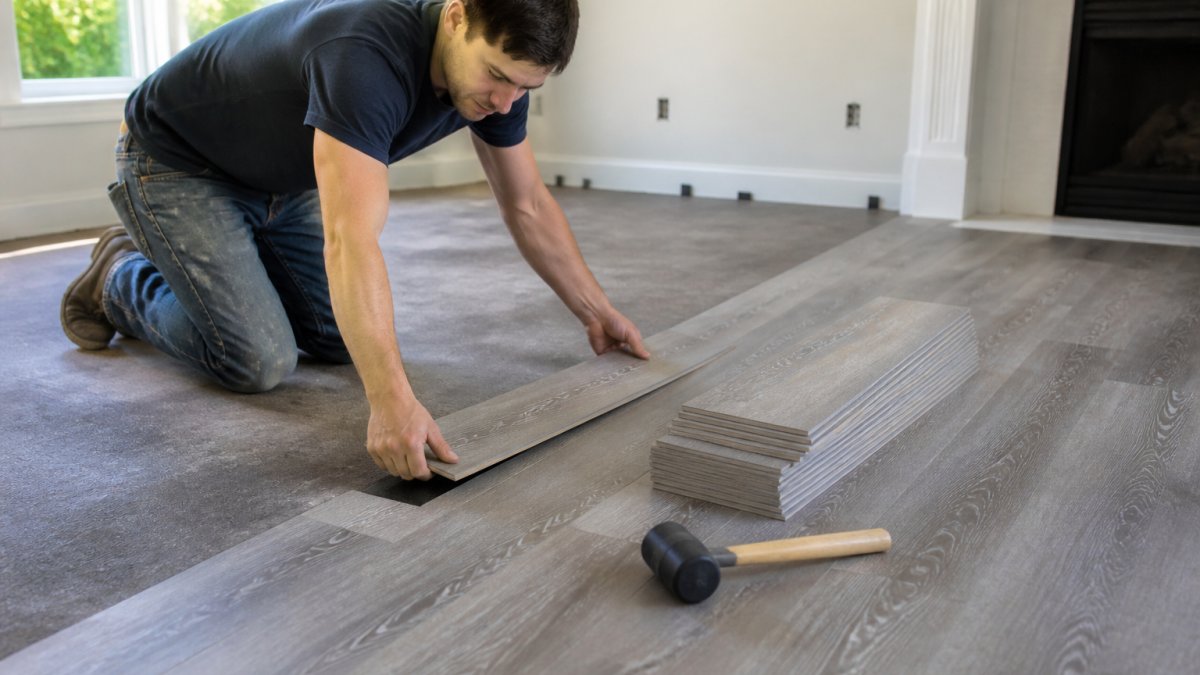
Floating floor systems, where flooring isn't attached to the subfloor, work well with underlayment. Ensure the underlayment is continuous under the entire floor. Gaps or seams reduce effectiveness. Seams should be taped to prevent moisture migration.
Leave expansion gaps around the room perimeter, typically 1/4 inch, to allow the floating floor to move with temperature and humidity changes. Underlayment should not extend into these gaps.
When to Remove Existing Flooring
Never install underlayment over existing hard flooring. The old flooring must be completely removed first.
Removing existing flooring reveals the subfloor condition. Clean the subfloor thoroughly, removing all dust, debris, and old adhesive. Check for moisture. If the subfloor is damp or has any water damage, address this before installing underlayment.
For plywood subfloors, check for soft spots or deterioration. Replace damaged sections before installing underlayment. For concrete subfloors, apply a moisture barrier if the concrete is below grade or experiences any moisture issues.
Deciding whether to install acoustic underlayment for upstairs bedrooms comes down to your specific noise problem and budget. If you're dealing with footstep noise and planning new flooring anyway, underlayment delivers measurable results at reasonable cost. At Hamptons carpet one floor and Home, we've guided hundreds of Suffolk County homeowners through this decision, and most who choose quality underlayment during flooring installation report satisfaction with the noise reduction. Our team helps you evaluate your situation, select the right material for your needs, and ensure proper installation that delivers the acoustic performance you expect. Contact us to discuss your specific situation and get a professional assessment of whether underlayment makes sense for your bedroom.
| Underlayment Type | IIC Rating | Cost per Sq Ft | Best For | Durability |
|---|---|---|---|---|
| Foam | 40-60 | $0.50-$1.00 | Budget-conscious, light noise | 5-10 years |
| Rubber | 60-75 | $1.00-$1.50 | Moderate to heavy noise, long-term | 20+ years |
| Cork | 50-65 | $1.50-$2.00 | Eco-conscious, moderate noise | 15-20 years |
Frequently Asked Questions
Does soundproof underlayment actually work for reducing footstep noise?
Yes, acoustic underlayment reduces impact noise by absorbing vibrations from footsteps before they travel through floor joists. The effectiveness depends on the IIC rating, higher ratings (68+) provide better sound attenuation. Rubber and cork materials typically outperform foam for footstep noise reduction, though no underlayment eliminates noise entirely. Expect 5-15 decibels of reduction depending on material quality and subfloor condition.
What IIC rating do I need for upstairs bedroom soundproofing?
For bedrooms, aim for an IIC rating of at least 66-68. This rating measures impact insulation class and indicates how well the underlayment reduces footstep and hollow sounds. Higher ratings (70+) provide superior performance but cost more. Check your local building codes, as some regions require minimum IIC ratings for multi-family homes. Combining high-density underlayment with quality hard flooring improves overall acoustic performance.
Is DIY installation of soundproof underlayment worth the cost savings?
DIY installation can save 40-60% on labor costs, making it worthwhile if you have basic flooring experience. However, improper installation, gaps, wrinkles, or incorrect subfloor preparation, significantly reduces acoustic performance and durability. Consider professional installation if your subfloor is uneven, if you're installing over existing flooring, or if structural concerns exist. The ROI depends on your time value and the complexity of your specific project.
Can I use soundproof underlayment with underfloor heating systems?
Most acoustic underlayments are compatible with underfloor heating, but thermal insulation properties vary. High-density foam and some cork products may reduce heat transfer efficiency. Rubber underlayment typically has minimal thermal impact. Always verify compatibility with your heating system manufacturer before purchasing. Some underlayments are specifically designed for radiant heating and won't compromise performance or warranty coverage.
This article was written using GrandRanker