 Ultimate guide
Waterproof Flooring Options for Busy Families: 2026 Guide
Table of Contents
- Why Waterproof Flooring Matters for Busy Families
- Top Waterproof Flooring Options for Busy Families Compared
- Luxury Vinyl Plank vs Laminate: Which Wins for Families?
- Best Flooring for Pets and Kids: Scratch, Slip, and Stain Resistance
- How to Clean Waterproof Vinyl Flooring Without Damaging It
- Waterproof Flooring Installation Cost: DIY vs. Professional
- Warranty Deep-Dive: What Family Flooring Warranties Actually Cover
- Conclusion
Last Updated: June 3, 2026
Choosing the wrong floor for a busy household is one of the most expensive mistakes Suffolk County homeowners make. The waterproof flooring options for busy families covered in this guide represent the most practical, durable, and cost-effective choices available in 2026, and Hamptons Carpet One Floor and Home has helped hundreds of local families navigate exactly this decision. Below, we'll show you how each material performs under real family conditions, what warranties actually protect you against, and which rooms demand different solutions.
Here's what most guides get wrong: they treat "waterproof" and "water-resistant" as interchangeable. They're not. That distinction alone can cost you thousands in water damage repairs.
Why Waterproof Flooring Matters for Busy Families
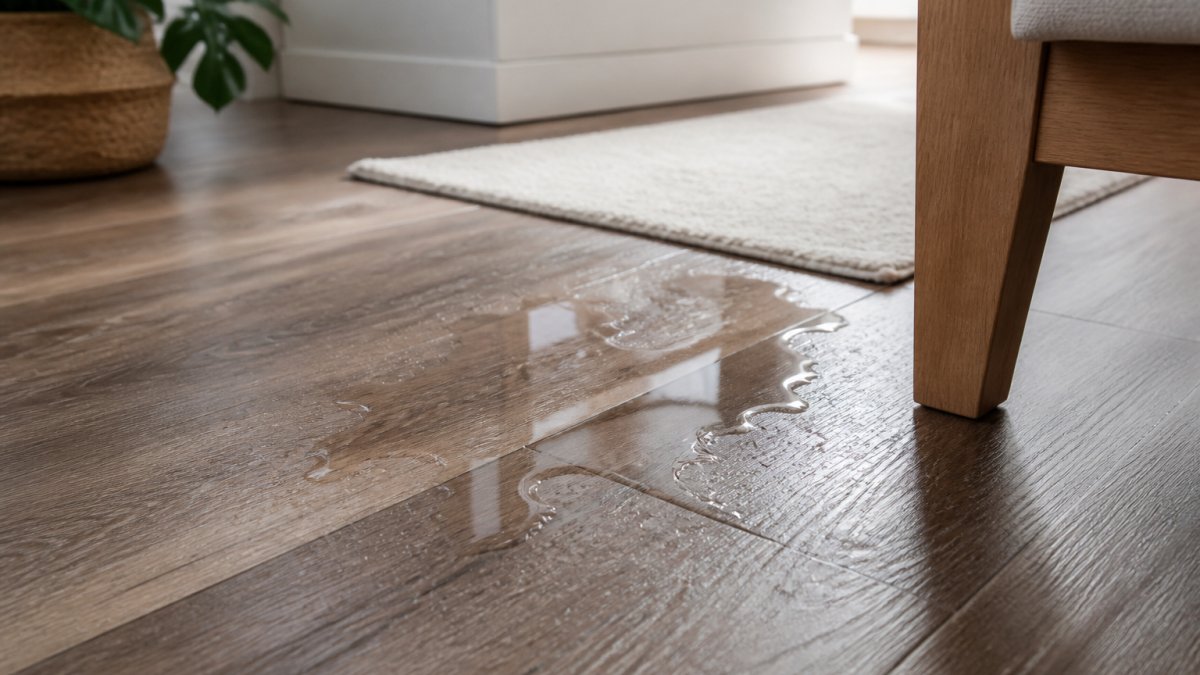
Waterproof flooring has a completely impermeable core that prevents moisture from penetrating the surface, joints, and subfloor below. Water-resistant flooring handles brief exposure but will eventually allow moisture to seep through seams with prolonged contact.
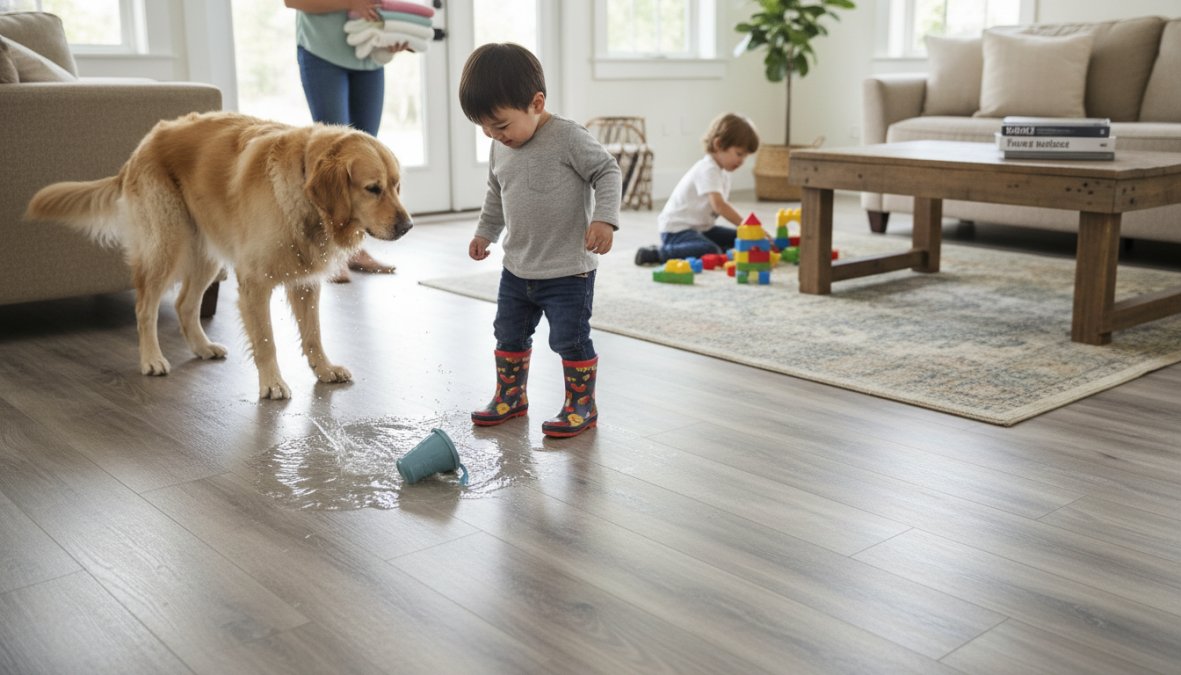
For families with kids, pets, and daily chaos, this difference is everything. A spilled juice box left for 20 minutes on water-resistant laminate can begin warping the core. The same spill on a fully waterproof luxury vinyl plank floor? Wipe it up whenever you get around to it.
The Real Cost of Water Damage and Ignored Spills
Water damage rarely announces itself immediately. Moisture works beneath the surface, promotes mold in the subfloor, and by the time you notice warping or odor, the repair has expanded well beyond the original spill zone. According to the Insurance Information Institute's guidance on home water damage, water-related claims are among the most common and costly homeowner insurance claims filed each year.
For families with toddlers, dogs, or bathrooms adjacent to living areas, flooring that eliminates this risk entirely is a baseline requirement, not a luxury upgrade.
What 'Waterproof' Actually Means vs. Water-Resistant
| Feature | Waterproof | Water-Resistant |
|---|---|---|
| Core material | 100% impermeable (WPC/SPC) | Fiberboard with surface coating |
| Spill tolerance | Indefinite with sealed edges | 30-60 minutes max |
| Subfloor protection | Full | Partial |
| Best for | Kitchens, baths, basements | Low-moisture living areas |
| Risk of warping | None | Moderate to high |
True waterproof flooring uses a rigid or flexible plastic core, typically WPC (wood-plastic composite) or SPC (stone-plastic composite), that does not absorb moisture. The edges still matter: even waterproof planks can allow water infiltration at unsealed seams, which is why proper installation is non-negotiable.
Top Waterproof Flooring Options for Busy Families Compared
Four primary flooring types dominate the market for family-focused buyers: luxury vinyl plank, waterproof laminate, tile, and engineered hardwood. Each has a distinct performance profile, and the right choice depends on your specific rooms, budget, and maintenance tolerance.
Luxury Vinyl Plank (LVP): The Family-First Choice
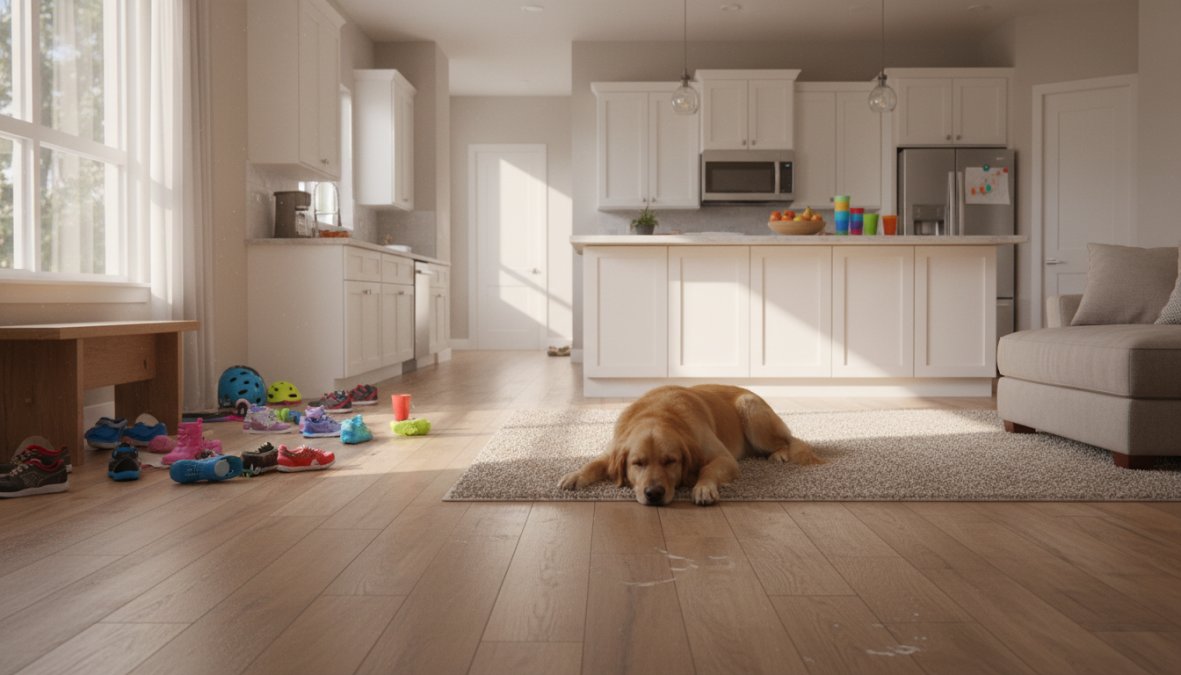
Luxury vinyl plank is the best waterproof flooring option for most busy families. It combines a 100% waterproof core with realistic wood visuals, a scratch-resistant wear layer, and a price point that undercuts engineered hardwood significantly.
Pros:
- Fully waterproof core (WPC or SPC)
- Scratch-resistant wear layer (6 mil to 20 mil options)
- DIY-friendly click-lock installation
- Comfortable underfoot, especially with attached underlayment
- Wide range of realistic wood and stone visuals
Cons:
- Can show seam gaps if subfloor isn't level
- Thinner wear layers (under 8 mil) scratch more easily than marketed
- Not as heat-resistant as tile
Wear layer thickness is the most important specification to understand. A 6 mil wear layer handles light traffic. For genuine high-traffic family use with pets, target 12 mil minimum. For mudrooms and entryways, 20 mil is worth the premium.
Waterproof Laminate: Improved but Still Limited
Modern waterproof laminate uses a sealed core and treated edges to resist water far better than earlier generations, and its embossed texture often surpasses vinyl in visual authenticity. The limitation remains real, however: prolonged standing water at the edges or a subfloor moisture issue will still compromise the product over time. For kitchens and bathrooms in homes with young children, it's a second-tier choice behind LVP.
Tile and Stone: Maximum Durability, Minimum Comfort
Porcelain tile is impervious to water, scratch-proof under normal use, and will outlast every other material on this list. The tradeoff is comfort and noise, tile is hard underfoot, cold in winter, and unforgiving when a toddler falls. For Suffolk County homes with radiant heat systems, tile becomes significantly more attractive. Without radiant heat, reserve it for bathrooms and laundry rooms where its waterproof performance is most critical.
Engineered Hardwood: Wood Look With Moisture Resistance
Engineered hardwood is not waterproof, it is moisture-resistant. The real wood veneer and plywood core handle humidity fluctuations better than solid hardwood, but standing water or high-moisture environments will damage it. For living rooms or bedrooms with low moisture exposure, it delivers genuine wood aesthetics. For kitchens, mudrooms, or basements, it's the wrong tool for the job.
Luxury Vinyl Plank vs Laminate: Which Wins for Families?
For most busy families, luxury vinyl plank wins. LVP offers a fully waterproof core, better resilience against pet claws, and easier repair, individual planks replace without disturbing the full floor. Laminate's advantage is visual texture, which some buyers find more convincing than vinyl's surface embossing.
The decision comes down to moisture exposure and budget. If the room sees regular spills, pets, or humidity, LVP is the correct choice without qualification. For a low-traffic bedroom or formal dining room, waterproof laminate is a reasonable alternative at potentially lower cost.
Wear Layer, Core Construction, and Subfloor Compatibility
The wear layer is the transparent protective coating over the decorative layer, it determines scratch resistance, stain resistance, and how long the floor looks new. Core construction separates LVP products significantly:
- WPC (Wood-Plastic Composite): Softer, warmer underfoot, better acoustic comfort, slightly less rigid
- SPC (Stone-Plastic Composite): Denser, more dimensionally stable, better for uneven subfloors, slightly harder underfoot
SPC is the better choice for Suffolk County homes with older subfloors that aren't perfectly level. Its rigidity bridges minor imperfections without telegraphing them through the surface. WPC is preferable where comfort and noise reduction matter more, such as children's playrooms.
Best Flooring for Pets and Kids: Scratch, Slip, and Stain Resistance
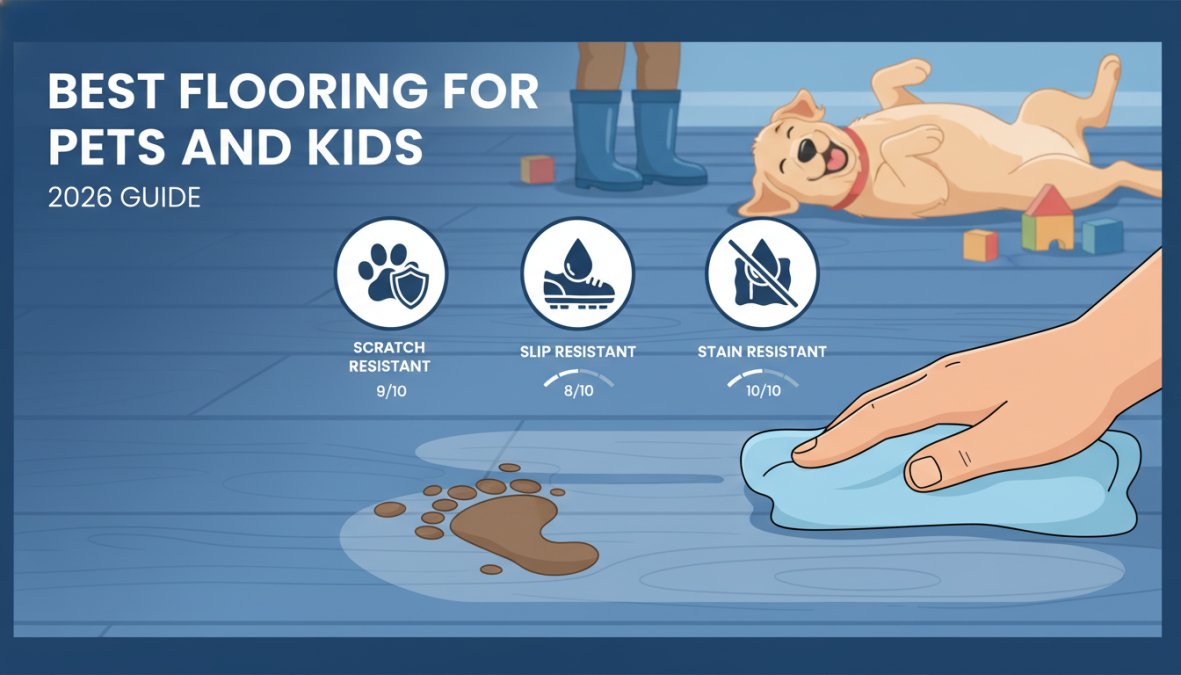
The best flooring for pets and kids combines a minimum 12 mil wear layer, a slip-resistant surface texture, and a waterproof core. SPC luxury vinyl plank with a textured matte finish comes closest for most family environments.
Toddler-Proof and Pet-Friendly Features to Prioritize
Scratch resistance and slip resistance often pull in opposite directions. Highly polished surfaces resist scratches better but become slick when wet. Textured matte finishes provide better grip but may show fine scratches from pet nails. For families with both toddlers and dogs, a low-gloss textured LVP surface is the best compromise.
Stain resistance is largely determined by the wear layer. A 12 mil or higher wear layer with a UV-cured finish resists pet urine, juice, and food stains without special cleaners, but prompt cleanup still matters, as pigmented liquids can stain the surface if left for extended periods.
Checklist: Pet and Kid-Friendly Flooring Features
- Wear layer 12 mil or higher
- Textured matte or low-gloss finish for slip resistance
- 100% waterproof core (WPC or SPC)
- Attached underlayment for impact noise reduction
- AC4 or AC5 abrasion rating for high-traffic durability
- Certified low-VOC or FloorScore certified for indoor air quality
Eco-Friendly and Non-Toxic Options for Health-Conscious Families
Vinyl flooring can off-gas volatile organic compounds (VOCs) from adhesives, plasticizers, and surface coatings, a legitimate concern for families with young children who spend significant time on the floor. The standard to look for is FloorScore certification, which tests VOC emissions against the California Section 01350 standard. GREENGUARD Gold certification is another reliable indicator.
Seek out phthalate-free formulations specifically. Some budget LVP products use phthalate plasticizers that have raised health concerns; reputable manufacturers now offer phthalate-free options explicitly. According to the EPA's guidance on indoor air quality and flooring materials, selecting low-emission flooring is one of the most impactful steps families can take to improve indoor air quality.
How to Clean Waterproof Vinyl Flooring Without Damaging It
Cleaning waterproof vinyl correctly means avoiding products that damage the wear layer. The most common mistake is using steam mops or harsh solvent-based cleaners, both of which degrade the surface coating over time and can void your warranty.
Daily, Weekly, and Deep-Cleaning Routines
Daily routine (5 minutes): Dry mop or vacuum with a soft-bristle attachment to remove grit and debris. Grit is the primary cause of surface micro-scratches on vinyl, this single habit extends wear layer life more than any other practice.
Weekly routine (15 minutes): Damp mop with a pH-neutral cleaner diluted in water. Wring the mop thoroughly: "damp" means nearly dry. Excess water pooling at seams can work into the subfloor at the perimeter even on waterproof flooring.
Deep cleaning (monthly or as needed): Use a manufacturer-approved vinyl floor cleaner for stubborn stains or buildup. Avoid wax-based products, which dull the finish and attract dirt. Never use abrasive scrubbers.
Waterproof Flooring Installation Cost: DIY vs. Professional
Installation cost is where many flooring budgets get surprised, material cost is only part of the equation. For Suffolk County homes, professional installation for LVP adds meaningfully to total project cost, and subfloor preparation is often the variable that determines whether a project runs over budget.
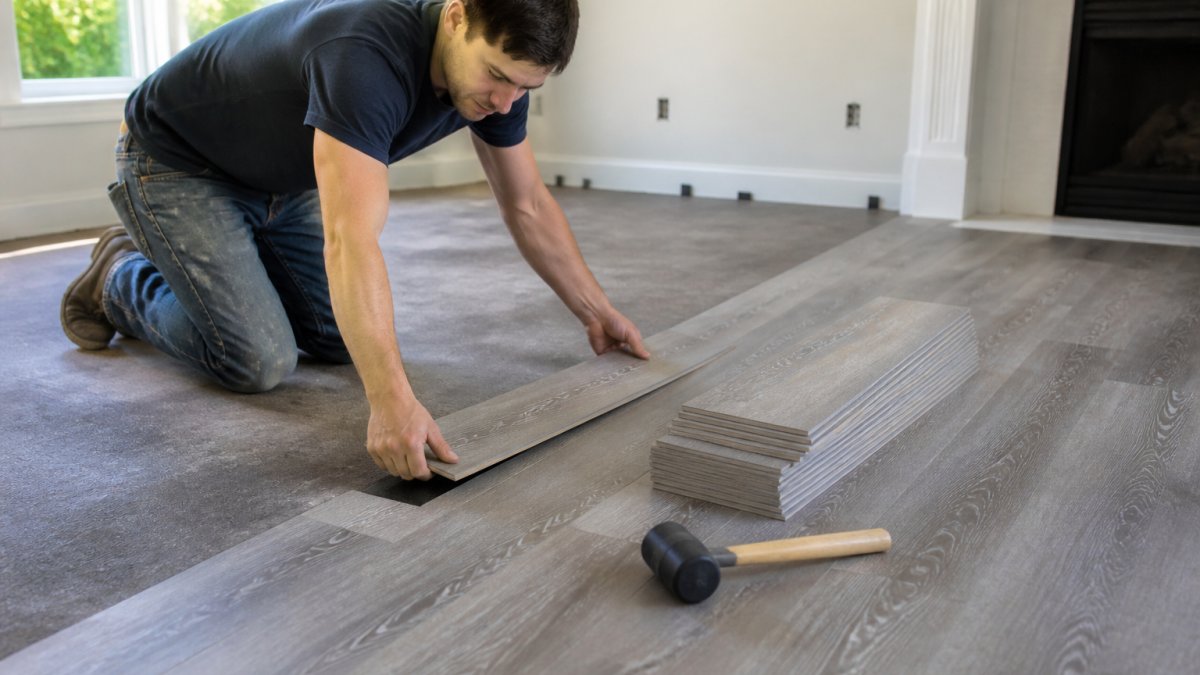
DIY installation is genuinely achievable with click-lock LVP. The format is designed for floating installation without adhesive, and most homeowners with basic tool competence can complete a room in a day. The primary risks are subfloor prep errors and improper expansion gap management, both of which cause problems that appear months after installation.
Room-by-Room Recommendations for Suffolk County Homes
| Room | Top Choice | Why | DIY Viable? |
|---|---|---|---|
| Kitchen | SPC LVP | Waterproof, stable, easy clean | Yes |
| Bathroom | Porcelain tile or SPC LVP | Maximum moisture resistance | Tile: harder; LVP: yes |
| Basement | SPC LVP | Handles subfloor moisture, stable | Yes with prep |
| Mudroom | SPC LVP (20 mil wear layer) | Heavy foot traffic, dirt, moisture | Yes |
| Living room | WPC LVP | Comfort, acoustics, aesthetics | Yes |
| Children's bedroom | WPC LVP | Soft underfoot, noise reduction | Yes |
Suffolk County basements present a specific challenge: concrete subfloors with potential moisture vapor transmission. SPC LVP handles this better than WPC because its denser core resists the slight moisture that migrates through concrete slabs. A moisture barrier underlayment adds an additional layer of protection. According to the National Wood Flooring Association's subfloor preparation guidelines, moisture testing of concrete subfloors before any flooring installation is essential to prevent long-term failures.
Warranty Deep-Dive: What Family Flooring Warranties Actually Cover
Most flooring warranties are written to protect the manufacturer, not the buyer. A standard LVP warranty includes separate coverage periods for wear-through, stain resistance, waterproof performance, and structural integrity. The headline number, often "lifetime" or "30 years", almost always refers to structural integrity, the least likely failure mode. Wear-through warranties are typically 10-25 years and are far more relevant to real family use.
What most warranties exclude:
- Damage from improper installation (the most common exclusion)
- Steam mop damage
- Damage from standing water at unsealed perimeter edges
- Scratches from furniture dragging
- Fading from direct UV exposure without window treatments
- Subfloor-related failures if subfloor prep wasn't documented
The practical advice: photograph your subfloor preparation before installation, keep your installer's documentation, and retain your purchase records. Warranty claims without proof of proper installation are routinely denied.
For families investing in quality flooring for a Suffolk County home, Hamptons Carpet One Floor and Home can walk you through the specific warranty terms of every product in our showroom before you commit.
The waterproof flooring options for busy families have never been better than in 2026. SPC luxury vinyl plank covers the vast majority of family needs at an accessible price point. For families with health concerns, FloorScore-certified products address indoor air quality without sacrificing performance. For rooms with extreme moisture exposure, tile remains the gold standard. The key is matching the material to the room's actual demands rather than choosing one solution for the entire house.
For a complete comparison of current product lines, review the Resilient Floor Covering Institute's consumer education resources to understand industry standards before visiting any showroom.
Selecting the right floor involves more variables than most guides acknowledge: subfloor condition, room-specific moisture exposure, warranty terms, and indoor air quality all factor into a decision that will affect your home for decades. Hamptons Carpet One Floor and Home serves all of Suffolk County and carries a full range of waterproof flooring options, from entry-level LVP to premium SPC and tile, with staff who can assess your specific rooms and subfloor conditions before recommending a product. Visit our showroom or contact our team to get a room-by-room recommendation backed by real local expertise.
Frequently Asked Questions
Is luxury vinyl plank really 100% waterproof for families?
Yes, quality LVP with a waterproof core is genuinely waterproof, not just water-resistant. Unlike laminate flooring, which can swell when moisture reaches the core, LVP's rigid or WPC core prevents water damage even from prolonged spills. However, water can still seep through gaps at the edges if the installation lacks proper sealing, so ensuring correct underlayment and perimeter caulking is important, especially in bathrooms or mudrooms with heavy foot traffic.
Which is better for families: laminate or vinyl flooring?
For most busy families with pets and kids, luxury vinyl plank edges out laminate flooring. LVP offers true waterproof protection, better slip resistance, softer underfoot feel, and comparable scratch resistance. Waterproof laminate has improved significantly but remains vulnerable to moisture at seams. If your household deals with muddy shoes, pet accidents, or toddler spills regularly, LVP is the more practical, cost-effective, and durable long-term choice for high-traffic areas.
What is the waterproof flooring installation cost, and should I DIY or hire a pro?
Waterproof flooring installation typically costs between $2 and $8 per square foot for labor, depending on the material and subfloor condition. LVP is one of the most DIY-friendly options available thanks to its click-lock system, which can reduce costs significantly. However, professional installation is recommended for large open areas, uneven subfloors, or rooms requiring precise cuts around cabinets and fixtures. For Suffolk County homeowners, getting a professional quote ensures proper underlayment and warranty compliance.
How do you clean waterproof vinyl flooring without damaging it?
Cleaning waterproof vinyl flooring is straightforward. For daily maintenance, sweep or vacuum to remove dirt and debris, especially important after muddy shoes track in grime. Weekly, damp-mop with a pH-neutral cleaner diluted in water. Avoid steam mops, abrasive scrubbers, or wax-based products, as these can dull the wear layer over time. For stubborn stains, a small amount of rubbing alcohol on a soft cloth works well. Consistent cleaning routine preserves both appearance and longevity.
Can I install waterproof flooring throughout my entire house?
Yes, one of the biggest advantages of waterproof flooring options like LVP is that they can run continuously through every room, including bathrooms, kitchens, basements, and bedrooms. This creates a cohesive home aesthetic and simplifies your cleaning routine. Using the same product throughout also makes transitions seamless and can positively impact home value. Just ensure the subfloor is level and dry before installation in moisture-prone areas like laundry rooms or below-grade spaces.
What should I look for in a warranty for family waterproof flooring?
Look for warranties that cover wear-through, staining, and waterproof performance separately, not just a blanket 'limited residential warranty.' Top-tier LVP products often include 15 to lifetime wear warranties and dedicated pet and waterproof coverage clauses. Read the fine print: some warranties are voided by improper cleaning products or DIY installation without certified underlayment. Ask your flooring retailer specifically what the warranty covers for pet scratches, water damage, and fading from sunlight exposure.
This article was written using GrandRanker